The debt black hole claims another victim
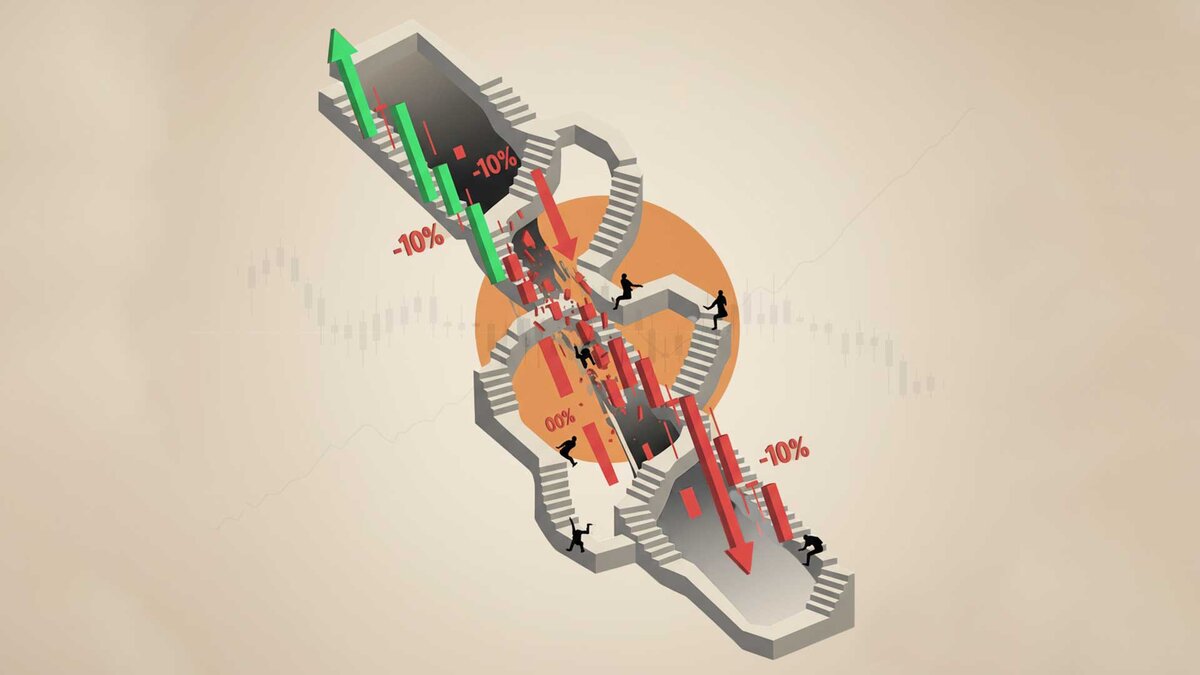

The Debt Black Hole has claimed another victim.
Saks Global Holdings, the parent company of Saks Fifth Avenue, Neiman Marcus, and Bergdorf Goodman, recently filed for Chapter 11 bankruptcy. The company couldn’t dig itself out from under $2.5 billion in debt.
This is a story illustrating how government policy, coupled with central bank mechanizations, incentivized bad decisions.
The story starts five years ago with the COVID-19 pandemic. Federal and state government policies virtually shut down the U.S. economy. At the same time, the Federal Reserve slashed interest rates to zero and launched a quantitative easing program that ultimately created nearly $5 trillion out of thin air. Meanwhile, millions of Americans were out of work and stuck in their homes. To relieve some of the pain caused by its own policies, the federal government showered the American population with stimulus money.
This was a recipe for massive price inflation.
Millions of people were sitting at home, flush with cash. Many paid off credit cards. Some people beefed up their savings accounts. And a lot of consumers sat on their couches and shopped online.
As the country emerged from the pandemic, the luxury sector boomed. Consumers were flush with cash. Many were still reluctant to travel, so they went shopping. Luxury sales boomed in 2021.
And then the inflation hit.
In March 2021, CPI began to reflect the monetary malfeasance of the COVID era. For a while, Jerome Powell and his minions at the Federal Reserve tried to convince us that inflation was “transitory.” We knew better because we actually went to the grocery store.
It didn’t take long for consumers to blow through the accumulated pandemic-era savings and start making ends meet using credit cards.
The inflationary era was particularly tough on the luxury retail sector. For a brief moment, the middle class could afford to shop at Saks. But when grocery prices went through the roof, the luxury spree came to a screeching halt. It didn’t take long before Sak’s clientele was squeezed down to the very wealthy.
Other dynamics were pressuring the luxury retail sector at the same time. Department store traffic was hit hard as consumers shifted more shopping online. Meanwhile, a lot of fashion houses were cutting out middlemen by opening their own boutiques and websites.
Struggling under the weight of a luxury recession, Saks' management made a fatal mistake. They decided to expand. The company borrowed billions to acquire rival Neiman Marcus for $2.7 billion in December 2024.
What else was happening in late 2024?
The Federal Reserve pivoted and began cutting interest rates. By the December meeting, the central bank had trimmed a full percentage point from the federal fund rate.
Did falling interest rates incentivize Saks management to go out on a limb and borrow billions for the Neiman takeover?
We can’t know what was going on in management’s heads. But we do know that the purpose of slashing interest rates is to incentivize more borrowing to stimulate economic activity. Well, rates fell, and Saks borrowed.
Of course, they may have done the deal anyway. Desperation often leads to bad decisions. However, it is hard to believe that a falling interest rate environment didn’t make the deal more appealing.
This is what Austrian School economists mean when they say artificially low interest rates incentivize malinvestment. Managers and investors make decisions they wouldn’t have made in a “normal” interest rate environment. Sometimes the gamble works, but most often it doesn’t. Eventually, these malinvestments have to be cleaned up. That’s what’s happening to Saks right now. When enough malinvestments start unwinding, you end up with an economic crash.
As an article on Seeking Alpha explained, there were funding problems at the start. Saks and Neiman were pulling from the same small customer pool. This overlap left little room for growth. As Seeking Alpha summarized it, “Their integration was ultimately a failure, as well as a plan to split physical and digital properties, and it was only a matter of time before both inventory and continued financing based on its real estate dried up.”
Reuters reported that the company had about $3.4 billion in funded debt obligations before the bankruptcy filing. This included term loan credit agreements and notes issued. Around $275 million of that debt was related to the Neiman Marcus acquisition and was set to mature in February.
Keep in mind, it wasn't just the rate cuts. The COVID policies set the stage, creating the luxury boom and loading up consumers with stimmy money.
There are a lot of companies deep in debt for the same reasons. Many loaded up on cheap debt during the decade following the Great Recession. Others took on debt during the low-interest rate period during the pandemic. When this debt comes due, it must be refinanced at higher rates. This is precisely why so many people want the Federal Reserve to continue cutting interest rates despite sticky price inflation. Of course, that’s a double-edged sword. By increasing liquidity, the Fed is likely incentivizing the creation of even more Saks.
The reason analyst Greg Weldon coined the term “Debt Black Hole” is that the gravity from a black hole in space bends everything around it. This debt black hole is bending everything in the economy. How long the central bankers and policymakers can fight against its pull remains to be seen, but one thing is certain – every boom comes with a bust. We’ve had one heck of a Fed-induced boom over the last 20 years or so. Don’t think the bust isn't coming. I’m sure the folks at Saks thought everything was going to be fine, too.
To receive free commentary and analysis on the gold and silver markets, click here to be added to the Money Metals news service.
Author
Mike Maharrey
Money Metals Exchange
Mike Maharrey is a journalist and market analyst for MoneyMetals.com with over a decade of experience in precious metals. He holds a BS in accounting from the University of Kentucky and a BA in journalism from the University of South Florida.