The Australian Dollar's struggle: How rising debt and slowing Chinese demand could pummel AUD in 2025

The Australian dollar (AUD) faces mounting challenges as we approach 2025, with key fiscal and macroeconomic factors outlined in the Mid-Year Economic and Fiscal Outlook (MYEFO) deepening concerns about the currency's future. Treasurer Jim Chalmers' MYEFO report reveals significant pressures from budget deficits, rising debt, and declining Chinese demand, all of which suggest the AUD may face a prolonged period of vulnerability in the short and long term.
Technical overview and recent decline
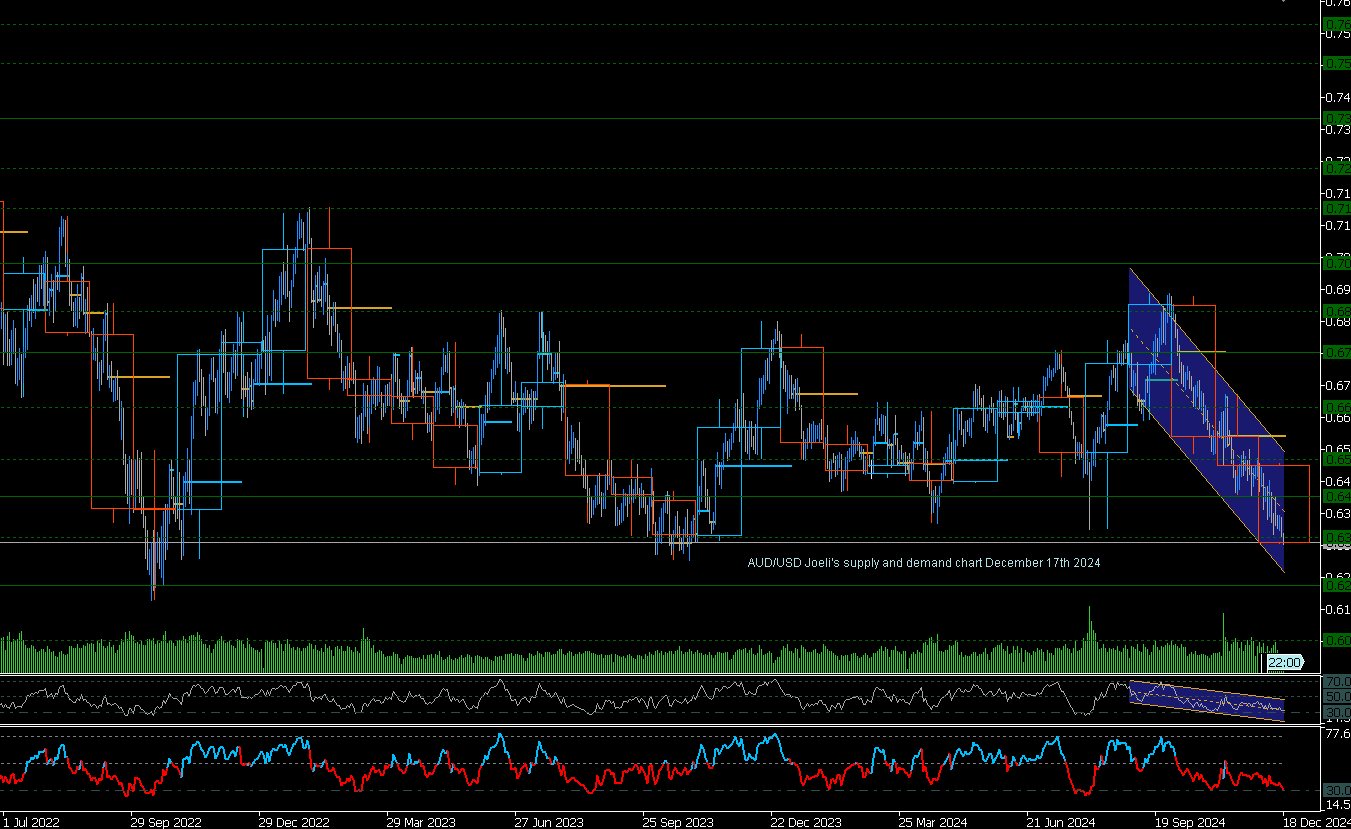
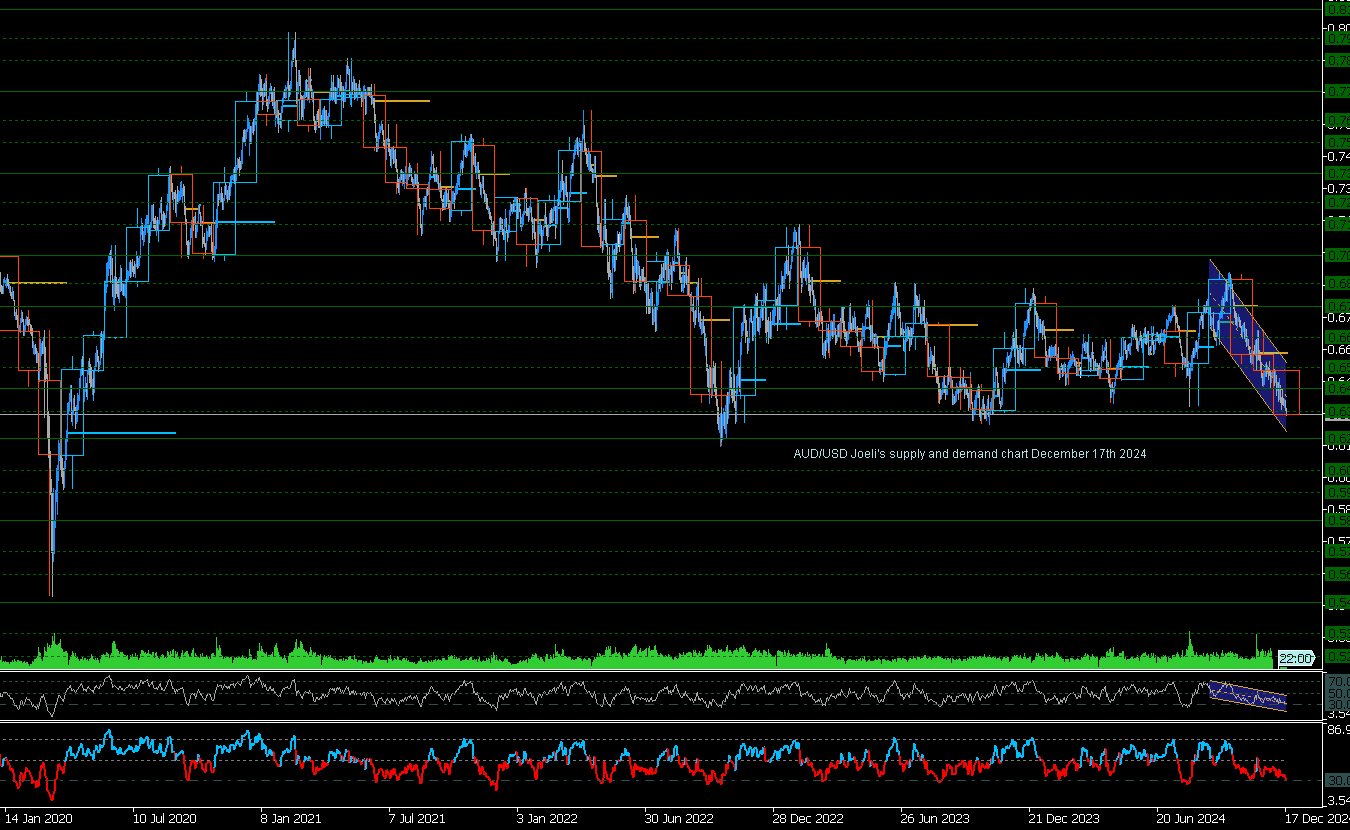
The Australian dollar has been under substantial pressure for the past ten weeks, a pattern reflected in the accompanying chart. This downtrend began after the AUD briefly tested the resistance at 0.6895 in June-July 2023, failing to break higher and initiating a selloff. This set the stage for ongoing bearish momentum. At the time of writing, December 18, 2024, the AUD is trading just below the 0.6329 support level, a key level tested in October 2023. Should the currency fail to hold at this level, the next major support comes into play near 0.6206, which was tested in October 2022. Hostile fiscal policy and economic slowdown pressures suggest the AUD will likely test lower levels in the coming months.
Fiscal deficits and rising public debt
The MYEFO report reveals that Australia's budget deficit is expected to reach $143.9 billion over the next four years, primarily driven by increased government spending, particularly on health and social programs (The Australian). Alongside this, net debt is set to grow to $708.7 billion by 2027-28 (The Australian). Such rising fiscal imbalances point to a potentially weaker AUD, as investors may begin to lose confidence in Australia's fiscal management. Persistent deficits and growing debt typically raise concerns about a country's ability to finance its obligations, leading to diminished investor confidence, which would exert additional downward pressure on the AUD.
China's slowdown and dwindling demand for commodities
The Chinese economic slowdown is an additional key threat to the Australian dollar. The Guardian notes that commodity exports—especially iron ore—could decline by over $100 billion in the next four years due to reduced demand from China, Australia's largest trading partner. This decline in commodity export revenue will reduce foreign currency earnings, ultimately impacting the broader Australian economy. Weakened demand for key exports such as iron ore contributes directly to a downward spiral for the AUD, as Australia earns fewer export revenues, which hurts its currency.
Further exacerbating the situation, tax receipts from mining companies are projected to fall by $8.5 billion over the next four years, marking the first downward revision since 2020 (The Guardian). This signals a troubling trend, as the Australian economy's reliance on mining exports faces significant challenges due to weakened Chinese demand, further suppressing the currency.
Inflation and policy adjustments
Rising inflation remains a concern, with the MYEFO report projecting moderate wage growth and continued pressure on living costs (The Australian). The Reserve Bank of Australia (RBA) will likely be forced to adopt a cautious approach, with interest rates expected to remain elevated to tame inflation in the short term. While higher interest rates could temporarily support the AUD by attracting foreign investment into Australian assets, the long-term outlook becomes more precarious. Excessively tight monetary policy could choke economic growth, especially as fiscal deficits mount and debt levels rise. This could further drag down investor confidence in Australia's economic future, weighing heavily on the AUD.
The global picture and geopolitical risk
Beyond domestic factors, the Australian dollar remains highly exposed to global market dynamics. U.S. Federal Reserve policies, commodity price fluctuations, and the ongoing uncertainty surrounding geopolitical tensions may further complicate the outlook for the AUD. For example, if global interest rates remain elevated or the U.S. dollar strengthens, the AUD could face additional downward pressure, further intensifying bearish momentum.
Looking ahead: Short-term support and long-term risks
While the AUD may find support at 0.6329 in the immediate term, a break below this level opens the door to further weakness, potentially targeting the 0.6206 support area and even lower in the months ahead. The long-term outlook remains bearish as fiscal imbalances, rising debt, and a slowdown in global demand—especially from China—add substantial risks for Australia's currency.
Conclusion: A bleak road ahead for the Australian Dollar
As fiscal pressures mount and export challenges increase, the Australian dollar's outlook in 2025 looks increasingly bleak. The MYEFO report paints a picture of a currency vulnerable to external shocks and structural economic changes. If these issues are not addressed through careful economic reorientation, diversification of exports, and robust fiscal management, the AUD could continue to face significant struggles, both in the short and long term.
Sources: Australian Mid-Year Economic and Fiscal Outlook (MYEFO), December 17, 2024, The Guardian and The Australian
Australian dollar short-term view of the combined daily and monthly price chart
Australian dollar long-term view of the combined daily and monthly price chart
Author

Denis Joeli Fatiaki
Independent Analyst
Denis Joeli Fatiaki possesses over a decade of extensive experience as a multi-asset trader and Market Strategist.