The 10 November cliff: How markets should trade the Trump Xi truce
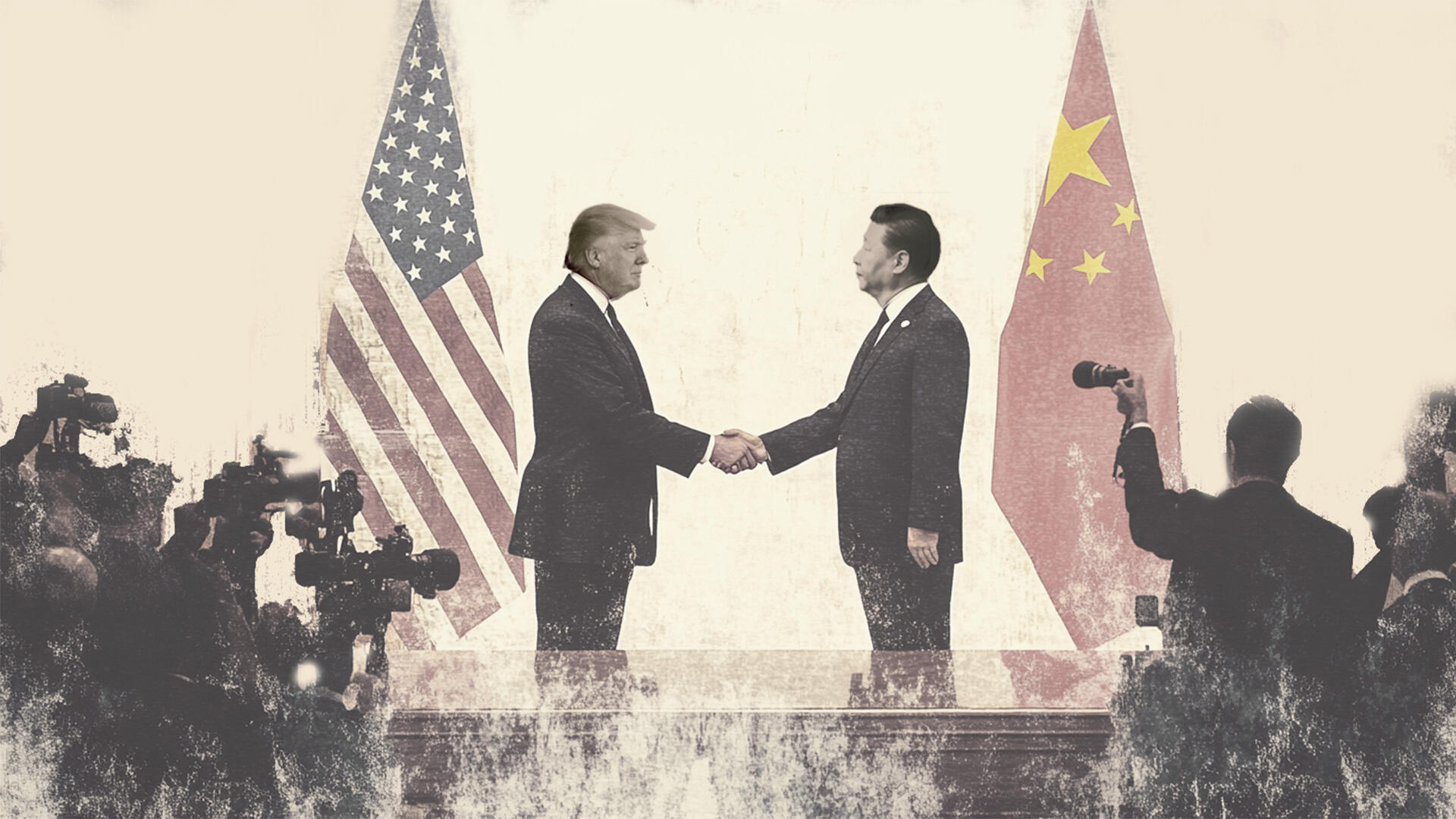
Markets tend to treat summits as events. They are better understood as deadlines. The meeting between Donald Trump and Xi Jinping at the White House, which opens on Thursday September 24thm and runs through Friday the 25th, will produce warm words, contracts announcements, and a great deal of ceremony. What it may not produce is the one thing traders actually need, which is clarity about 10 November.
That is the date on which the current US China trade truce and China's one year suspension of its sweeping rare earth export controls both expire. It falls one week after the American midterm elections. Treasury Secretary Scott Bessent has said Washington is fine with either continuing the current truce or examining a bigger deal. For markets, that range of outcomes is the whole story.
The macro backdrop is not what tariffs promised
Start with the numbers. China's trade surplus reached $119.1 billion in August, a record for the year. Exports rose 25 percent on a year earlier and shipments to the United States jumped 34.4 percent, helped by base effects after last year's tariff shock. Over the first eight months of 2026 the surplus reached roughly $806 billion, on pace to beat last year's record of $1.2 trillion. The growth was led by autos and high tech goods.
The lesson for investors is that tariffs changed the route of Chinese exports, not the volume. At the same time, China's domestic economy remains fragile, with house prices down about 30 percent over six years and a rising share of loss making industrial firms. Beijing needs external demand more than ever. That makes a trade rupture more costly for China than its headline surplus suggests, and it is the main reason I expect the truce to be extended in some form.
Four scenarios and how to read them
Scenario | What it looks like | Likely market read |
Rollover | Truce and rare earth suspension extended past 10 November, purchase headlines on soybeans, energy and aircraft | Mild relief, stable yuan, support for agriculture and aerospace |
Bigger deal | Tariff cuts, looser chip access, multiyear energy purchase commitments | Risk on, firmer CNH and AUD, chips and copper higher, US crude exports supported |
Drift | Warm words but no extension date, the November clock keeps running | Rising volatility into November, bid for rare earth and defense names |
Rupture | A Taiwan or Iran dispute spills into trade, controls reimposed | Risk off, dollar and gold higher, chip stocks and the Taiwan dollar lower |
My base case sits between rollover and drift. The risk that markets underprice is drift, a summit that reads well on the day but leaves the rare earth clock running. That outcome would not show up in the first session's price action. It would show up in November, as supply chain managers start hedging and volatility in the yuan and industrial metals picks up.
The yuan and the China proxies
USD/CNH is the cleanest real time gauge of Beijing's confidence in the relationship. A managed, stable yuan after the summit signals that Beijing sees the truce as secure. A weaker daily yuan fixing from the People's Bank of China in the weeks before 10 November would be an early warning that the rollover is in doubt. The Australian dollar and copper, both traditional proxies for Chinese demand, should respond to any concrete purchase commitments, though they will also be driven by China's domestic property cycle, which a summit cannot fix.
Oil is policy now, not just demand
Energy is where this summit connects most directly to prices. With Hormuz largely closed, the American blockade halting new Iranian exports from the Gulf, and Saudi Arabia's East West pipeline to the Red Sea shut since 11 September, Shanghai crude futures have set records. In May the White House said Xi was interested in buying more American oil to reduce China's dependence on the Strait.
If this week produces volume commitments, the implication is support for US crude exports and for WTI relative to Middle East benchmarks, along with changes in tanker routing and freight. It also raises the value of the few Gulf barrels that can reach Asia without crossing Hormuz, notably through the UAE's port of Fujairah. Chinese buying on this scale is a political decision, and traders should treat purchase headlines as policy signals rather than demand data.
Chips and the Taiwan discount
Beijing is openly asking for export controls on advanced chips to be relaxed, and Nvidia's China business remains a bargaining point. Under the arrangement announced in January, Washington takes a 25 percent cut on permitted H200 sales, and so far only limited volumes have moved. Any easing would be positive for US chipmakers in the short term. The longer term picture is less comfortable, because China is steadily building its own substitutes.
The larger risk is Taiwan. A $14 billion US arms package for the island has been frozen since May, and Trump has described it as a negotiating chip. Reports suggest an announcement may be delayed until after APEC in November. For markets, the risk is not invasion but coercion, a quarantine or inspection regime that raises insurance costs across the semiconductor supply chain. That tail risk is poorly priced in chip valuations and in the Taiwan dollar, and it is the scenario that would overwhelm every other trade in this piece.
What to watch
The summit runs through Friday evening, so the formal readouts may not arrive until the end of the week. When they do, five signals will tell traders more than the toasts at Thursday's state dinner. First, an explicit extension date past 10 November. Second, whether the rare earth suspension is renewed together with tariffs or separately. Third, energy purchase volumes rather than intentions. Fourth, any mention of chip export controls in either readout. Fifth, any change in Taiwan language, which would be the most important signal of the day.
Summits sell stability and status quo. Deadlines are often artificial. Until the date is fixed, the market should treat this truce as what it is, a calm with an expiration date.
Author

Andrea Zanon
Confidente
Andrea Zanon has 20 years of professional experience as a disaster risk management, sustainability, and entrepreneurship specialist. Mr. Zanon has advised international institutions and countries across the Middle East and North Africa. Mr.