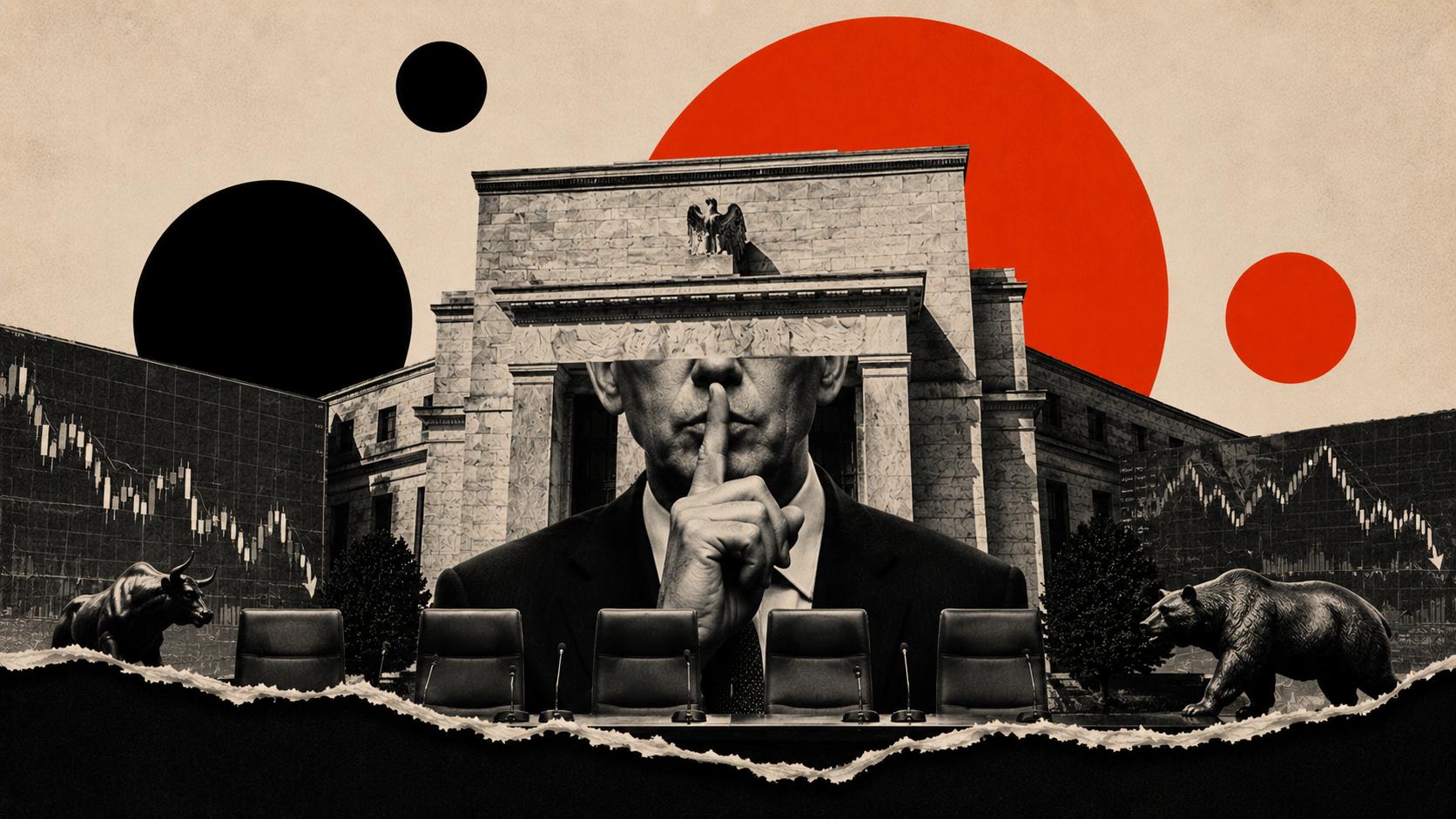
Tech tantrum: Samsung, semis, the strait and a momentum market finally meeting gravity
- Samsung’s selloff after a major profit beat was the signal: in popular AI names, “better than expected” is no longer enough when the market has priced in perfection.
- The token-spend slowdown is the more important structural warning. AI usage can keep rising even while pricing power leaks, making the monetisation debate far more uncomfortable for hyperscalers and model makers.
- This remains a controlled momentum unwind, not broad risk-off. Positive breadth, equal-weight resilience and defensive leadership suggest rotation is doing more work than panic.
- Hormuz is the macro accelerant. Higher oil, firmer inflation expectations and a 30-year Treasury yield back above 5% raise the valuation hurdle for long-duration AI winners just as earnings season begins.
Tech tantrum
Tuesday’s market action looked less like a collapse and more like an overstretched spring finally snapping back, jolted by a toxic market cocktail: Samsung was sold despite smashing earnings, tanker attacks in the Strait of Hormuz and the revocation of Iranian sanction waivers pushed oil higher, while a rise in New York Fed inflation expectations added fresh heat to the rates market. The result was a familiar cross-asset chain reaction: crude rose, Treasury yields climbed, chip stocks and the broader equity market rolled over, and the dollar jumped higher.
The spark for the tech tantrum was Samsung. The company delivered a monster operating-profit beat, driven by stronger-than-expected DRAM profitability, yet the shares still fell sharply in Seoul. A modest revenue miss and a stock priced for perfection were enough to turn what should have been a victory lap into a fire drill.
That is often how momentum reversals begin. The numbers do not have to be bad. They simply have to be less perfect than a market already standing on tiptoe to applaud.
Samsung’s decline rippled through the AI infrastructure complex. Memory names, data-centre beneficiaries, factory automation, machinery, industrial metals and the usual collection of picks-and-shovels suppliers all came under pressure. The SOX semiconductor index fell roughly 6% on the day and has now lost around 15% over four trading sessions.
That sounds dramatic until one steps back. The index has merely round-tripped about a month of gains and remains up roughly 73% year to date. This is not yet a tech wreck. It is a market accustomed to every AI earnings release arriving with fireworks, suddenly discovering that even spectacular results can be met with a shrug and a sell ticket.
The old trader’s rule remains useful: the market is never asking whether earnings are good. It is asking whether they are good enough relative to positioning.
That hurdle has become brutally high across popular AI exposures. Samsung’s guidance did not undermine the longer-term memory story. Tight supply, customer contracts and firmer pricing remain supportive. But the reaction mattered more than the print. Investors are becoming unwilling to reward merely strong results where expectations have already been lifted into the stratosphere.
That is an awkward setup heading into US second-quarter earnings season. The banks may open proceedings, but the real examination will be reserved for hyperscalers, semiconductor suppliers, hardware makers and the wider AI capex ecosystem. The market has priced an enormous amount of future success into these names. The question is not whether investment is large. It is whether returns can keep pace with the capital being thrown at the problem.
One useful way to look through the AI fog is to follow the money being spent on tokens: the tiny units of computation that users buy to run large language models. It is not a perfect measure, but it is probably the closest thing the market has to a real-time price tag on AI demand and, more importantly, on the sector’s pricing power.
That makes the recent drop in the Silicon Data Token Expenditure Index worth watching.
The gauge blends token usage with the price customers are willing to pay, so a fall does not automatically mean AI demand is collapsing. It could reflect lower list prices, customers migrating toward cheaper models, or a softer willingness to pay for the same intelligence.
But none of those explanations is entirely comforting for an industry spending hundreds of billions of dollars to build capacity.
Only weeks ago, token expenditure was running at roughly twice late-last-year levels, even though the price of an individual token had already fallen more than 90% since 2023. That is the uncomfortable arithmetic now creeping into the AI trade. Usage can explode, chips can remain tight and datacentres can continue rising out of the ground, yet the revenue captured per unit of intelligence can still fall faster than volume grows.
That is the distinction equity investors are beginning to wrestle with. The AI build may be booming, but a boom in usage is not automatically a boom in monetisation. Samsung’s numbers reinforced the strength of the physical build-out. The token data raises the harder question: whether the companies paying for all that compute will ultimately earn an adequate return on it.
The sector rotation debate has been popular for weeks, but the more important rotation may be inside technology itself. Investors are beginning to distinguish between companies monetising AI, those funding the physical build-out, and those swept higher merely because they were standing near the parade.
Japan offered an early warning. Semiconductors, materials and factory automation names were hit hard, while banks continued to outperform. China property shares also slipped toward recent lows. By the time US cash trading opened, the Nasdaq was under immediate pressure, falling more than 2.5% at its worst before a late bounce merely put a little lipstick on an already ugly pig.
Yet this was not a wholesale evacuation from risk. The Dow outperformed, equal-weighted performance held up better than cap-weighted benchmarks, breadth remained surprisingly positive, and leadership migrated toward healthcare, insurers, staples, telecoms, select software and midstream energy.
It looked less like panic than a market taking weight out of its most extended positions and redistributing it across the rest of the book.
What began as a sharp reversal in AI, semiconductor and memory names quickly became a positioning event. Momentum has come off hard from its June peak, realised volatility has surged, and prime-broker activity suggests investors are still cutting leverage across the market’s most crowded high-beta and memory trades.
The investor split is telling. Long-only accounts have been meaningful net sellers, particularly across technology and AI-linked cyclicals. Hedge funds have shifted to net buyers, though the activity looks more like short covering and selective adding than fresh conviction risk-taking. With single-stock shorting still subdued, systematic and factor-driven flows appear to be steering much of the move.
In plain English, investors are reducing risk in the same trades they had spent months leaning on.
The macro backdrop did not help. A renewed flare-up in the Strait of Hormuz pushed oil higher after the US Treasury revoked a waiver allowing Iranian oil sales in response to attacks on commercial shipping. US crude pushed toward $72 late in the session, reminding markets that the interim peace arrangement between Washington and Tehran remains more ceasefire than settlement.
The Strait is not merely a geopolitical headline. It is a pressure valve for global inflation expectations. When tanker attacks rise, and sanctions waivers disappear, energy markets immediately begin repricing freight, crude, and refined-product risk. The New York Fed’s inflation expectations data, which reached a three-year high, added to the discomfort.
Treasury yields rose across the curve. The 30-year yield moved meaningfully back above 5%, reaching its highest level since late May. Firming hike expectations and heavy bond supply added pressure, while even the biggest hyperscaler borrowers found that demand was not quite as endless as the financing boom had implied.
Amazon’s latest $25 billion bond offering was a useful tell. Peak demand reached roughly $62 billion, well below the extraordinary interest seen for its previous mega-deal. There is still ample money for hyperscaler debt, but capital is not infinite, even for the best-known names in the room.
That is an important distinction for the AI narrative. The investment cycle may be real. Compute demand may be real. But the funding burden is real too, and markets are beginning to ask how much duration, credit capacity and investor patience can be absorbed before the returns become harder to justify.
The dollar strengthened through the session and accelerated on the waiver-revocation headline, moving back toward pre-payroll levels. GBP weakened, gold was hit hard as the stronger dollar and higher yields raised the opportunity cost of holding non-yielding assets, while Bitcoin gave back early gains and finished broadly unchanged after a choppy session.
The more subtle risk remains beneath the index surface. Bloomberg’s Simon White has argued that banks have been facilitating a positive feedback loop between risk-taking and risk provision, repressing volatility and lowering stock correlations. It works beautifully while balance sheets are expanding and dealers are willing to warehouse risk. It becomes less pleasant when inventories are stretched and a volatility shock forces banks to cut exposure.
For now, this still looks like a momentum reset rather than a systemic break. The S&P 500 has flattened after a powerful April and May run. Semiconductor losses have erased only a short stretch of gains. Breadth is improving, defensives are attracting interest, and the market is rotating rather than capitulating.
The irony is that this may be the most hated high in years. Index levels look euphoric, yet hedge-fund leverage remains near one-year lows, active managers have been reducing exposure, and broader sentiment measures remain far less exuberant than the headlines suggest.
That does not remove downside risk. It simply means the weak point is not indiscriminate optimism. It is concentrated expectation.
The AI trade is being forced to prove that the cash burn, chip demand and datacentre build-out can translate into durable earnings power. Samsung’s numbers did not break that story. The token data did not disprove it either. But together they delivered the same warning: a fundamentally intact story can still need a sharp repricing when the market begins to question the return on every dollar being spent.
Author

Stephen Innes
SPI Asset Management
With more than 25 years of experience, Stephen has a deep-seated knowledge of G10 and Asian currency markets as well as precious metal and oil markets.