Swiss franc slides after a dovish SNB rate decision


The Swiss franc declined against most peers as the market reacted to the interest rate decision by the Swiss National Bank (SNB). In the decision, the bank left the interest rate unchanged at -0.75% as most analysts were expecting. The bank predicts that the economy will drop by about 5% and that the rate of inflation will remain below 1% until the first quarter of 2020. Also, the bank said that it was ready to intervene in the market more strongly to devalue the franc. This is important since a stronger franc tends to affect the country’s exporters.
The euro declined against the US dollar as the market continued to worry about the rising number of coronavirus cases in Europe. Some of the EU members seeing rising cases are Belgium, Italy, and Spain. In addition, the euro declined as investors reacted to relatively weak business climate data from Germany. According to the ifo Institute, business expectations rose to 97.7 from the previous 97.2. That was a lower increase than the 98.0 that analysts were expecting. The current assessment and business climate also increased to 89.2 and 93.4, respectively. Analysts polled by Reuters were expecting the number to increase to 89.5 and 93.8, respectively.
The US dollar increased against most peers as traders continued to reflect on the rising risks in the market. These risks include the potential for political tensions in the United States, a second-wave of the covid-19 pandemic, and the ongoing tensions between the US and China. Later today, the currency will react to a testimony by Jerome Powell, the Fed chair. It will also react to the new home sales numbers from the US. Elsewhere, the Turkish central bank made a surprise rate hike while the Norges bank left rates unchanged.
EUR/USD
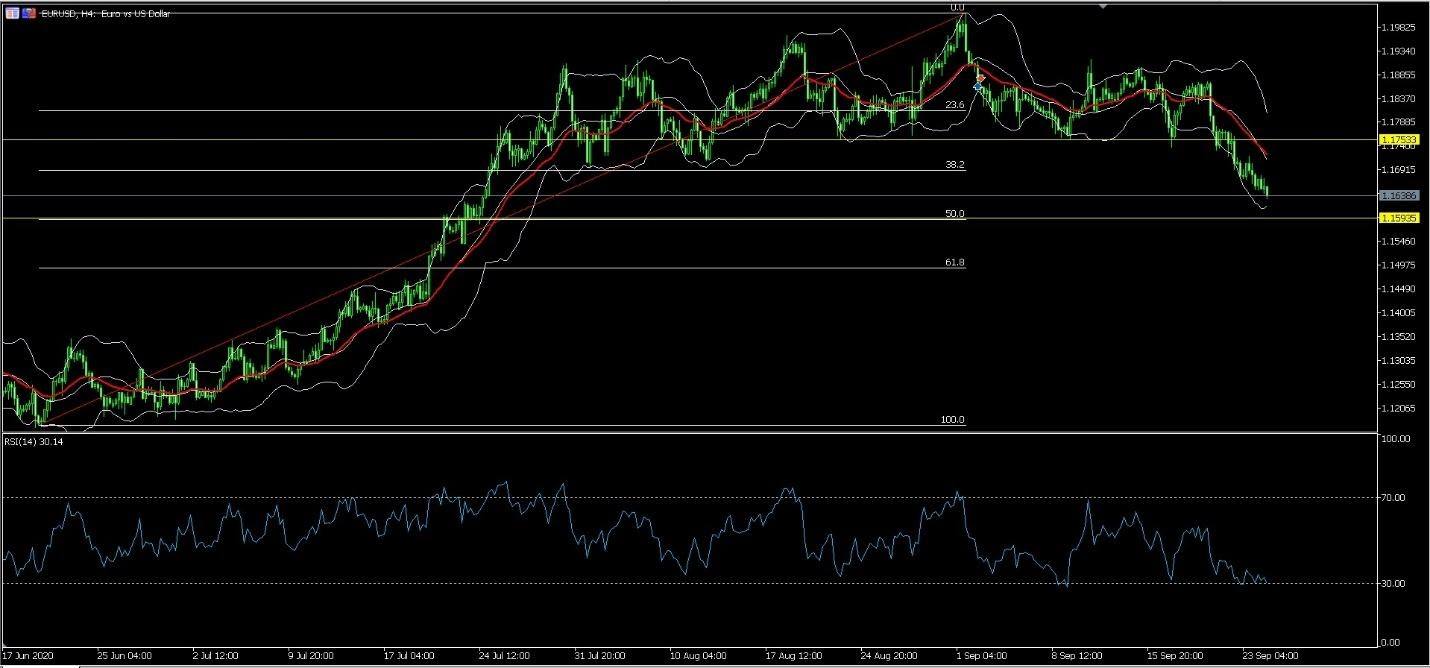
The EUR/USD pair has been in a strong downward trend recently. It has declined from a high of 1.2015 on 1 September to today’s low of 1.1632. On the four-hour chart, the price has moved below the 38.2% Fibonacci retracement level. It is also along the lower line of the Bollinger Band. Also, the pair’s RSI is slightly above the oversold level of 30. Therefore, the pair is likely to continue falling as bears aim for the next support level at 1.1593. This is the 50% Fibonacci level.
USD/CHF
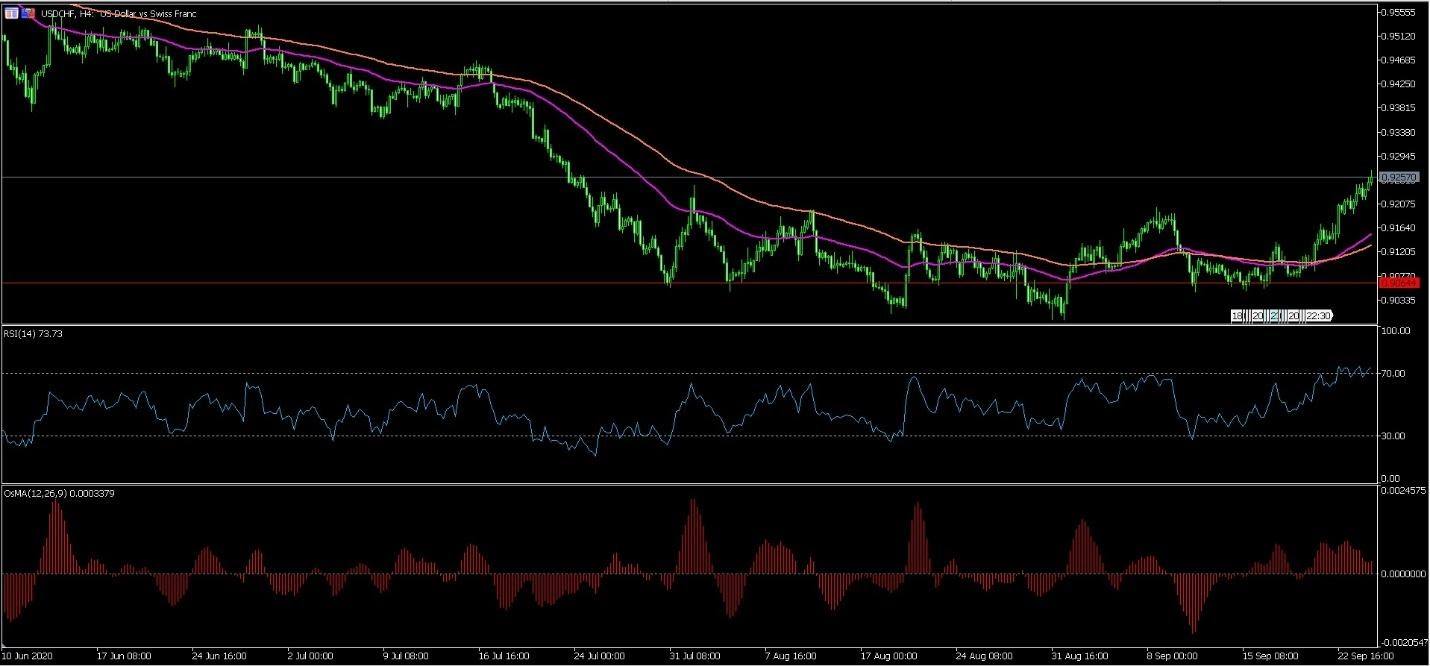
The USD/CHF pair rose to an intraday high of 0.9270, which is the highest it has been since July 23. On the four-hour chart, the price has moved significantly above the 25-day and 14-day exponential moving averages. The RSI has moved to the overbought level of 70 while the moving average of oscillator has remained above the neutral level for the past few days. Therefore, the pair is likely to continue rising as bulls aim for the next resistance level at 0.9300.
XAU/USD
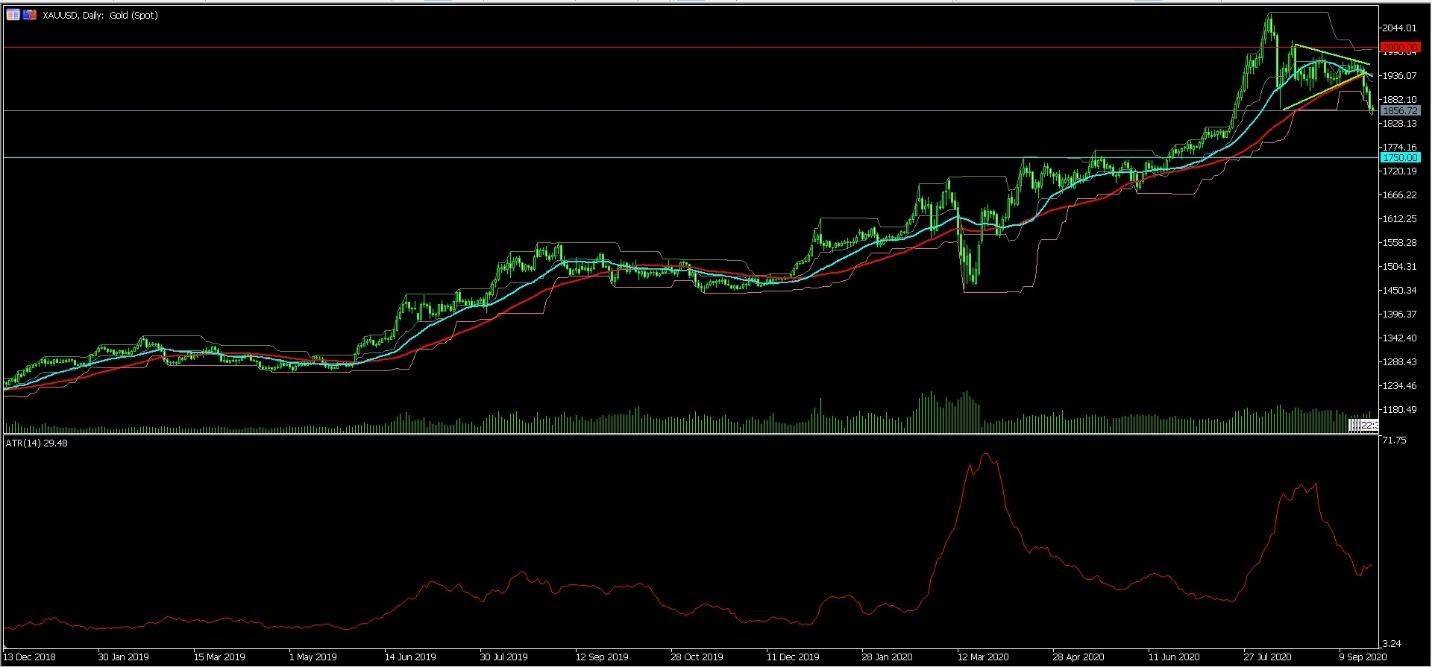
The XAU/USD pair declined to an intraday low of 1855, which is the lowest it has been since July 22. The price has also moved below the previous bullish pennant pattern. It is also below the 25-day and 14-day exponential moving averages and along the lower line of the Donchian channel. Therefore, the price is likely to continue falling as bears attempt to move below the support at 1800.
Author
OctaFx Analyst Team
OctaFX
OctaFX is a market-leading forex broker, providing personalised forex brokerage services to customers in over 100 countries worldwide.