S&P hits the pause button as trade tailwinds fade and the Fed looms
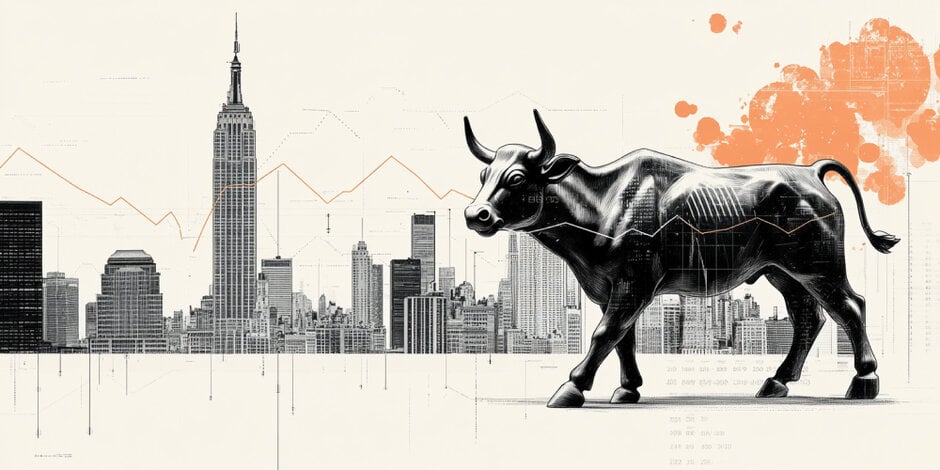

The S&P 500 took a breather on Tuesday—just after tagging fresh highs on the open—as traders caught their breath ahead of a trifecta of macro hurdles: Fed day, a data deluge, and the Friday jobs gauntlet.
After running hard from the April lows, the market once again exhaled—just as it has on virtually every fresh-record summit ascent. Today was no different. I’d call it a session best described as pre-risk-event position reduction—though, given the week’s stacked slate, it felt more like a mild recalibration than a full retreat. No one’s running for the hills. They’re just adjusting their sightlines before the Federal Reserve policy fog rolls in.
With 170 companies reporting, and a full “Magnificent Seven” lineup set to deliver earnings this week, traders have their hands full juggling single-stock landmines and macro grenades. Boeing beat but dropped. P&G impressed but drifted. UPS missed and ghosted guidance, while Whirlpool not only whiffed—it slashed its dividend. Even the bellwethers are blinking.
But the real gravity shift came from the macro tape.
Markets had been floating on a cloud of trade optimism—first Japan, then the EU—but the sugar high is wearing off. Now, with U.S.-China talks dragging on in Stockholm, there’s a growing sense that the momentum is stalling. Bessent flagged it bluntly: “China jumped the gun a little on the 90-day pause”—a diplomatic misstep that’s yet to be resolved. And their rare earth controls, once expected to be a surgical tool, have turned out “a bit clunky,” hinting that Beijing isn’t folding at the trade table just yet—playing their rare earth cards close to the chest as Washington locks in deals elsewhere. Of course, China is aware that the US want to play the Russia oil card ( see below Tariff Triggers, Oil Flows, and the BRICS Bottleneck)
Meanwhile, the Fed lurks. Powell & Co. are widely expected to hold at 4.25–4.50%, but traders will be scanning every comma of the press conference for signs of a policy pivot—or signs that one won't come. And frankly, it makes little sense for the Fed to wax dovish given the inflation unknowns still lurking around the corner, particularly from tariff pass-throughs. The effective tariff rate may settle near 15%–20%, but the second-round effects haven’t hit the data yet. Powell’s best move here is strategic ambiguity—keep the door open but don’t throw it wide.
Still, the dollar refuses to flinch. In fact, it’s rallying—and not just against the euro. This week’s sharp drop in EUR/USD wasn’t isolated; the greenback surged broadly, suggesting the market may finally be shaking off the trade war risk premium it priced in back in April. With 60% of U.S. trade now covered by tariff détente (Japan, EU, UK), Washington's economic bazooka looks more like a scalpel—controlled damage, minimal blowback, and that is providing a tailwind for the dollar again.
The logic? Tariffs have become a fiscal boon, not a bust. They’re juicing Treasury receipts without detonating consumption—yet. Inflation is lingering, but that just buys Powell more time on the sidelines. Rate cut bets are being repriced accordingly, and yield differentials are starting to matter again. The days of the dollar dancing to Trump’s Truth Social feed may be numbered.
For now, it’s all about survival through the week. The market’s had its run. But with carry trades looking over their shoulder at a resurgent dollar, long-end yields perking up, and the VIX pinned under 13, traders are eyeing the August calendar with a mix of bravado and dread.
This isn’t fear—it’s the sound of traders rolling their dice and covering their tails.
Tariff triggers, Oil flows, and the BRICS bottleneck
Trump just moved the goalposts on Putin—again. The 50-day ceasefire ultimatum on Ukraine has been slashed to “10 or 12 days,” setting up a high-stakes endgame where tariffs, not tanks, become the next round of artillery. The battlefield? Russia’s oil lifeline.
Instead of threatening a blanket tariff on all U.S. trade partners, Trump is now zeroing in on Russia’s key oil customers—the arteries that have kept Moscow’s war machine pumping despite sanctions. And if those partners—China, India, Türkiye, and others—don’t dial back their crude purchases, they could face punitive tariffs or secondary sanctions themselves. Washington’s message is blunt: you can’t finance both sides of the conflict.
The EU? Already subdued. Trump's lopsided "deal" last week effectively transformed Brussels into Washington's largest economic protectorate. It gives him just enough political capital to press harder on Beijing and Delhi. The ask? Curtail Russian oil imports or prepare for tariff duress.
Turkey might slip through the cracks, playing both sides as usual, angling for influence from the Black Sea to Central Asia. And the Central Asian Republics—bit players in global trade but now pawns in the sanctions chessboard—could get a pass, provided they stop laundering Russian barrels.
But the true fulcrum lies with China and India—BRICS titans, yes, but also deeply tied to U.S. trade. Each now plays a dangerous game of split loyalties. Trump is betting one or both will blink. And if they don’t? The oil market gets another shock, and inflation expectations rip higher. Markets are already catching the scent—WTI’s bouncing, and Russian Urals are widening their discount spread to Brent once again.
From a trader’s lens, this isn’t just macro—it’s metastasizing. Trump’s three-pronged Ukraine policy—tariff pressure, arms flows, and deadlines—isn’t just aimed at Moscow. It’s designed to splinter BRICS from within. Drive a wedge between Beijing and Delhi. Force both to calculate whether losing the U.S. market is worth defending discounted oil.
Putin, for his part, believes he can still achieve his maximalist aims—taking the Donbas, decapitating Ukraine’s defense structure, and rendering NATO toothless—regardless of what China and India do. He’s betting that their mutual distrust will override Washington’s threats. And if they both keep buying, the RIC core of BRICS becomes more than just an acronym—it becomes a problem.
This is geopolitical game theory in its rawest form. Trump thinks none of them want to be last to the deal table. Putin thinks none of them want to be left out of Russian crude. Someone’s wrong. We’ll find out in 10 days.
Author
Stephen Innes
SPI Asset Management
With more than 25 years of experience, Stephen has a deep-seated knowledge of G10 and Asian currency markets as well as precious metal and oil markets.