Sorry, No-Brexit: Auf Wiedersehen sterling
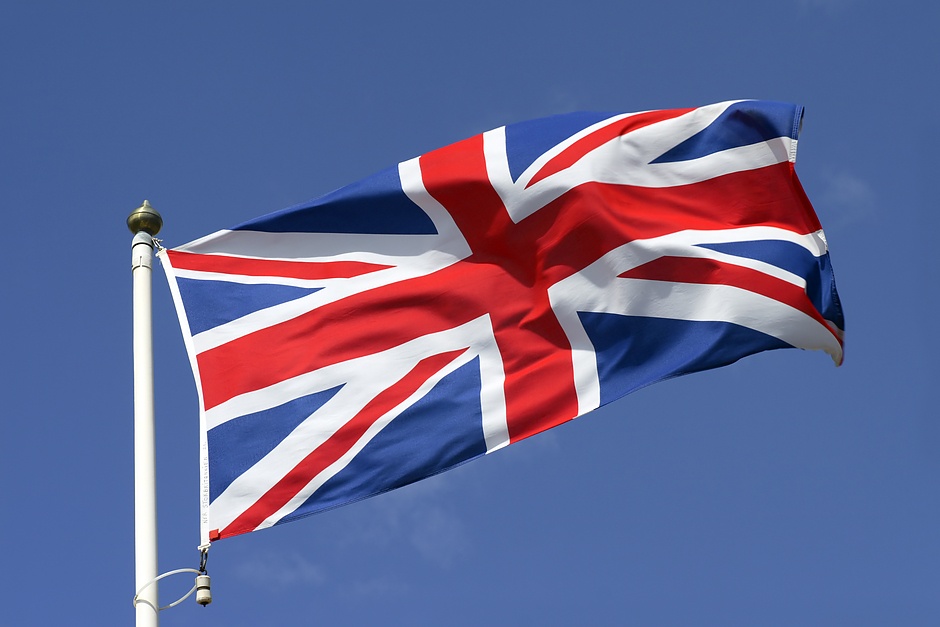

This whole Brexit motive is not only consuming every moment of my working day, but also my spare time.
Maybe it's just me, but the situation is just so darn domineering. I find myself compelled to read into every fine detail of the entire thing and I'm in constant debates with friends and family who are on both sides of the vote. It can get pretty heated at times too and it is a very delicate subject, as this really will and already is starting to affect people's lives.
An Brexit-Alien in Guatemala

Source: Free Images
I have been accused as being a nationalist, even though I have lived for half a decade now one million miles away from the culture I was born and raised in. I have also had my expertise put into question when debating over the euro having thrown my opinions out there that should Britain not leave the EU, at some stage, Britain would be forced to join the single currency in one form or another. Admittedly, the conditions have never been favorable for Britain to do so, but that doesn't mean that it could never happen. After all, the political union in the eurozoneis an economic existential necessity, not a re-negotiable ambition and those that the argue the financial crisis has meant conditions have never been worse for joining the euro, I beg to differ and invite you to come at this from a different angle.
Five economic tests? - No, this has just got 'political'
Euroscepticism has never been so high as it is now and while that might be one argument that the UK would not join the single currency, at the same time, it is the same very argument that would force Britain to do so at some point in time. Forget about the technicalities of it all, or Gordon Brown's five economic EMU ( Economic and Monetary Union of the European Union) tests that once failed, because it is perhaps the only way that the Eurozone project can now survive.
This is now 100% 'political' and not only that, the pound is headed in a far more favorable level to be joining the EMU comparative to when the pound was down at 0.6500 and 0.6900 in that year the UK Treasury was assessing the feasibility of joining, and if one recalls, between 2001 and 2003, further studies were carried out and a revised assessment of the five tests were later released in June 2003 that there had indeed been significant progress on convergence since the last test back in 1997 where sterling had weakened significantly above 0.7000.
In fact, there were a number of positives that the Treasury had concluded would come as a result in joining the euro such as investment and that it would benefit Britain's financial centre, while growth, stability and employment would also increase as a result of euro membership. Also, it wasn't too long ago, during the previous financial crisis in 2008 that Jose Manuel Barroso (the European Commission President) stated that UK leaders were seriously considering the switch, later denied by UK parliament.
-636050708849144736.jpg&w=1536&q=95)
Source: Free Images
Housing was one of the underlying issues that had stood in the way of monetary union due to the UK's market mostly on variable housing rates and small changes in interest rates affected consumers more in the UK than many continental European countries. However, these days, fixed mortgages are far more common with interest rates at virtually zero, albeit strangely as the threat of rates going up have not really been on anyones minds now for several years. Perhaps home owners have just wanted peace of mind during this financial crisis and lenders have been reluctant to have first time buyers take a gamble on variable rates that essentially got the UK into this financial crisis mess in the first place. Since 2011, fixed rates have become more popular and it doesn't seem as though the BoE is going to be in a position to start raising rates again for the foreseeable future. However, again, what I want to stress is that should Britain want to stay a part of the union, it may be forced to make the essential reforms to fit in with the EU and that includes it's style of housing market where it is more profitable to build houses than not to build which is one of the main differences between the continent's and the UK's housing market.
More than ever, there needs to be complete union for the Eurozone to work over the longer term and there will need to be far more significant fiscal transfers between regions for it to work. That will require each member to be using the single currency for various reasons, such as greater financial linkages between banks in respect to banking system's oversight and fiscal transfers, let alone constraint over Member State spending and debt-raising decisions, while otherwise, the associated lack of political union has been the key cause of the Eurozonecrisis.
A negligent parent correcting their ways
Should UK parliament, lead by Theresa May, a remain campaigner, eventually decide to now leave the EU, if adequate economic mechanisms and absolute political union are not introduced, anti-European sentiment will not go away and the EU project will eventually fall apart entirely and much like a negligent parent correcting their ways, tougher rules and political integration will be laid out to the UK and other member states where the EU will hasten a remodeling of the 'Brussels Club's' structure, one of which will be that the UK has to drop the pound and join the euro.
It is inconceivable that the UK will not be required to fully take up full EU federalist project at some stage in the future if parliament votes to stay in the EU. Euroscepticism has arisen because of political integration that had not proceeded rapidly enough to date, and this Brexit vote is either the end of the EU and the euro or the very event when UK parliament decide to stay with the EU that will be its re-birth fighting back bigger and even more stubborn.

Source: iStock
For the EU to survive at all, a Single European State is needed. That requires deeper political integration and this means a single currency so that the leaders can allocate effective controls over policies such as tax and subsequent spending decisions which means reduced control over tax and spending decisions for Member States; This is an existential necessity.
Back when the single currency was established in 1999, only Denmark and Britain “opted out” temporarily. So, like Sweden who is obliged to join, I would not be surprised that the UK will not be obliged either, or at least to enter the ERM II and be restricted to a floating bracket that is pegged to the euro. Of course, any long-term form of EU membership ultimately requires euro membership. Every new EU members since the euro came in have committed to joining. By 2020, all but five (if including Poland who are in fact likely to join by then) member states of the EU are scheduled to become euro members leaving just the UK, Denmark, Sweden and Bulgaria outside.
A Single European State will mean that the residual nugatory non-Eurozone EU will have to be aborted, but fused together with the non-EU members, called the “European Economic Area” (Norway, Iceland and Liechtenstein) and after 2020, it is very unlikely that there will be any non-euro members of the EU at all, given the existential economic necessity of the Eurozone forming into a deeper political union.
If UK parliament wants to stay in the EU, Europe will be saying, "Auf Wiedersehen sterling".
Author
Ross J Burland
FXStreet
Ross J Burland, born in England, UK, is a sportsman at heart. He played Rugby and Judo for his county, Kent and the South East of England Rugby team.