Some losses for the euro after the ECB holds

The European Central Bank (ECB) held its rates on 23 July as widely expected, continuing to stress a ‘wait and see’ approach to policy as the price of oil and inflation remain high. Traders are now looking ahead to eurozone-wide flash GDP and inflation in the next few days. This article summarises recent news affecting the euro, looks ahead at possibilities for inflation, growth and monetary policy in the near future and briefly analyses the charts of EUR/GBP and EUR/JPY.
Overall the ECB’s latest meeting didn’t bring any significant news, with the Executive Board mostly sticking to the script and stressing that future hikes depend on how long oil remains relatively expensive and so inflation high. Compared to some other major, advanced economies, notably the USA, inflation in the eurozone remains lower:
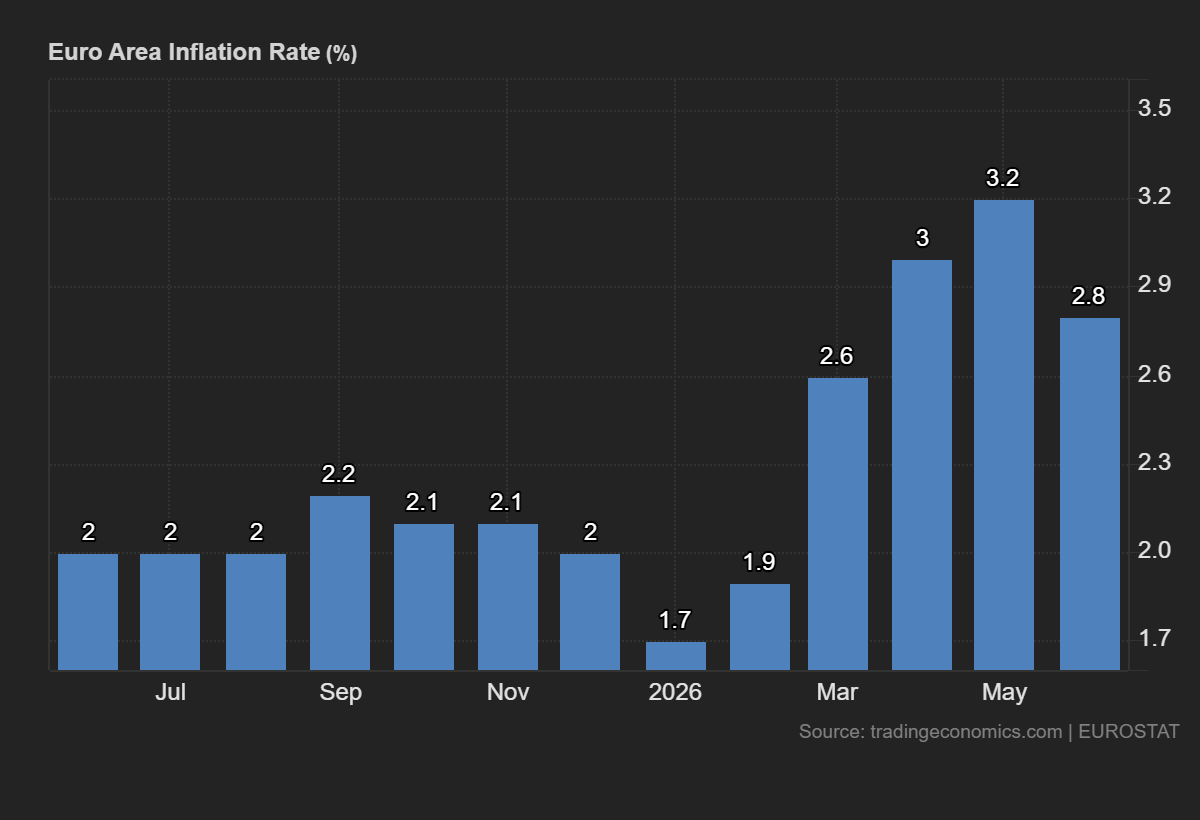
After having reached slightly below target at the beginning of 2026, inflation in the eurozone as elsewhere spiked from March onward as the effects of the blockade of oil from the Gulf became clear. Also like in some other major economies, inflation in the eurozone last month fell more than expected to 2.8%. While it remains above target, the ECB was among the first major central banks to act to hike rates, moving up last month for the first time in three years.
31 July’s flash inflation is a key release because it might strengthen or dampen expectations for a hike to 2.65% in September. Early estimates suggest that annual headline inflation in the eurozone might have risen this month to about 3%, but considering recent undershoots it’d be possible to see a smaller rise or possibly a decline. The euro’s reaction also depends on the situation on the chart as discussed below, though.
While overall growth in the USA has remained fairly robust in recent months considering the circumstances, the same can’t be said for the eurozone:
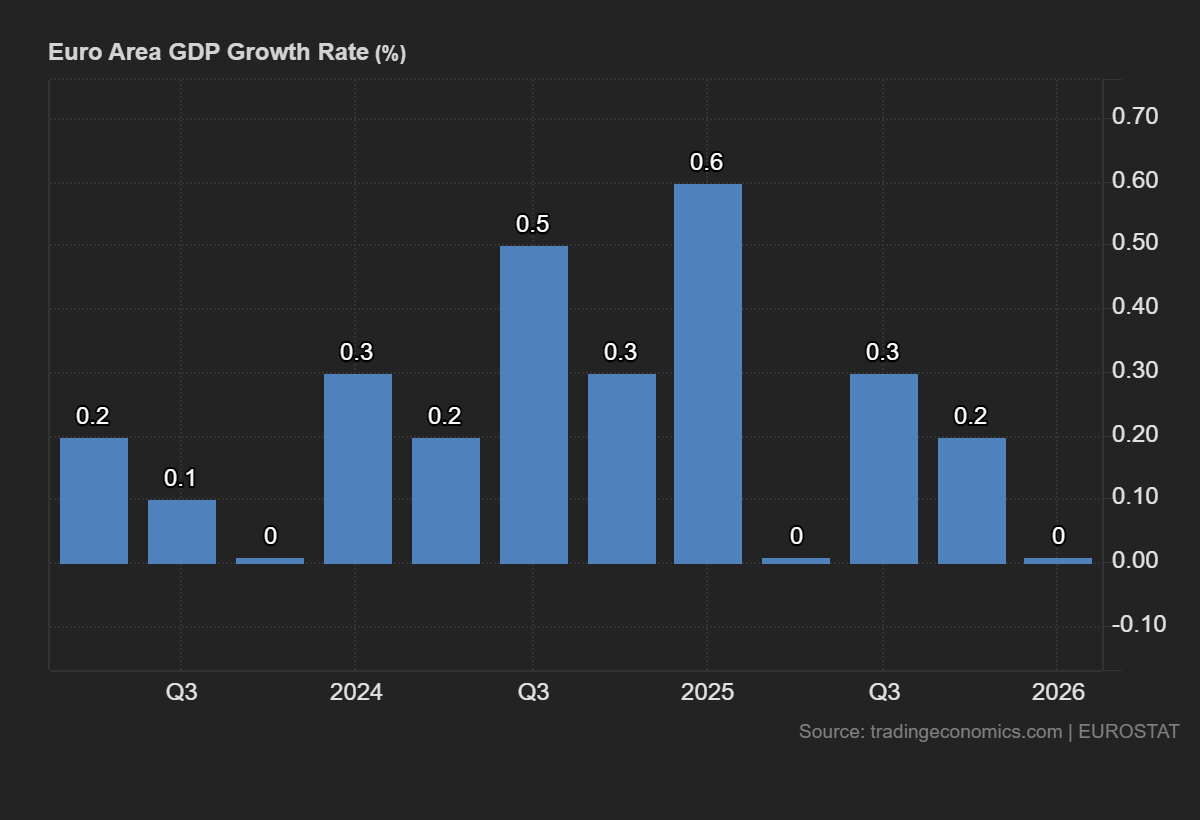
GDP growth has been generally weak for several years with three quarters of stagnation or near stagnation since 2023. The ECB’s job is to manage inflation but it’s also important for a central bank to avoid making economic conditions excessively difficult. The Fed has some room to move on rates without being seen as triggering a recession yet the risk of stagflation in the EU remains real.
30 July’s flash GDP growth for the second quarter in the eurozone has some early expectations of 0.1%. In the unlikely event of a significant positive surprise, participants might be more inclined to expect further hikes by the ECB, but given the current situation of inflation and GDP and likely outcomes in the next few weeks imminent further hikes seem questionable.
Slight decline by Euro-Pound after the ECB’s meeting
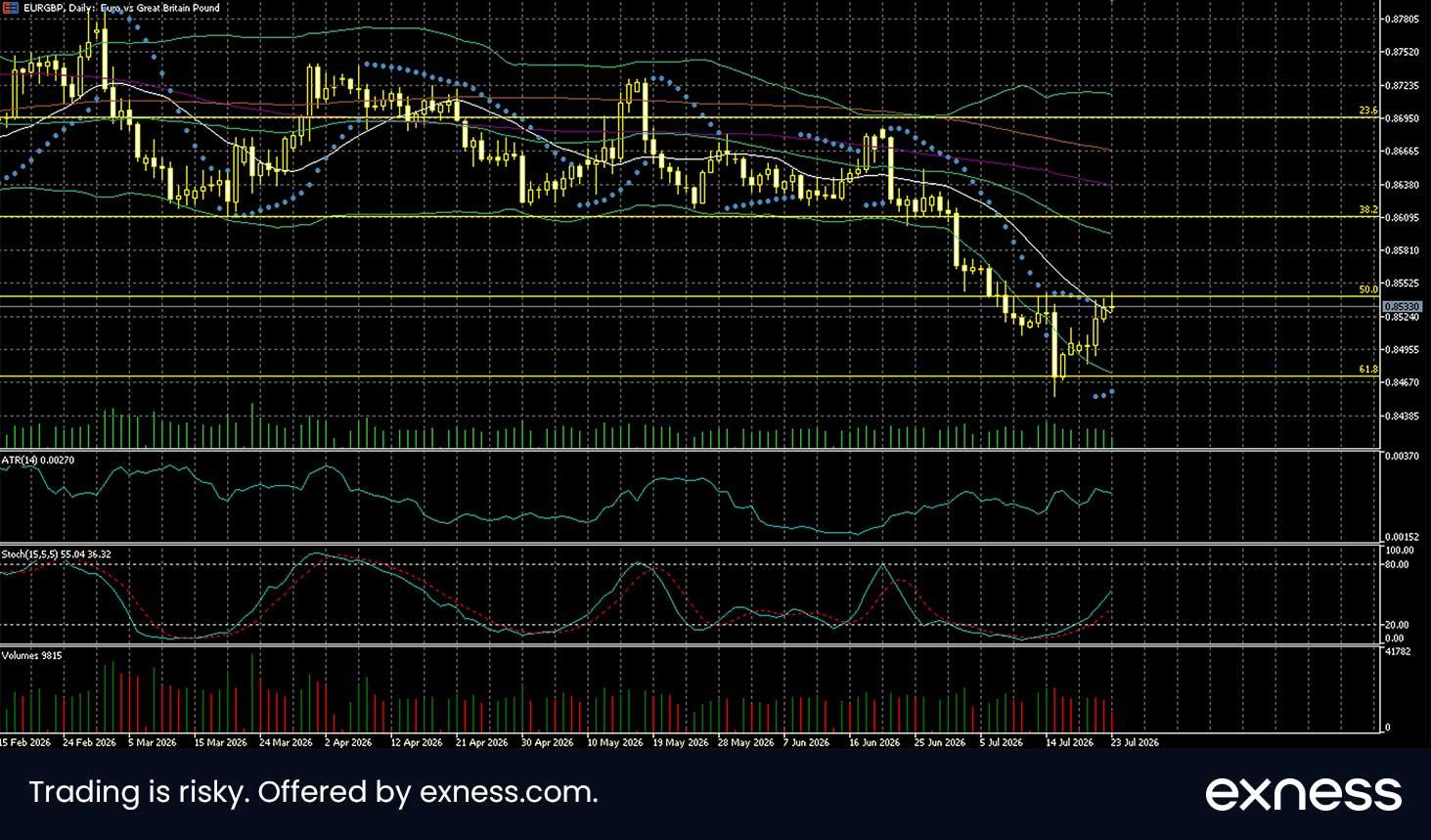
Euro-pound’s recent bounce seems to have paused as the common currency generally declined in the wake of the ECB’s meeting on 23 July. Recent economic data might seem to favour the pound with lower unemployment and higher growth in Britain compared to the eurozone while inflation is similar. Although participants had priced in a hike by the ECB in September, this seems less certain now, so there’s a possibility that the current difference in rates favouring the pound might persist into the autumn.
The 61.8% weekly Fibonacci retracement around 84.7p is a clear candidate for support given the bounce from there with moderate volume on 16 July and continuation upward since. The price has yet to break clearly through the 20 SMA around 85.2p, but if it does the next possible resistance in the medium term could be the 38.2% Fibo slightly above 86p although the 50 SMA from Bands might be a dynamic resistance.
With no strong change in volume or ATR within the last few weeks, the price could continue to gain depending on sentiment and particularly that around British politics with Andy Burnham’s government still fresh. Both the Fed and the BoE are due to meet in the next few days while the eurozone’s flash inflation and Q2 GDP on 30 and 31 July might give more hints as to the ECB’s next move (or lack thereof) in September.
Euro-Yen continues to push up
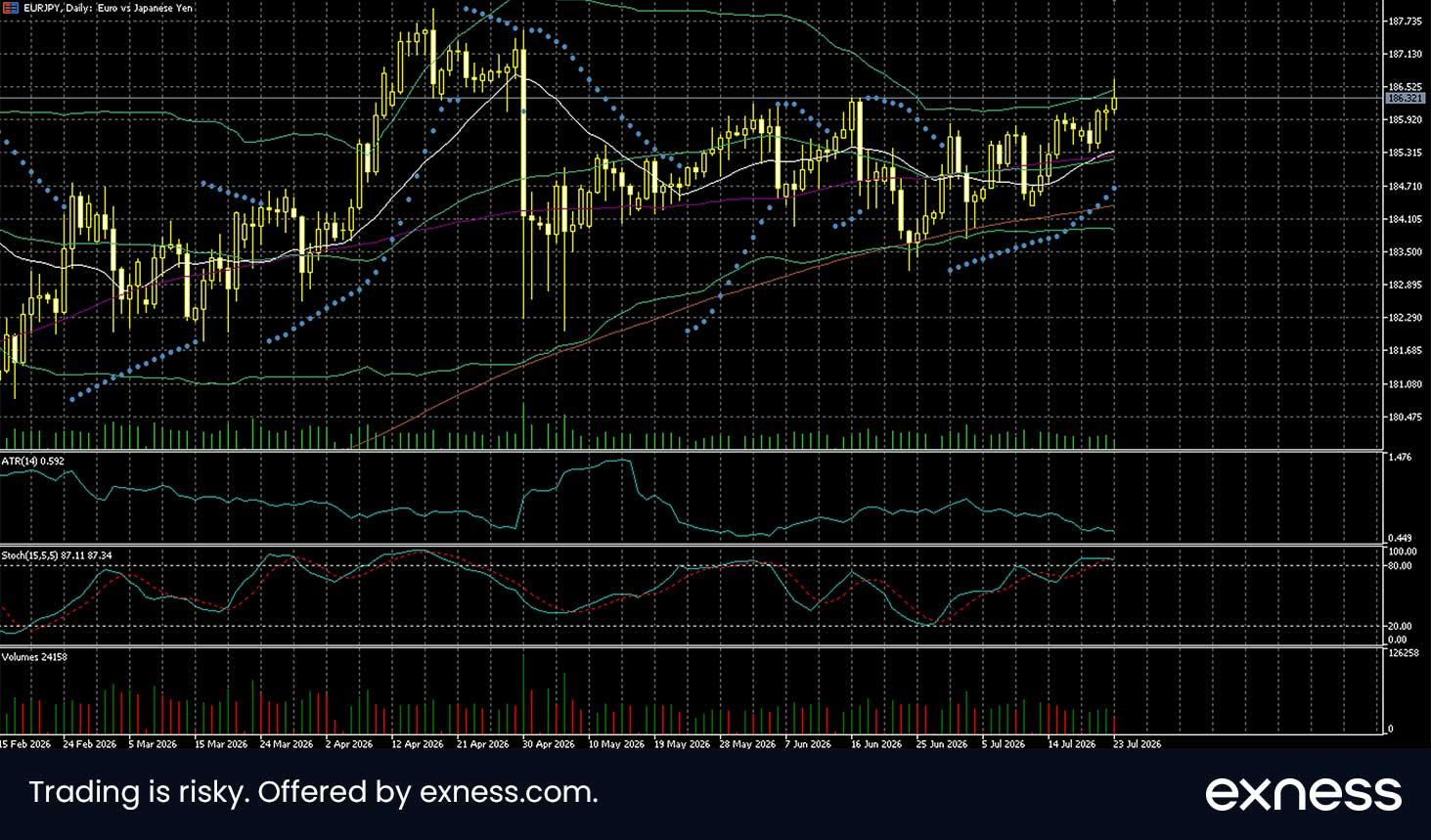
Euro-yen reached a high of around three months on 23 July after the ECB held rates but expectations for the next hike in September continued. The yen has made generally consistent losses against most major currencies in recent months as Japanese inflation and rates remain much lower than in other major economies and the BoJ’s intervention in April brought a very limited reprieve at huge cost. A hike by the BoJ on 31 July seems unlikely.
There’s no clear candidate for resistance on the daily chart apart from the latest high slightly below ¥188. However, both the slow stochastic and Bollinger Bands signal overbought, so momentum might die down for a while until the next possible move up in a few days. Volume doesn’t suggest an immediate strong continuation upward.
A retracement lower from here might be capped by the tightly bunched 20, 50 and 100 SMAs around ¥185.30, but the 200 SMA seems like a potentially strong dynamic support having been tested unsuccessfully twice on 24 June and 2 July. Traders are looking ahead to the Bank of Japan’s meeting and the eurozone’s flash inflation and GDP in the next few days, so volatility might pick up.
Author

Michael Stark
Exness
Michael has been investing since 2007 and trading CFDs since 2013. He favors considering both fundamental and technical analysis where possible, with a focus on swing and position trading.