Smoke beneath the spotlight: Earnings erode while the Fed takes fire

The Sweeney spike aside—American Eagle shares vaulting nearly 24% after President Trump called their Sydney Sweeney campaign “the ‘HOTTEST’ ad out there”—the deeper market current is less steamy and more strained. While the headlines feed off retail euphoria, the underlying macro tells a more brittle story.
For those watching earnings season as an economic barometer, there’s trouble brewing beneath the surface. Historically, it's hard to fall into recession when corporate profits are rising—but that's exactly where the tape looks wobbly now, once you adjust for the gravitational pull of Big Tech.
Strip out the Magnificent Six—Amazon, Apple, Alphabet, Meta, Microsoft, and Tesla (Nvidia reports EOM)—and look at operating performance across the remaining 264 non-financial, non-energy S&P 500 firms that have reported. Revenues are fine. But costs are misbehaving, and margins are getting squeezed. The trend in operating profit is unambiguously weak. And it’s not just a few bad apples: in consumer discretionary, nearly half the names posted falling profits; staples weren’t far behind.
That’s the top end of town. But zooming out to the broader economy, the situation may be more precarious. A rough reconstruction of national corporate profit trends—backing into estimates from GDP and personal income data—suggests Q2 profits barely grew year-on-year. That's a clear break from the mid-single-digit growth pace seen over the past few quarters.
If large-cap firms are still growing (albeit slowly), then it doesn’t take a leap to infer where the weakness is concentrated: small businesses. This aligns with deteriorating employment signals in the small-cap space and stagnation in business formation metrics. Nothing screams collapse—but the economic cushion that has buffered growth over the past year is wearing thin.
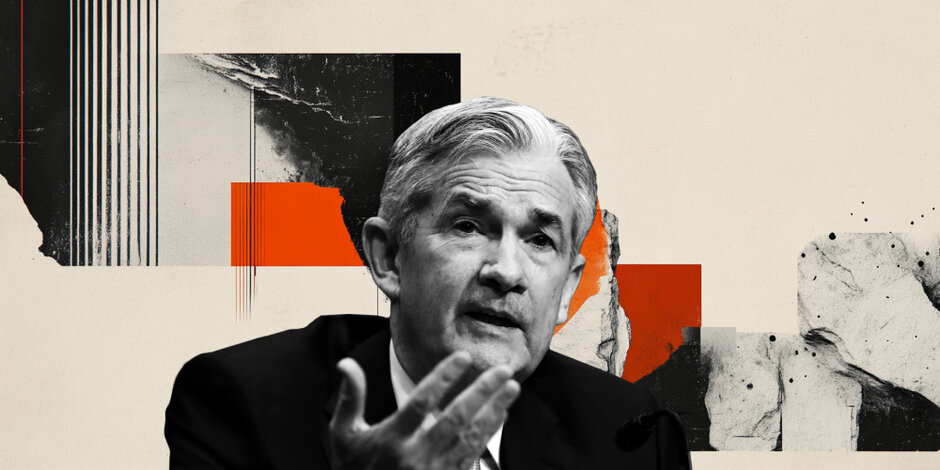
And then came the latest tremor from the Fed.
Governor Adriana Kugler resigned five months ahead of schedule, a move that landed with added weight given the week’s chaos: a soft jobs report, the controversial firing of the head of the Bureau of Labor Statistics, and now a fresh vacancy on the central bank’s board. The Fed is being surrounded, politically and symbolically.
If Trump uses this opening to insert a loyalist, markets may begin discounting the specter of politicized monetary policy. That means a softer dollar, a nudge lower in front-end rates, and a steeper long end on fears of inflation mismanagement. Not a wholesale repricing—but the first ripples of institutional tension.
Still, structurally, the Fed isn't easy to hijack. A single governor cannot override Powell or shift the FOMC’s direction alone. Even if the pick is a clear proxy for Trump’s economic vision, the majority of voting members remain outside that influence. For now.
But there is a theoretical doomsday lever. The Fed Board has veto power over regional bank leadership. In an extreme case, like-minded appointees could install sympathetic voices across the regional Feds, altering the FOMC’s composition. That’s unlikely—but no longer unimaginable.
Markets aren’t panicking. But they are beginning to hedge against institutional drift. As the S&P 500 dances near highs, the breadth of earnings growth narrows. As the dollar loses its swagger, concerns over policy integrity mount. And as noise around the Fed rises, even soft landings start to look like slippery terrain.
The party isn’t over. But the exits are being checked.
Author
Stephen Innes
SPI Asset Management
With more than 25 years of experience, Stephen has a deep-seated knowledge of G10 and Asian currency markets as well as precious metal and oil markets.