|

Slow boat from China: Implications of soaring shipping costs

Summary

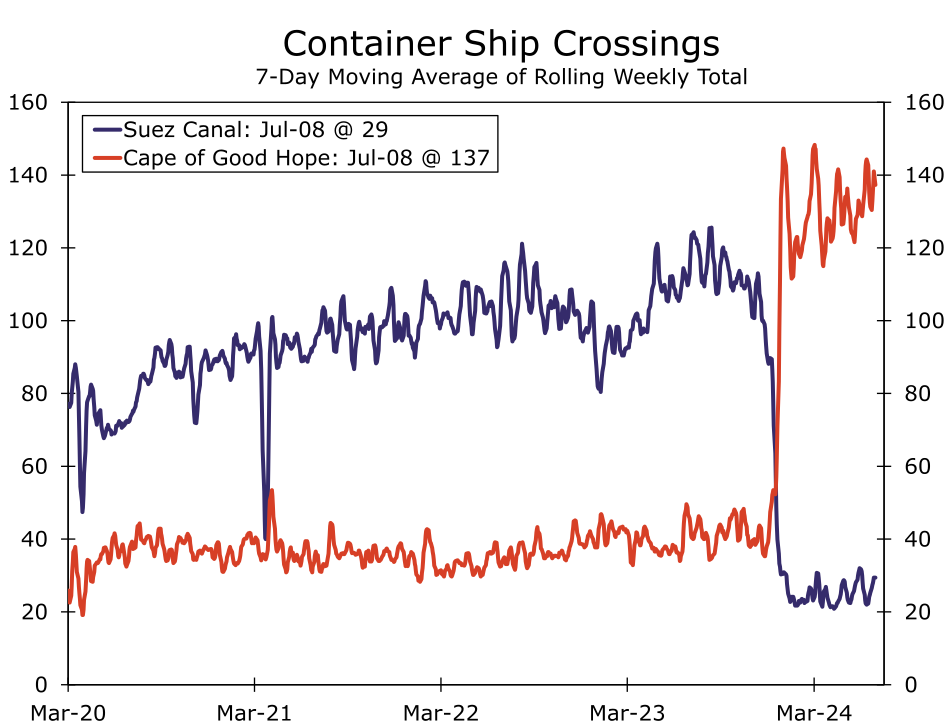
Red Sea attacks are increasing the time and cost of shipping, and the impact is felt far beyond the Asia–Europe trade route. That said, this is not a replay of the global supply chain crisis of 2021–2023. The absence of extreme shocks in both supply and demand relative to that period means that, although importers will continue to feel the pinch, higher shipping rates are unlikely to be fully passed on or to spur a rebound in inflation.

"Fate, it seems, is not without a sense of irony"

At the southern tip of Africa, the warm water from the Indian Ocean meets the cool current coming up from the Antarctic, resulting in stormy weather. When first encountered in 1488 by Portuguese explorer Bartolomeu Dias, he called it Cabo das Tormentas, or “Cape of Storms”. Portuguese King John II later changed the name to “Cape of Good Hope” to encourage exploration and give mariners faith they could reach India by sea. It worked. The Cape Sea Route became well traveled, and the cape itself became a significant port and waypoint for sailors traveling between Europe and Asia.

When the Suez Canal opened in 1869, it provided a much shorter route from the Mediterranean Sea to the Indian Ocean, making the long trip around Africa inefficient. Maybe Morpheus was right about fate. Houthi militant attacks on commercial ships going through the Bab al-Mandab Straight, which connects the Red Sea and the Gulf of Aden, have made travel toward the Suez Canal prohibitively dangerous. June saw the largest number of ships attacked since last December, when more vessels were moving through the area. The attacks have caused chaos in a globally important trade region and have been connected to a renewed rise in global shipping costs.
Download the Full Report!

Author

More from Wells Fargo Research Team
Share:

Editor's Picks

EUR/USD looks sidelined around 1.1850

EUR/USD remains on the back foot, extending its bearish tone and sliding towards the 1.1850 area to print fresh daily lows on Monday. The move lower comes as the US Dollar gathers modest traction, with thin liquidity and subdued volatility amplifying price swings amid the US market holiday.

GBP/USD flirts with daily lows near 1.3630

GBP/USD has quickly given back Friday’s solid gains, turning lower at the start of the week and drifting back towards the 1.3630 area. The focus now shifts squarely to Tuesday’s UK labour market report, which is likely to keep the quid firmly in the spotlight and could set the tone for Cable’s next move.

Gold battle around $5,000 continues

Gold is giving back part of Friday’s sharp rebound, deflating below the key $5,000 mark per troy ounce as the new week gets underway. Modest gains in the US Dollar are keeping the metal in check, while thin trading conditions, due to the Presidents Day holiday in the US, are adding to the choppy and hesitant tone across markets.

Bitcoin consolidates as on-chain data show mixed signals

Bitcoin price has consolidated between $65,700 and $72,000 over the past nine days, with no clear directional bias. US-listed spot ETFs recorded a $359.91 million weekly outflow, marking the fourth consecutive week of withdrawals.

The week ahead: Key inflation readings and why the AI trade could be overdone

It is likely to be a quiet start to the week, with US markets closed on Monday for Presidents Day. European markets are higher across the board and gold is clinging to the $5,000 level after the tamer than expected CPI report in the US reduced haven flows to precious metals.

XRP steadies in narrow range as fund inflows, futures interest rise

Ripple is trading in a narrow range between $1.45 (immediate support) and $1.50 (resistance) at the time of writing on Monday. The remittance token extended its recovery last week, peaking at $1.67 on Sunday from the weekly open at $1.43.

















