Silver rally gains steam: Here’s why $90 could be the next big target
March has been a terrible month for precious metals, and they were off to a poor start in April. Despite risk-aversion, investors lean on the Greenback and leave Silver and Gold out of their portfolios.
Well, it seems the time to sell the US Dollar has come.
Iran war coming to an end?
The headline sounds optimistic, but at least it seems to reflect the market’s sentiment. Silver surged to an almost one-month high near $80 in the American session on Tuesday, as market participants welcomed the latest United States-Iran headlines. Following failed negotiations over the weekend that resulted in US President Donald Trump deploying additional troops in the Middle East and the decision to close the Strait of Hormuz to Iranian tankers, a double blockage of the critical sea pass, hope returned.
Against investors' fears of a new escalation of the conflict, representatives from both sides announced a second round of negotiations taking place in the upcoming days. At the same time, Pakistan is doubling its efforts to bring peace to the Middle East, and alongside other countries from the region is calling to extend the ceasefire to 45-60 days.
It’s - almost all - about the war
But is it all about the war? A good chunk of the ongoing decline in the US Dollar (USD) is indeed linked to encouraging headlines suggesting the worst of the war may be over. But it’s not the only factor weighing on the Greenback. The next Federal Reserve (Fed) monetary policy meeting is barely two weeks away, and investors are already looking at what the US central bank may or may not do this time.
The upcoming Federal Open Market Committee (FOMC) should be the last under Chair Jerome Powell, as long as the Senate accepts Kevin Warsh's nomination before the next FOMC meeting scheduled for mid-June.
Chair Powell has refused to lower rates as President Trump demanded, and time proved him right, although for the wrong reasons. Powell & co were concerned the White House tariff policy would harm consumption, which it did, although to a lesser extent than feared. The Fed was walking on eggshells before the Oil War started, leading to fresh inflationary pressures in the US.
At this point, it’s worth remembering that inflation in the US has not hit the 2% Fed’s goal since 2021, and in fact, peaked at a near two-year high in February.
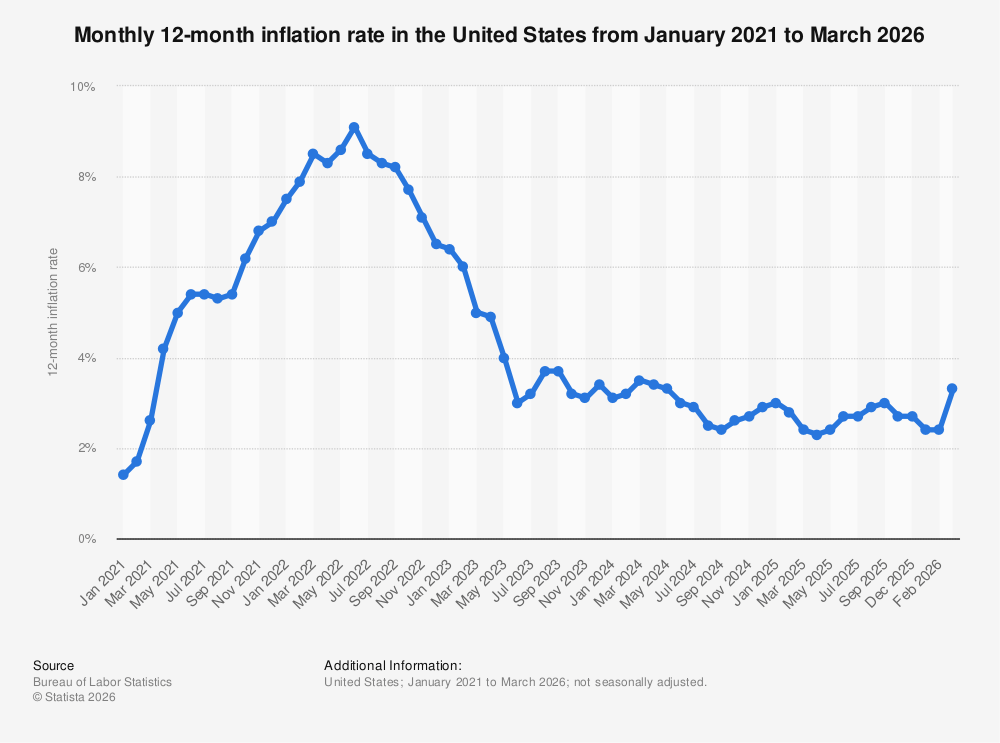
Source: US Bureau of Labor Statistics
The minutes from the latest FOMC meeting reflect what policymakers see: risks of inflation have increased, while a rate cut is still on the table for 2026, officials won’t hesitate to go in the exact opposite direction. Whereas they will go for rate hikes or not will depend on Trump’s foreign polices, which at this point don’t look rate-cut friendly.
Tariffs will continue to weigh on domestic prices, while the Middle East war is likely to maintain energy prices at current levels. The longer the war or even negotiations extend, the deeper the pain.
What does this mean for Silver?
Generally speaking, rate hikes translate into a stronger currency, but that won’t be the case if the Fed acts with urgency to tame inflation. The Fed has a schedule, and recent developments are interrupting it. Policymakers don’t like it, nor do market players.
The uncertainty generated by the war, the potential policy shift, and whatever Trump surprise has with tariffs is not only likely to undermine USD demand, but also boost that of precious metals.
The XAG/USD pair seems to have found an interim bottom at $61, the March monthly low. It has also trimmed half of its March losses in the first two weeks of April, and technically, the upward momentum keeps building.
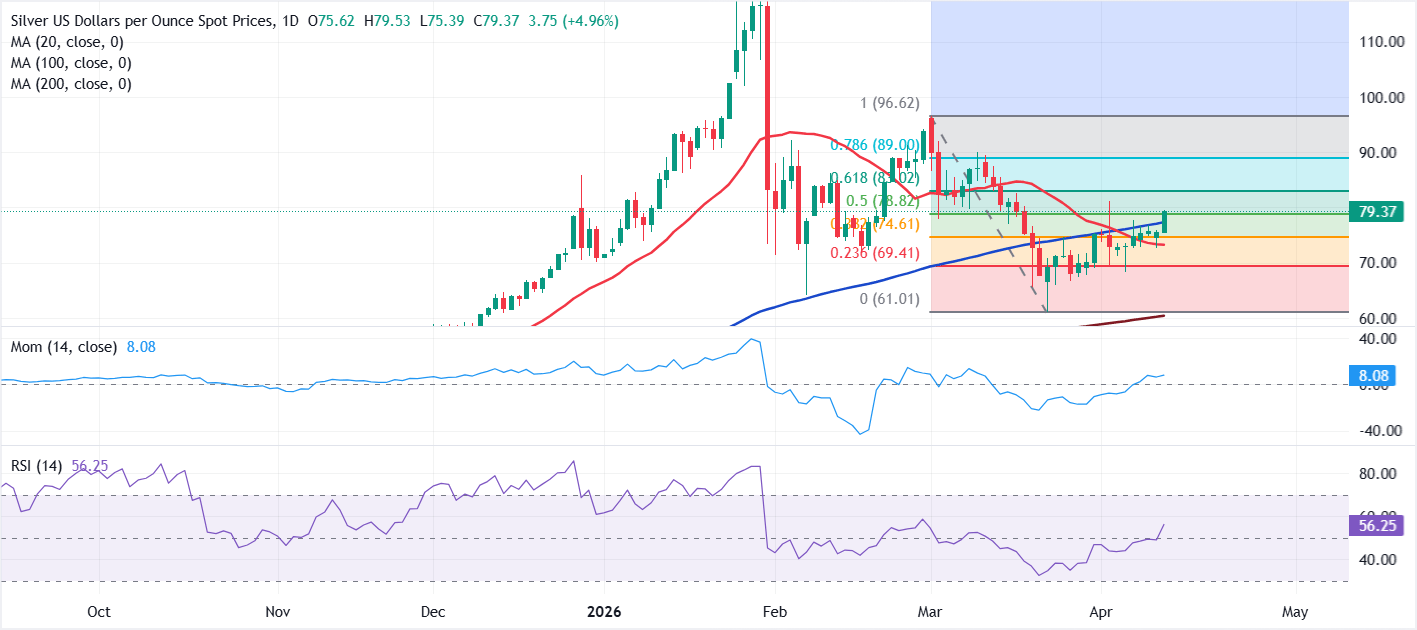
The fact that Silver recovered above a bullish 100 Simple Moving Average (SMA) adds to the bullish case. To confirm a firmer rally, buyers have to beat a critical threshold: the $81 area, where the pair has the 61.8% Fibonacci retracement of its March slump and a relevant intraday high. Once above it, there’s little in the way towards the $90 threshold, while above the latter, the March high at $96 comes next. A slide below the 38.2% Fibonacci retracement of the same slump at around $74 will harm buyers' conviction, but only once below the next Fibonacci support at $69, bulls will lose interest.
(This story was corrected on April 15 at 02:48 GMT to say in eighth paragraph that inflation in the US has not hit the 2% Fed’s goal since 2021, and in fact, peaked at a near two-year high in February, not two-week high.)
Author

Valeria Bednarik
FXStreet
Valeria Bednarik was born and lives in Buenos Aires, Argentina. Her passion for math and numbers pushed her into studying economics in her younger years.