Risk appetite improves, but the US consumer is flashing warning signs ahead of Jackson Hole

Risk is back on, but the US consumer is flashing warning signs ahead of Jackson Hole
It’s a risk-on day. As we mentioned earlier, stocks are rallying, led by a rebound in tech. The Nasdaq’s sell off in recent days had started to look like an anomaly, so a pullback is to be
expected, especially as we lead up to Nvidia’s results tomorrow evening.
Nvidia is higher by 1.8% today, and has broken back above the $210 mark. The recovery comes after its longest losing streak in 4 years. Nvidia’s shares had 7 days of consecutive losses. Considering the company is expected to post revenues of more than $92bn for last quarter, an extended sell off was unlikely to continue.
A limited rally in US stocks
The Dow Jones has lagged behind the Nasdaq so far today, and the breadth of the rally has been fairly narrow. While tech has led the recovery, 5 sectors are posting losses on the S&P 500. Consumer staples is leading the decliners, and is lower by more than 1%. This suggests that consumer-linked stocks remain under pressure even though bond yields and the oil price have fallen sharply today.
The US stock market recovery looks like it is all driven by expectations that Nvidia’s results will be a shot in the arm for the AI trade as we move towards the final month of Q3. This puts a lot of pressure on Jensen Huang to deliver.
Progress in reopening the Strait of Hormuz weighs on the oil price
The sharp decline in the oil price today saw Brent and WTI fall more than 3% each, Brent crude is now trading just above $87 per barrel, a drop of 4.6% this week, after Iran and Oman issued a joint statement on Tuesday. It said that the two countries had discussed a ‘phased framework’ that could help to reopen the Strait of Hormuz permanently, including the operation of a temporary corridor for safe passage for commercial vessels and the provision of relevant maritime security.
We have been here before, but now that the US has tightened the screws on Iran with economic sanctions, and with the US Midterms around the corner, there could be more impetus for the US and Iran to find a deal.
Why are US consumer stocks faltering?
The interesting thing is that the global economy has been extremely resilient to the spike in oil prices for most of this year. However, now that the oil price could retreat as we move into Autumn, consumer stocks, especially in the US, seem to be capitulating. Maybe those weak payrolls numbers in the US mean something?
Oil prices and the bond market
The sharp drop in bond yields is also worth noting, especially as we lead up to Jackson Hole, the central bankers’ conference, which starts on Friday. The US 10-year Treasury yield is lower by 5bps today, in the UK the 10-year yield is down 7bps. This suggests that UK bond yields remained closed linked to movements in the oil price. The Chancellor will be hoping that the movement in the oil price continues to trend lower to reduce UK borrowing costs ahead of October’s Budget. The PM has already touted the potential for more tax rises in the coming months, which could knock already fragile UK economic confidence.
Why US consumer stocks matter for Warsh
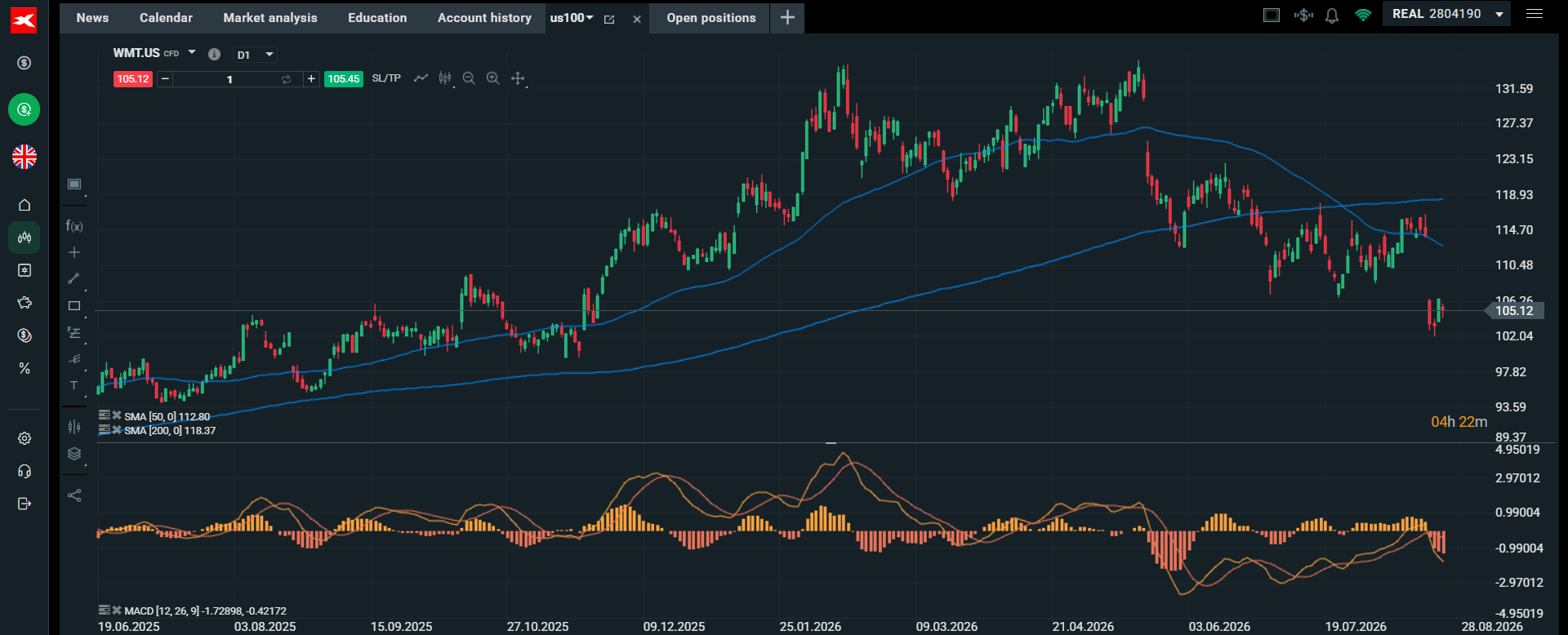
Interestingly, as the market ponders what tone Kevin Warsh will strike during his first Jackson Hole speech, he may be swayed more by the poor performance of consumer stocks and the labour market rather than inflation concerns. Ofcourse, we need to see how core PCE fares for July, which will be released tomorrow, but the weak performance of Walmart, Target, Deckers and Casey’s General Stores could be front and centre of Warsh’s mind in the coming days.
Weakness in the consumer sector, along with an escalating trade war between the US and Canada, which has seen both sides slap tariffs on each other in recent days, is keeping the dollar subdued. However, the drop in bond yields and the easing of fiscal concerns due to the falling oil price and the Treasury’s $1 trillion war chest to stabilize the Treasury market, is knocking precious metals. Platinum is lower by more than 1%, and gold is down a notch after earlier recording a 3-month high.
Overall, the recovery in the AI trade is to be expected as we lead up to Nvidia’s earnings report. However, the most interesting development in markets as we lead up to Jackson Hole is not what the oil price is doing, but rather what is happening with US consumer stocks.
Chart 1: Walmart falls to its lowest level in 10 months
Source: XTB
Author

Kathleen Brooks
XTB UK
Kathleen has nearly 15 years’ experience working with some of the leading retail trading and investment companies in the City of London.
















