RBNZ Interest Rate Decision Preview: Holding on the hold
- The Reserve Bank of New Zealand is expected to keep the OCR unchanged at 5.5% in August.
- The Kiwi is poised for stability but could react sharply to any surprises.
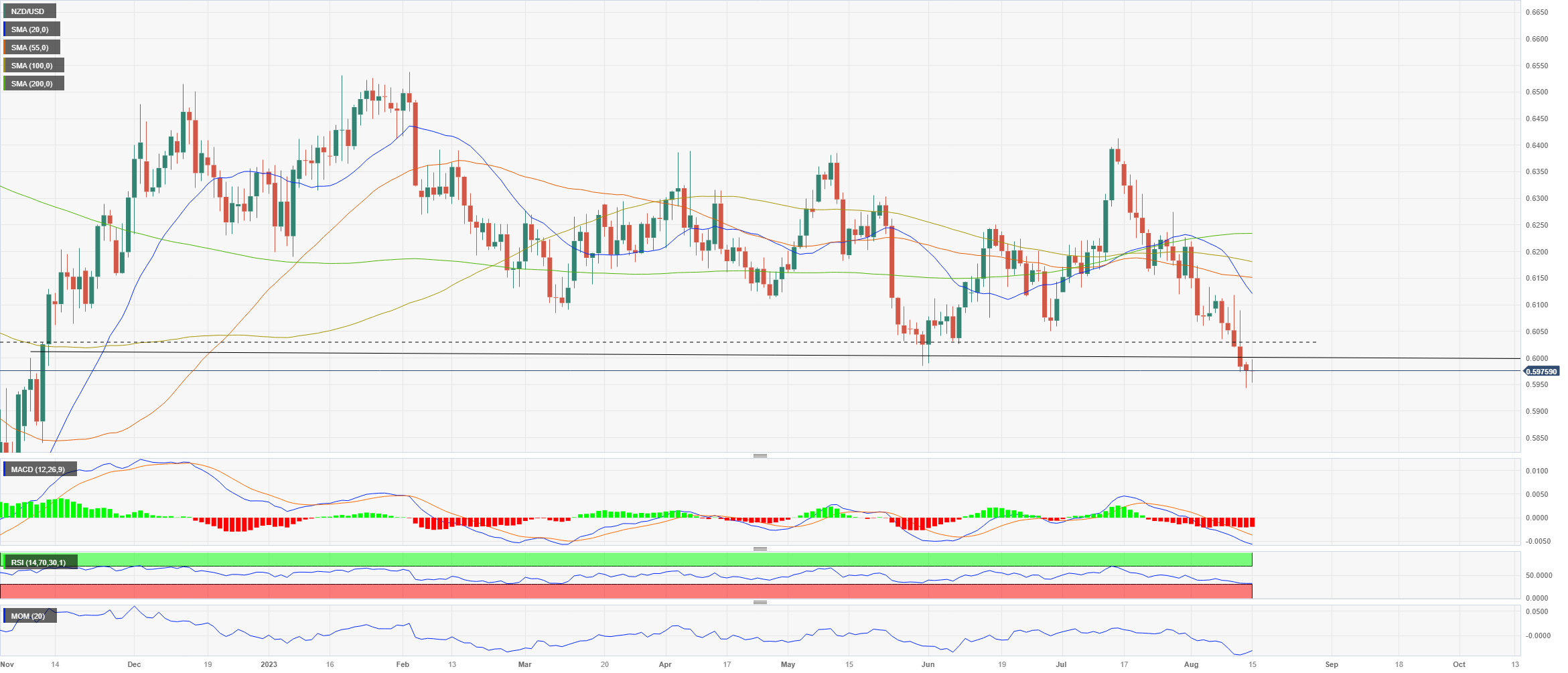
- NZD/USD maintains a bearish bias but appears to be setting up for a potential correction.

On Wednesday, August 16th, the Reserve Bank of New Zealand (RBNZ) will announce its decision on monetary policy. It is expected to keep the Official Cash Rate (OCR) unchanged at 5.5%. The central bank will release its Monetary Policy Statement, including new macro forecasts, and there will be a press conference with Governor Adrian Orr and other members of the Monetary Policy Committee.
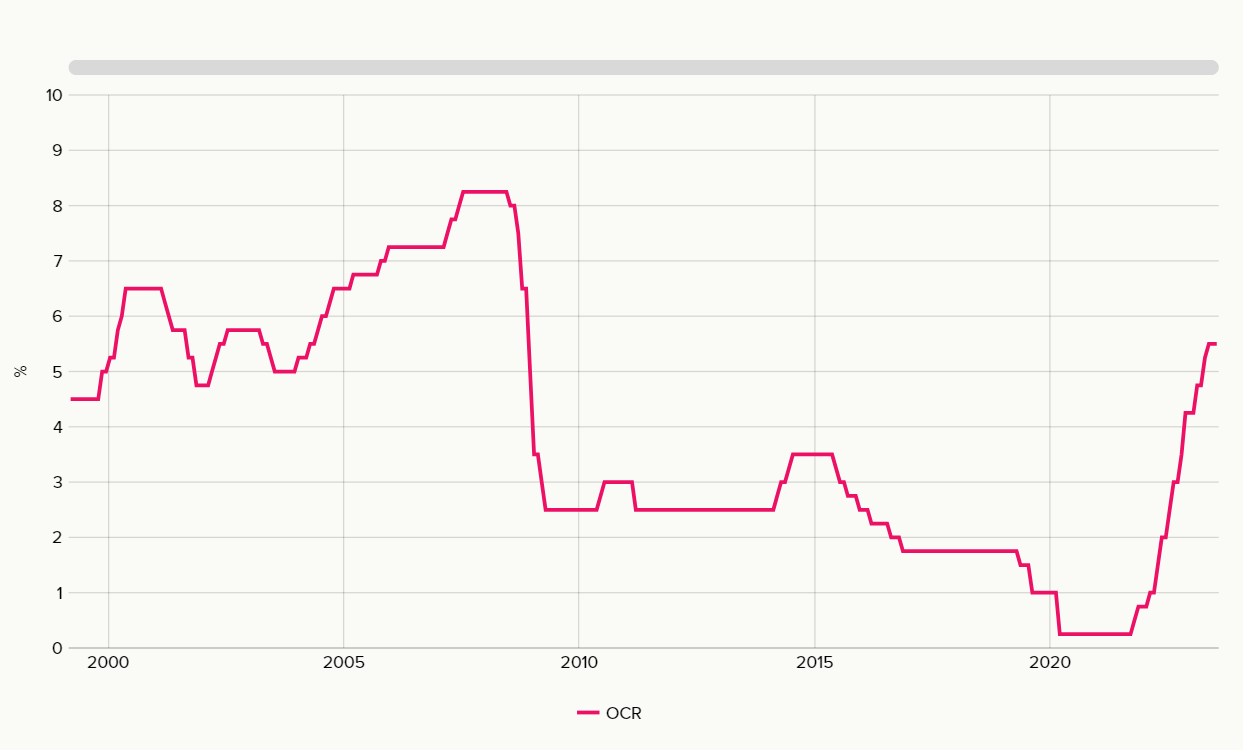
Official Cash Rate - Source: RNBZ
At the last meeting on July 12th, the RBNZ left the OCR unchanged at 5.5% as widely expected. It was the first hold since the bank started its tightening cycle in 2021. The statement contained little changes from the previous one. It noted that interest rates "are constraining spending and inflation pressures as anticipated and required." The central bank acknowledged that the outlook for the housing market "has become more balanced" and house prices "have returned to more sustainable levels." The RBNZ reiterated that "interest rates will need to remain at a restrictive level for the foreseeable future to ensure consumer price inflation returns to the 1 to 3% target range while supporting maximum sustainable employment."
During the second quarter, the inflation rate reached 6.0% (annual), in line with the central bank's projection of 6.1%. For now, the questions regarding the RBNZ are not when it can raise or cut rates, but for how long rates will remain at the peak. The central bank is expected to keep rates unchanged on Wednesday and at the next meeting. The interest rate market shows less than a 10% probability of a rate hike in October and around 30% for November.
What happens if the RBNZ surprises?
The RBNZ is unlikely to make changes, and any surprise could come from the statement and a change in the forward guidance or the macroeconomic forecasts. At this point, the surprise could be in either direction, with optimistic or pessimistic forecasts, or by offering a hawkish or dovish interest rate outlook.
A positive for the Kiwi would be if the RBNZ opens the door to a rate hike or makes an implicit commitment to further monetary policy tightening. Such a scenario should temporarily strengthen the New Zealand Dollar against its main rivals.
If the RBNZ suggests that the time for cutting rates has approached or anything close to that, the Kiwi will likely suffer significantly, considering the current context for the currency and the divergence with what other central banks are doing.
NZD/USD outlook with the Reserve Bank of New Zealand
The NZD/USD weakened modestly after the July RBNZ decision, but ended the day sharply higher on the back of a weaker US Dollar following the US Consumer Price Index reading for June. The pair peaked two days later at 0.6411, the highest level since February, and then started a descending move that is still ongoing.
The pair has recently broken below 0.6030 and is testing levels under 0.6000, trading at the lowest since November of last year. A recovery above 0.6030 would alleviate the bearish pressure. The Kiwi would need a daily close above 0.6120 (20-day Simple Moving Average) to gain support for a significant recovery.
On the contrary, while under 0.6000, more losses seem likely, with the next strong support around 0.5870. Technical indicators are starting to turn to the upside, suggesting some correction or consolidation might be on the cards. In the unlikely scenario of a surprise from the RBNZ, the correction could either be averted or fueled.
Author

Matías Salord
FXStreet
Matías started in financial markets in 2008, after graduating in Economics. He was trained in chart analysis and then became an educator. He also studied Journalism. He started writing analyses for specialized websites before joining FXStreet.