|

RBA: Past peak inflation?
The RBA thinks it has reached peak inflation and is citing monthly CPI data suggesting that inflation has peaked. Remember going into the meeting we pointed out that the headline and core inflation readings were still climbing and there was not an obvious sign of peaking. This is significant because the RBA sees signs of inflation peaking and is the main reason for the dovish reaction to the latest decision.

The RBA was widely expected to hike by 25bps which it did bringing rates to 3.60%. However, confidence regarding inflation showing signs of peaking has now seen a reduction in peak rate expectations. The terminal rate is now seen at 4.00% by STIR markets:
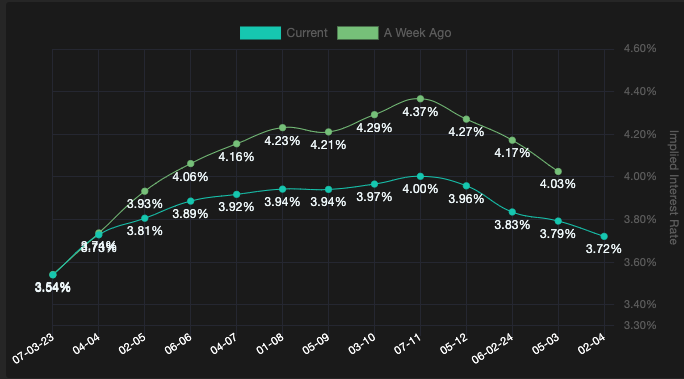
Chart

Has inflation really peaked?

Shortly after the meeting Westpac’s Bill Evans forecasts, in contrast, to STIR markets, that the RBA will still need to hike in April and May. Bill Evans noted the inflation outlook is still too high and it is too soon to pause in April. So, this means that incoming inflation data will be absolutely crucial for the Australian dollar moving forward. High inflation prints will once again prompt calls for a more aggressive RBA that would lift the AUDNZD pair. So, incoming inflation data is very important.

The main takeaways

The main point to take from the RBA monetary policy statement is that the RBA still sees the need for further rate hikes, but it is uncertain about how tight the labor market is, how households will manage with higher rates, and the actual level inflation will settle at. Furthermore, the RBA is uncertain about the path of the global economy and how other central banks’ hiking actions will impact it. So, moving forward to look for AUD moves keep an eye on labour data, inflation data, Chinese data, and US monetary policy.
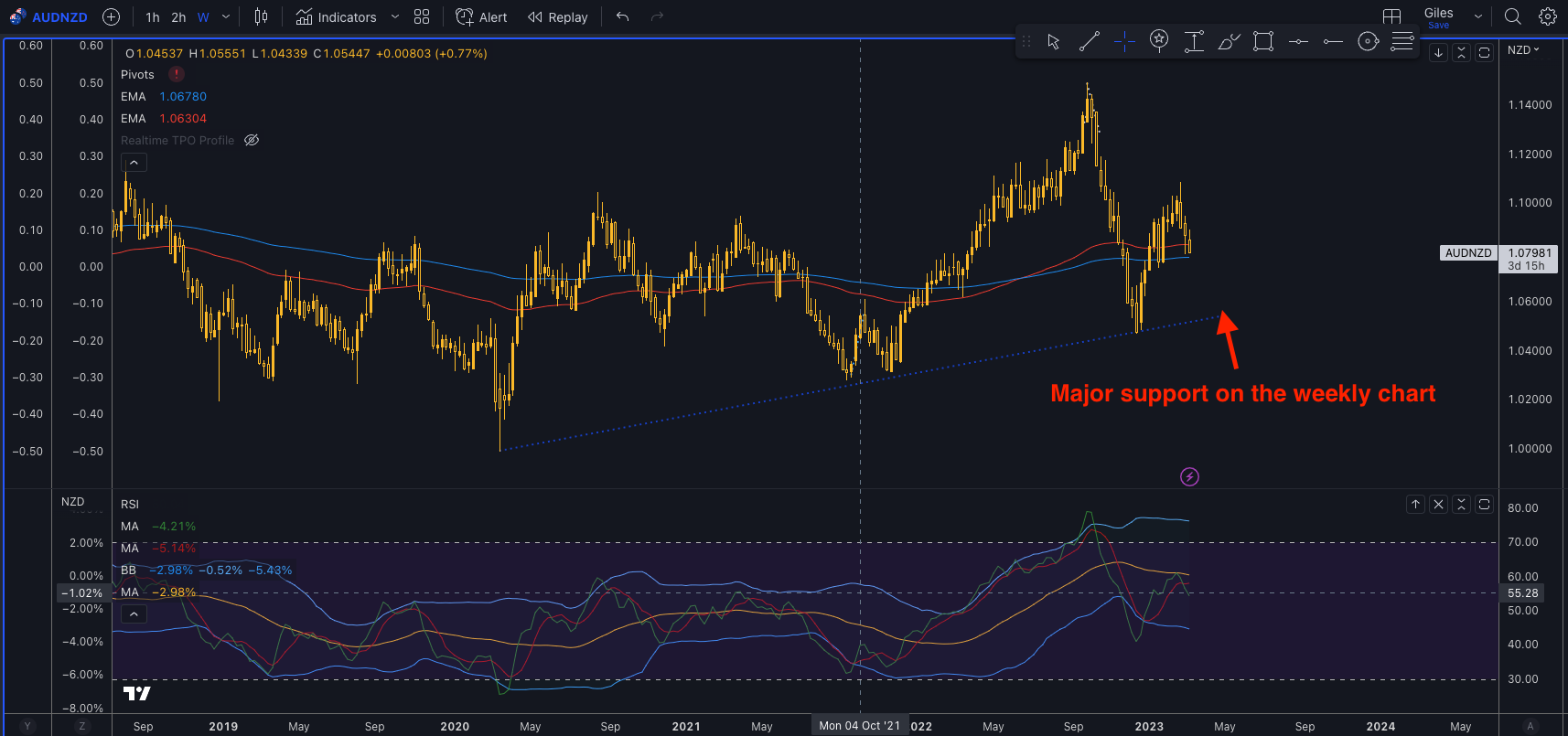
AUDNZD

Learn more about HYCM


Author

Giles Coghlan LLB, Lth, MA

Giles is the chief market analyst for Financial Source. His goal is to help you find simple, high-conviction fundamental trade opportunities. He has regular media presentations being featured in National and International Press.


More from Giles Coghlan LLB, Lth, MA
Share:

Markets move fast. We move first.

Orange Juice Newsletter brings you expert driven insights - not headlines. Every day on your inbox.

By subscribing you agree to our Terms and conditions.

Editor's Picks

EUR/USD bounces toward 1.1750 as US Dollar loses strength

EUR/USD returned to the 1.1750 price zone in the American session on Friday, despite falling Wall Street, which indicates risk aversion. Trading conditions remain thin following the New Year holiday and ahead of the weekend, with the focus shifting to US employment and European data scheduled for next week.

GBP/USD nears 1.3500, holds within familiar levels

After testing 1.3400 on the last day of 2025, GBP/USD managed to stage a rebound. Nevertheless, the pair finds it difficult to gather momentum and trades with modest intraday gains at around 1.3490 as market participants remain in holiday mood.

Gold trims intraday gains, approaches $4,300

Gold retreated sharply from the $4,400  area and trades flat for the day in the $4,320 price zone. Choppy trading conditions exacerbated the intraday decline, although XAU/USD bearish case is out of the picture, considering growing expectations for a dovish Fed and persistent geopolitical tensions.

Cardano gains early New Year momentum, bulls target falling wedge breakout

Cardano kicks off the New Year on a positive note and is extending gains, trading above $0.36 at the time of writing on Friday. Improving on-chain and derivatives data point to growing bullish interest, while the technical outlook keeps an upside breakout in focus.

Economic outlook 2026-2027 in advanced countries: Solidity test

After a year marked by global economic resilience and ending on a note of optimism, 2026 looks promising and could be a year of solid economic performance. In our baseline scenario, we expect most of the supportive factors at work in 2025 to continue to play a role in 2026.

Crypto market outlook for 2026

Year 2025 was volatile, as crypto often is.  Among positive catalysts were favourable regulatory changes in the U.S., rise of Digital Asset Treasuries (DAT), adoption of AI and tokenization of Real-World-Assets (RWA).












