Rate of contraction exceeds the global financial crisis

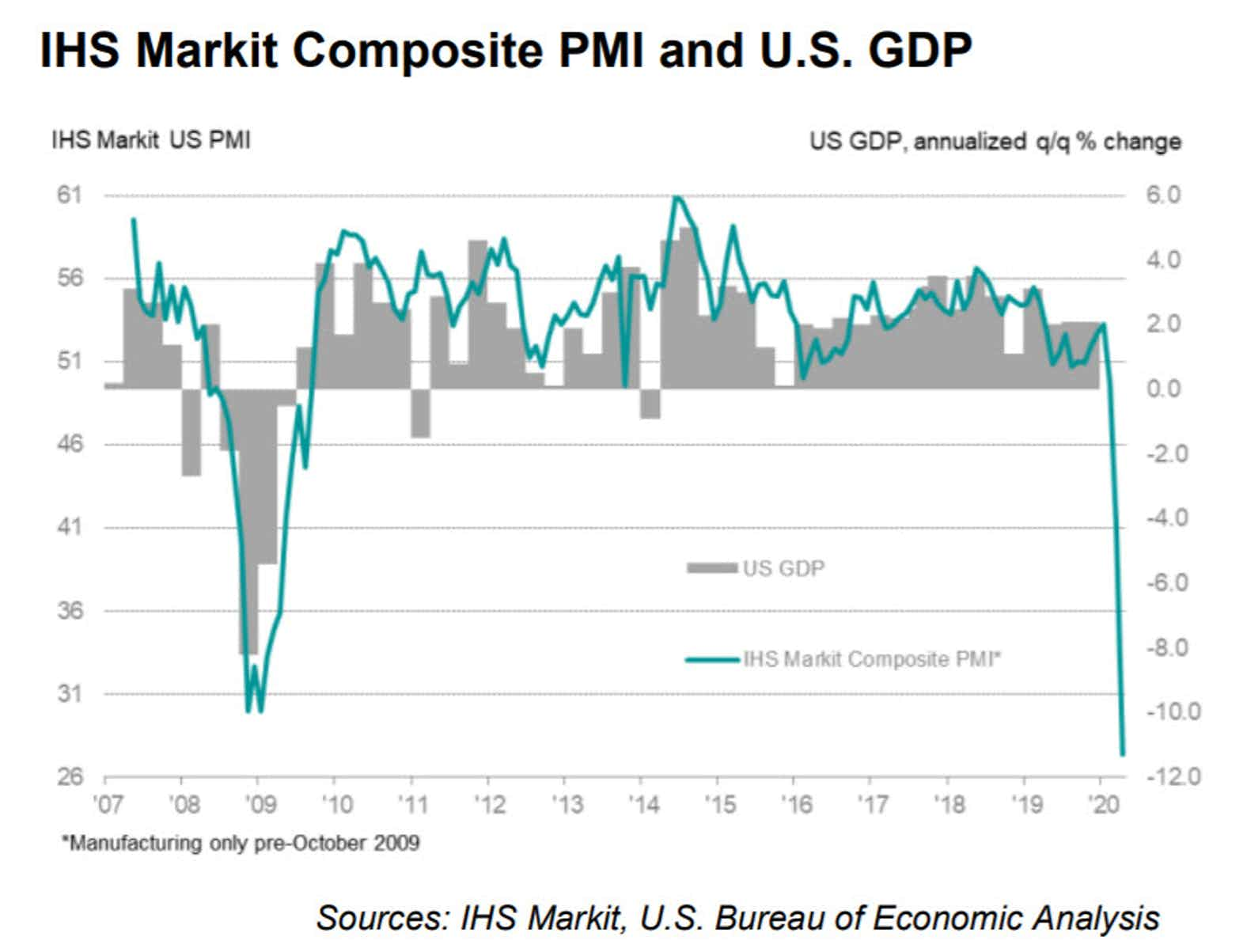
The US is suffering the fastest deterioration in operating conditions for over 11 years.
Markit reports Output Contracts at Fastest Pace in Survey History amid COVID19 pandemic .
Key Findings
- Flash U.S. Composite Output Index at 27.4 (40.9 in March). New series low.
- Flash U.S. Services Business Activity Index at 27.0 (39.8 in March). New series low.
- Flash U.S. Manufacturing PMI at 36.9 (48.5 in March). 133-month low.
- Flash U.S. Manufacturing Output Index at 29.4 (46.5 in March). New series low.
Adjusted for seasonal factors, the IHS Markit Flash U.S. Composite PMI Output Index posted 27.4 in April, down from 40.9 in March, to signal the fastest reduction in private sector output since the series began in late-2009.
Services companies registered the steepest rate of decline in the survey’s history, while manufacturers recorded the sharpest fall in sales since the depths of the financial crisis in early-2009.
The cancellation and postponement of orders led firms to reduce their workforce numbers at a rate far exceeding anything seen previously over the survey history at the start of the second quarter.
Chris Williamson, Chief Business Economist Comments
- “The COVID-19 outbreak dealt a blow to the US economy of a ferocity not previously seen in recent history during April. The deterioration in the flash PMI numbers indicates a rate of contraction exceeding that seen even at the height of the global financial crisis, with jobs also being slashed at a rate far exceeding anything previously recorded by the survey.”
- “The large swathe of non-essential business that has been shut down temporarily amid efforts to contain the virus means the blow has been most heavily felt in the service sector, and especially for consumer facing companies in the recreation and travel industries. Those companies still actively trading meanwhile reported the steepest drop in demand seen since data were first available, and are also struggling against twin headwinds of staff shortages and supply chain delays.”
- “The scale of the fall in the PMI adds to signs that the second quarter will see an historically dramatic contraction of the economy, and will add to worries about the ultimate cost of the fight against the pandemic.”
Still Actively Trading
Comment #2 is interesting: "Those companies still actively trading..." implies Markit was unable to reach some companies.
What's Next?
On March 23, I wrote Nothing is Working Now: What's Next for America?
I noted 20 "What's Next?" things.
Covid-19 Recession Will Be Deeper Than the Great Financial Crisis
On April 1, I commented, the Covid-19 Recession Will Be Deeper Than the Great Financial Crisis. Do not expect a V-shaped recovery.
Forever Changed
- More teleconferencing and fewer corporate lunches
- Less air travel, hotels, and car rentals at the personal and business level
- More work at home
- More do-it-yourself haircuts, nails, lawns, etc.
- Fewer car purchases
- Fewer home purchases
- Accelerated online shopping and more mall closures
The knock on impacts of all of those means more bankruptcies and less employment..
The Markit report and comments from Chris Williamson lends support for my views.
Note: In case you missed the announcement, I am now on TheStreet.com/Mishtalk
The redirect is automatic and there will be no lost articles or lost comments to articles. My "room" on TheStreet will remain free of charge.
Mish
Author

Mike “Mish” Shedlock's
Sitka Pacific Capital Management,Llc
Mike “Mish” Shedlock is a registered investment advisor for SitkaPacific Capital Management.