Precious metals tumble as war re-escalation revives Oil risks

Gold and silver are under pressure after the most serious escalation between Israel and Iran since April’s ceasefire.
i. Israel and Iran exchanged strikes, marking the most significant direct flare-up between both sides since the ceasefire.
ii. Israel reportedly struck targets in central and western Iran, including the Mahshahr petrochemical complex in southwestern Iran.
iii. Iran responded with missile attacks on Israeli targets, with air defence systems activated across Israel.
iv. Yemen’s Houthi forces announced a ban on Israeli maritime navigation in the Red Sea, stating that Israeli-linked vessels would be considered military targets.
v. Israel also resumed strikes around Beirut, raising questions about the durability of the recent Lebanon ceasefire.
For markets, the concern is not just the military activity itself. The developments involve energy infrastructure, shipping routes, and oil supply, which is why crude oil immediately became one of the most important assets to watch.
Important caveat
For now, I am treating the current backdrop as bearish for precious metals and supportive for oil. However, markets have not fully digested the latest developments, and the news cycle remains extremely fluid.
At the time of writing, at the beginning of the London session on 8 June, neither President Trump nor the Israeli government has provided substantial forward guidance following the latest exchange of strikes.
Any signs of de-escalation, renewed negotiations, or confirmation that the attacks were limited in scope could quickly unwind some of the risk premium currently being priced into oil.
Gold and Silver lose long-term trend support
Gold and silver have both closed below their daily 200 EMA for the first time since the Q1 advance.
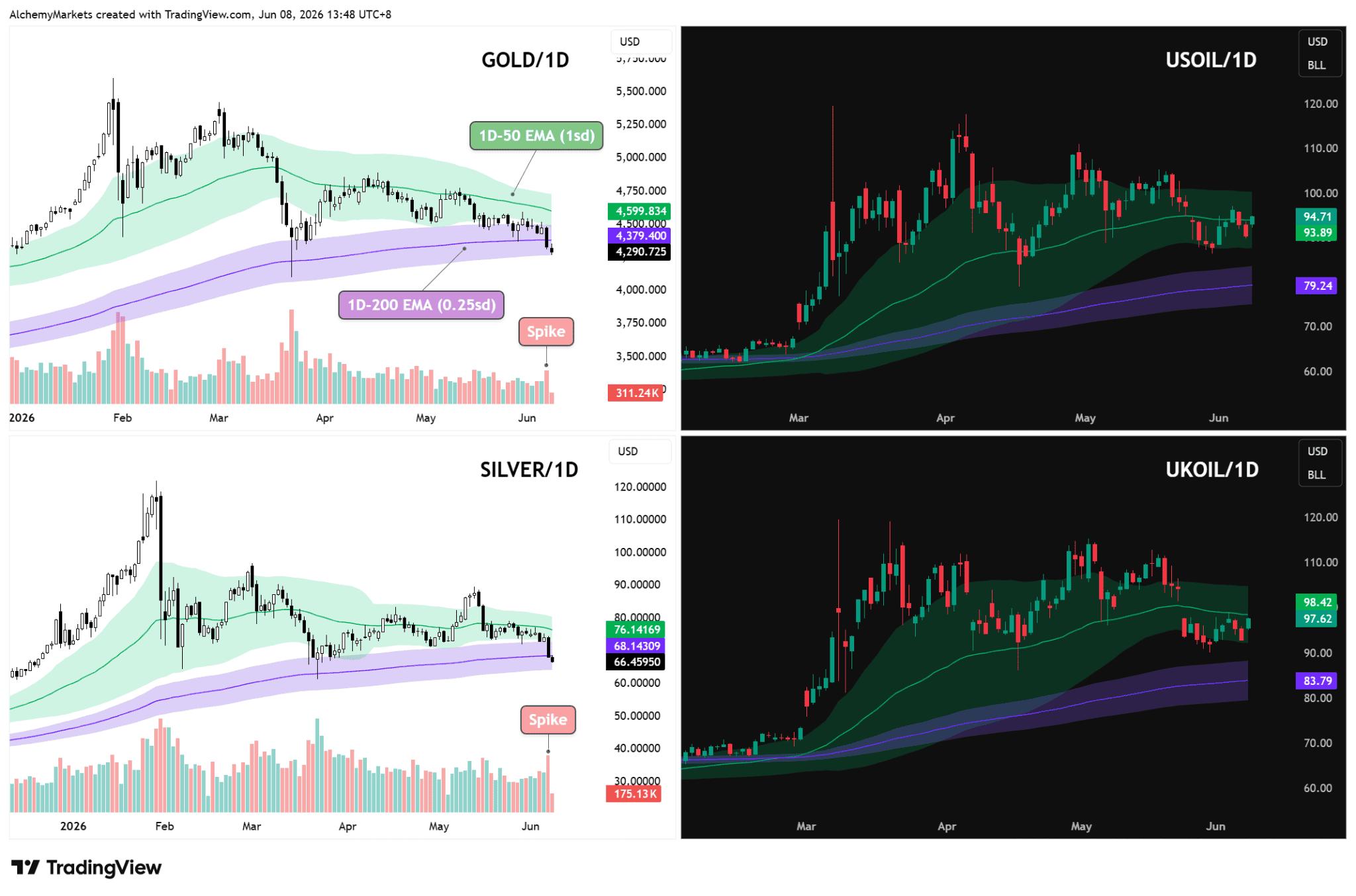
Price remains inside the broader 0.25 standard deviation band surrounding the moving average, so the entire support zone has not fully broken yet. Even so, a confirmed daily close beneath the 200 EMA is not something to dismiss lightly.
Volume also increased noticeably during the breakdown. This can sometimes signal exhaustion, but neither gold nor silver has produced a meaningful rejection back above support. Until that changes, the break remains valid.
The next area to watch is the 200 EMA band itself. If price drops below it, and struggles to reclaim it, the band could begin acting as resistance.
Oil is included in the chart for context – notice how oil gapped up on war re-escalation while gold and silver are losing support. Additionally, WTI and brent crude oil continues to hold above its longer-term trend structure. That difference tells us where market attention currently sits.
Oil is feeding back into the rates story
Gold normally benefits from geopolitical uncertainty, so why isn’t gold, and by extension, silver, rising on war re-escalation?
The problem is that this particular escalation is feeding directly into oil prices and inflation concerns. When energy infrastructure becomes part of the story, markets start thinking about inflation rather than safe-haven demand. Higher oil prices increase the risk that inflation remains elevated, which in turn makes it harder for central banks to justify aggressive rate cuts.
That is already becoming a challenge for markets. Last week’s stronger-than-expected US jobs report reduced confidence that the Federal Reserve would be cutting rates aggressively anytime soon. Oil moving higher into CPI week only adds another complication.
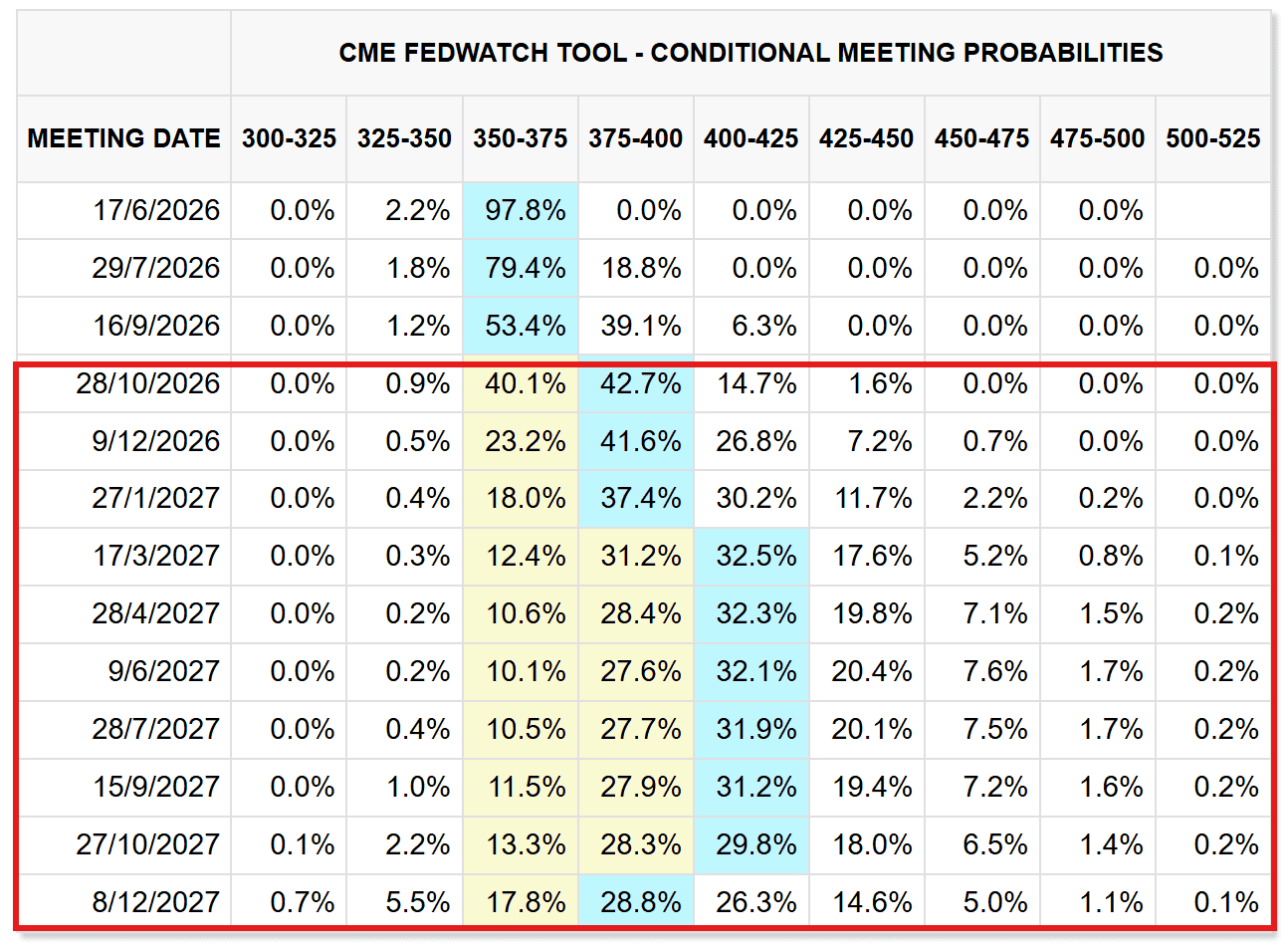
Fed Funds futures continue to show traders becoming less confident that policy easing will arrive as quickly as many expected earlier in the year, with expectations for rate hikes taking dominance as early as October.
For gold and silver, that creates an uncomfortable backdrop. Precious metals generally perform best when markets are pricing lower yields, easier policy, and a weaker dollar. Current conditions are moving in the opposite direction.
CPI is the next major test
Attention now shifts to Wednesday’s US CPI report.
Markets expect headline inflation to rise to 4.0% year-over-year from 3.8%, while Core CPI is expected to increase to 2.9% from 2.8%.
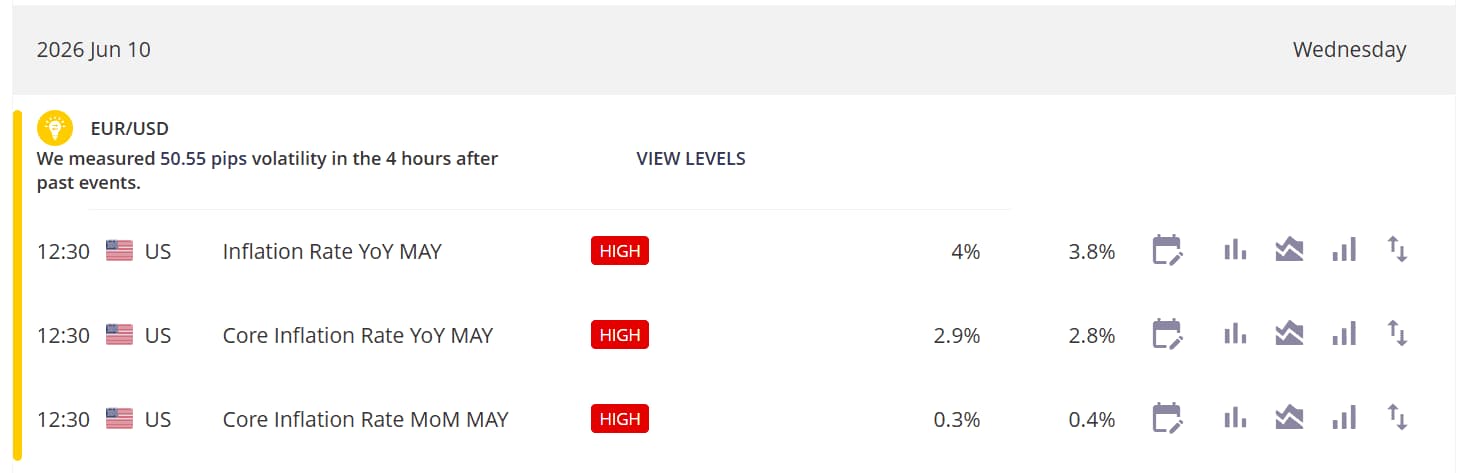
The report now becomes the next major confirmation point for markets.
A hotter-than-expected reading would reinforce concerns that inflation remains sticky and that rate cuts may stay further away than previously expected. A softer reading could provide some relief across risk assets and precious metals.
However, traders should remember that the latest rise in oil prices has only just occurred. Any inflationary effects from this newest escalation are unlikely to be fully reflected in this week’s report.
The four-hour chart shows the next battleground
The daily chart highlights the structural break. The 4-hour chart provides the roadmap.
Gold is already trading below both the 50 EMA and 200 EMA on the 4-hour timeframe, with the 50 EMA now positioned below the 200 EMA. Silver is showing a similar structure.
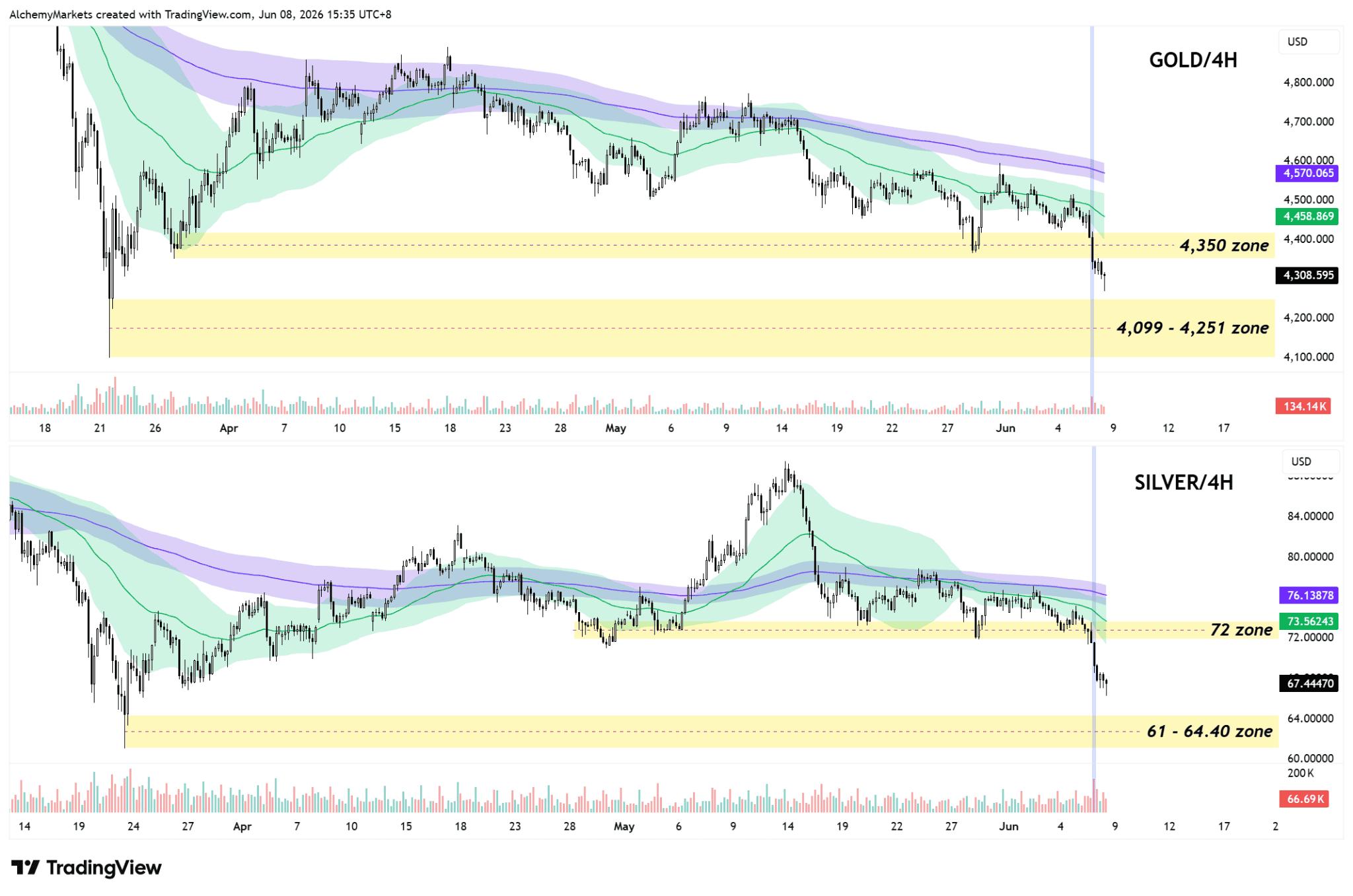
For gold, the 4,350 zone has already been lost and now becomes the first resistance area to monitor on any rebound. Below current price, the next larger support region sits between 4,099 and 4,251.
Silver has also broken below the 72 zone and is approaching the next major support area between 61.00 and 64.40.
As long as both metals remain below their 4-hour moving averages, rallies may struggle to gain traction. The larger support zones become increasingly important if selling pressure continues into CPI.
Bottom line
This is not a straightforward geopolitical safe-haven story.
Markets are looking at the inflation implications of the conflict just as much as the conflict itself. Oil prices have moved sharply higher, rate-cut expectations have become less aggressive following strong jobs data, and precious metals have broken below important long-term support.
Gold and silver still have opportunities to stabilise, particularly if inflation data comes in softer than expected. For now though, the charts show weakening momentum while traders wait for CPI to either reinforce or challenge the higher-for-longer narrative.
Author

Zorrays Junaid
Alchemy Markets
Zorrays Junaid has extensive combined experience in the financial markets as a portfolio manager and trading coach. More recently, he is an Analyst with Alchemy Markets, and has contributed to DailyFX and Elliott Wave Forecast in the past.