Powell and Lagarde missed out on the opportunity to talk up markets towards their monetary policy paths

Markets
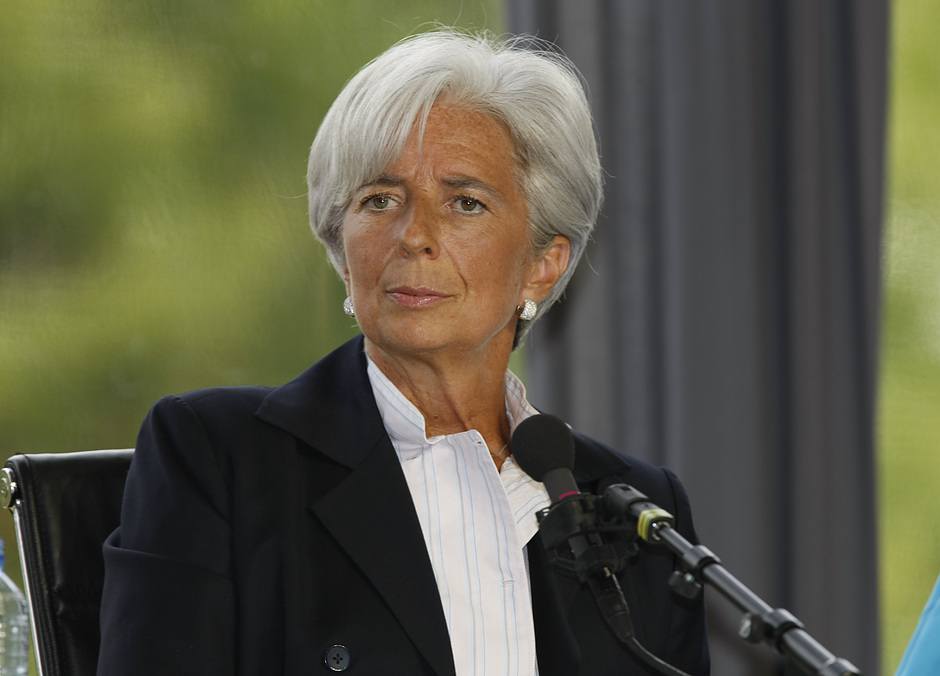
It didn’t quite turn out how we expected it to be. Especially on bond markets. Fed Chair Powell and ECB Lagarde missed out on the opportunity to talk up markets towards their envisioned monetary policy paths. In case of the US, we follow some of Powell’s “caution” given the absolute level of the policy rate and the fact that core inflation starts showing signs of coming down. Nevertheless, market pricing still doesn’t stroke with Fed intentions to deliver multiple rate increases (2 times 25 bps as envisioned in December dot plots). In case of Europe, we are totally flabbergasted by the bond rally seen yesterday, even as ECB Lagarde during the Q&A initially reluctantly, but later on more decisively, pushed back against the notion of hitting a potential peak rate (soon) after March and against the idea of cutting back rates soon after. EMU core inflation is still rising and the ECB wants to be absolutely sure that inflation is back at 2% - “not just for weeks or even months” – before reversing the current course. Our longer term view remains bearish on especially European bonds, but we acknowledge that short term momentum could be more neutral or even bullish especially in case we get some negative economic surprises. This afternoon’s US payrolls report and US non-manufacturing ISM could be a litmus test. Consensus expects another strong job gain (+189k) with wages expected to keep their monthly dynamic (0.3% M/M; down to 4.3% Y/Y). Markets over the past months zoomed in on the weaker parts of payrolls and household survey, whether it was job growth or wage growth. The services ISM is forecast to return just above the 50 boom/bust mark. Stock markets are flying high this week. Main European indices gained up to 2% yesterday with the US’s performance ranging between flat (Dow) and +3.25% (Nasdaq; following Meta earnings). Our longer term view is similar as the one for bond markets. Disappointing earnings by other big tech names (Apple, Amazon, Alphabet) already pull US equity futures significantly lower this morning. China underperforms despite a better-than-expected Caixin services PMI (52.9 from 48 vs 51 expected). In FX, we’ve seen a (so far) failed attempt of EUR/USD to take out 1.10 (close 1.0910). A balance of weakness with the single currency eventually reversing course on a post-ECB bond outperformance. German yields lost a whopping 12.7 bps (30-yr) to 22 bps (7-yr) yesterday compared with maximum 2.8 bps (5-yr) for the US. 10-yr yield spreads vs Germany narrowed around 9 bps for the likes of Greece, Portugal and Spain with Italy outperforming (-19 bps). EUR/GBP took out the 0.8897 January high as the Bank of England effectively suggested that a March rate hike will be (conditionally) the last one. Relative yield dynamics will play in the disadvantage of sterling, which faces the most dire economic outlook as well. The break – if confirmed – suggests a rapid return to EUR/GBP 0.90+ levels. Last year’s high stands at 0.9266.
News and views
A Bank of England CFO survey showed that UK businesses in January expected their own output prices to rise by an average 5.8%, unchanged from December. Expectations for the one-year ahead CPI inflation dropped from 7.4% to 6.4%. Three-year ahead inflation eased 0.3% to 3.7%. Businesses expect unit costs to grow by 8% over the coming year, down from 8.1%. Realized unit cost growth was estimated to have fallen from 10.1% to 9.9%. Expected year-ahead wage growth eased 0.6% to 5.7% in January. Recruitment difficulties continued to ease, with 35% of firms currently finding recruitment ‘much harder’ than usual, the lowest since the question was introduced in October 2021 (peak at 66% in June 2022). Expectations for year-ahead employment growth eased 0.7 percentage points to 1.2% and were weaker than realized employment growth, which was 3.4% in the year to January. 57% of firms reported that uncertainty for their business was high or very high.
SNB governor Jordan reiterated yesterday that inflationary pressures remain higher than the Swiss central bank can tolerate. In this respect, the possibility of further interest rates can’t be excluded. The Swiss job market remains strong as the unemployment rate dropped below the 2019 level, which might translate into higher (wage) costs for companies. Jordan indicated that the Swiss economy could see two quarters of contraction, but there is a chance for 2023 overall growth prints positive. The Swiss policy rate since June has been raised from -0.75% to 1.0%. The next policy meeting is scheduled for March 23. The Swiss franc recently showed signs of bottoming (against the euro). EUR/CHF dropped back to 0.996, after a brief journey north of parity in January.
Author
KBC Market Research Desk
KBC Bank