NZD/USD reaches annual high amid USD weakness

The NZD/USD pair has climbed to the highest level since 15 January 2024, continuing its trajectory within an ascending channel towards a target of 0.6233. The New Zealand dollar's growth is primarily fuelled by the weakening US dollar, mirroring trends observed with other currencies such as the AUD and CAD.
Investor sentiment is buoyed by the anticipation that the US Federal Reserve will begin easing monetary policy at its September meeting. Debates about whether the rate cut will be 25 or 50 basis points are ongoing. The decision is seen as imminent given the current inflationary environment in the US and the need to support the employment market.
Conversely, the Reserve Bank of New Zealand (RBNZ) has already taken proactive steps by lowering its interest rate earlier this month. The RBNZ has also signalled a potential reduction in lending costs by up to 75 basis points by year-end, marking a fairly aggressive stance on rates. This transparent approach to monetary policy is helping to shape market expectations and bolster the NZD.
Technical analysis of NZD/USD
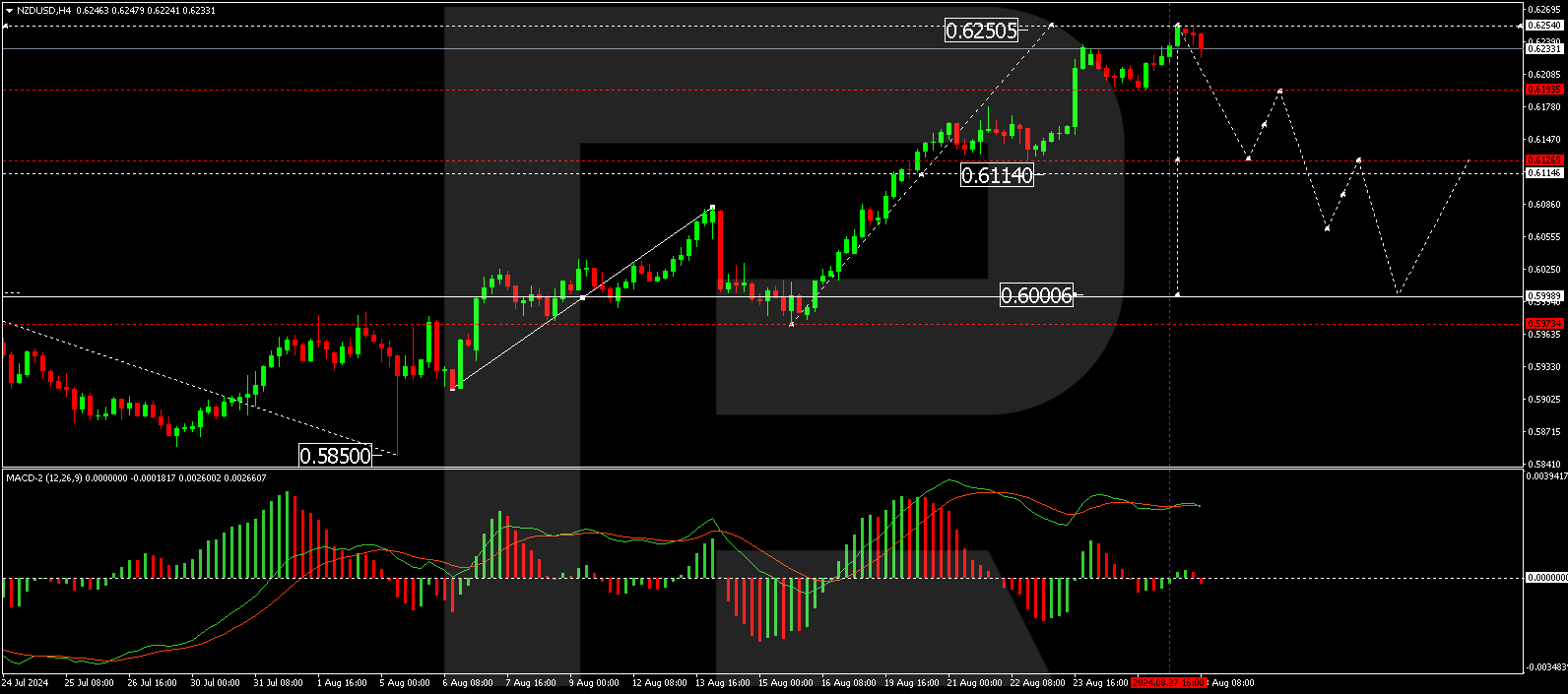
On the H4 chart, NZD/USD has completed a growth wave to 0.6250 and is now forming the initial decline phase towards 0.6128. After reaching this target, a corrective movement to 0.6191 might occur, testing it from below before initiating a further decline to 0.6065 and possibly extending to 0.6000. The MACD indicator, positioned above zero but trending downwards, supports this bearish outlook.
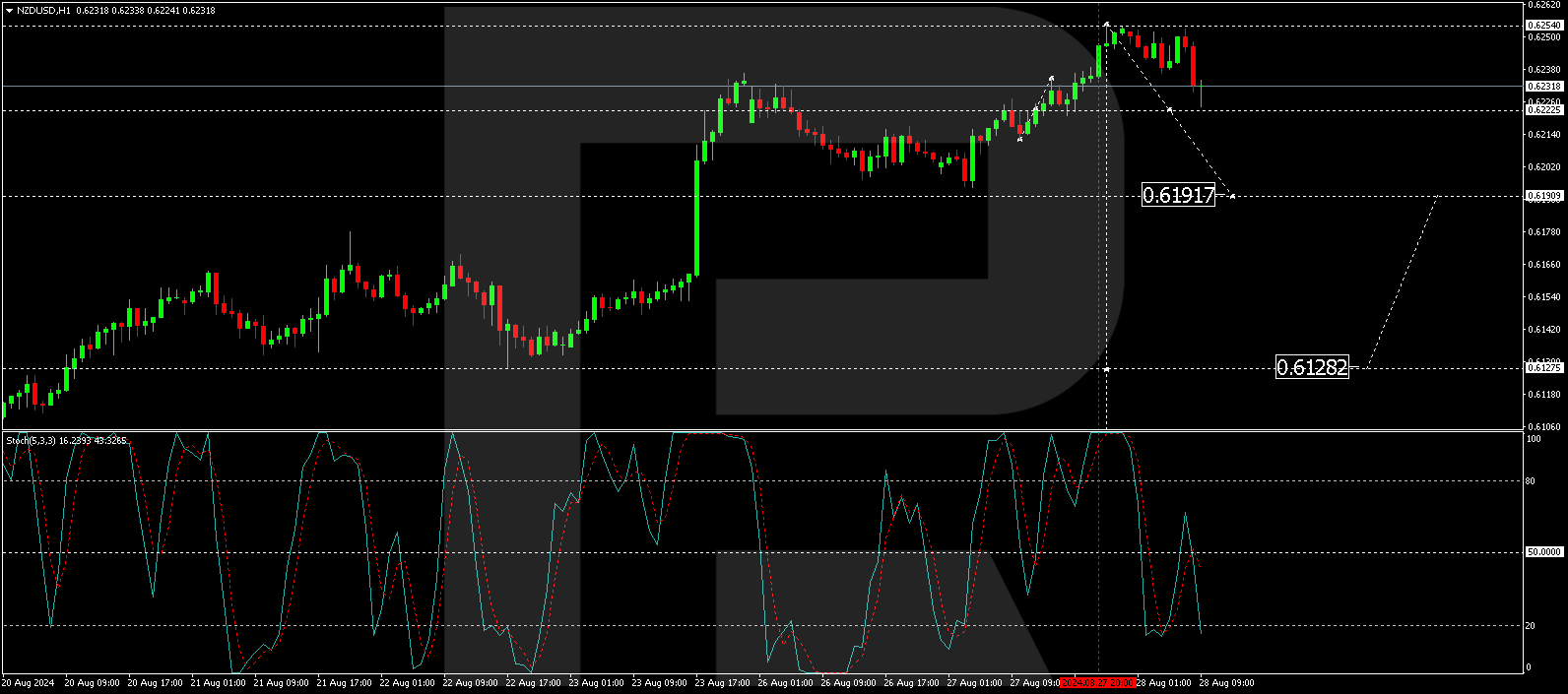
On the H1 chart, the pair is currently developing a decline structure towards 0.6222. Following this, a brief uptick to 0.6238 is expected, potentially leading to a consolidation around this level. A downward exit from this consolidation could signal the continuation of the downward trend towards 0.6128. This scenario is corroborated by the Stochastic oscillator, with its signal line below 50 and aiming towards 20, indicating a likely continuation of the downward movement.
Author
Andrey Goilov
RoboForex
Higher economic education. Andrey Goilov has been working on the Forex market since 2005. A financial analyst and successful trader. Preference in trading is highly volatile instruments.

















