NZD and RBNZ: Levels, Ranges

Why follow and trade NZD at current 0.6300's is because its the lowest exchange rate among all 28 Currency Pairs and only competes with CAD/CHF at 0.7500's and EUR/GBP at 0.8600's. As lowest exchange rate, NZD provides best signal and insight to all currency pairs.
A break above for example to wide range EUR/USD and GBP/USD without follow through by NZD warrants caution to a false move higher by wide rangers. Conversely, NZD follows through to the downside.
Consider the distribution
GBP/USD 1.2800's
USD/CAD 1.3100's
EUR/USD 1.1017
USD/JPY 1.0900's
USD/CHF 0.9900's
AUD/USD 0.6800's
NZD/USD 0.6300's
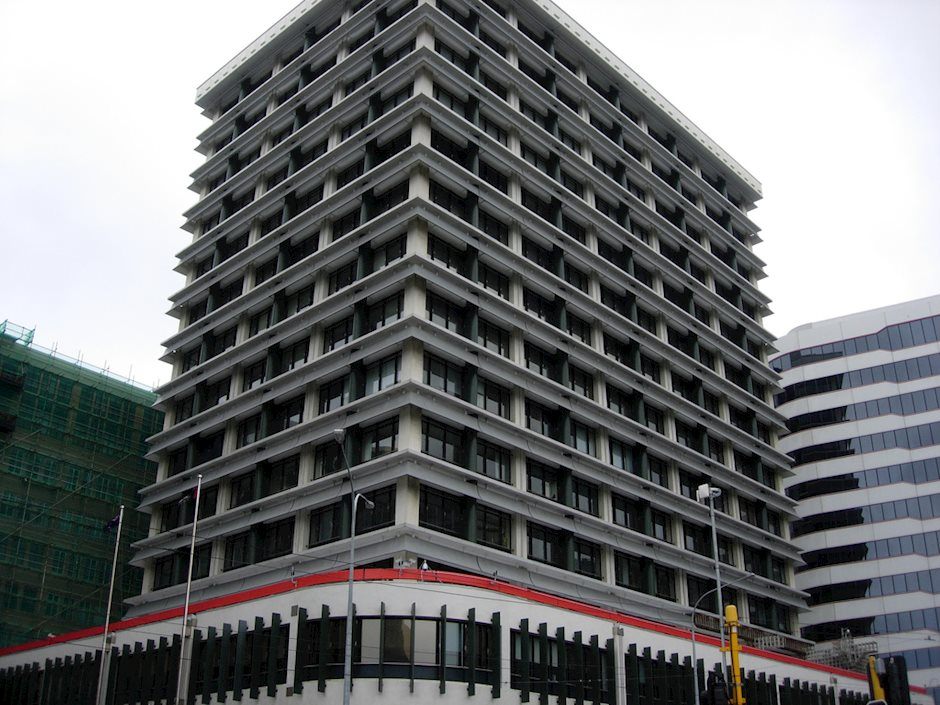
Most important to NZD, the RBNZ is the first central bank to report interest rates and NZD rates are derived and factored based on the Fed's crucial interest rate release every trading afternoon. The RBNZ sets the standard for all interest rates across Asia and Europe until its time again for the fed to release rates on a 24 hour cycle for the next trade day.
Since the last RBNZ meeting September 29 against the OCR cut to 1.0 in August, New Zealand real GDP for June, March and last December sustained 2.4, 2.7 and 2.8 December and remains higher Vs CAD at 1.6 %, EUR 1.2%, AUD at 1.9, JPY at 0.6 and GBP at 1.4.
New Zealand however remains just below USD at 2.6, 2.9 and 2.9 from June to December. Since June 2015 to present, New Zealand GDP began 2015 at 4.0 and now resides at a healthy 2.4. The August cut as stated from the September statement is expected to sustain GDP at current high levels.
As the September GDP reported, the New Zealand economy reached $300 billion for the first time in its history with + 0.7 % in Services leading the way from + 0.3% in March. Manufacturing and Goods producing industries fell 0.2% in June followed by a 1.9% increase in March.
Inflation at 1.5% is perfectly in line to the 1%-3% target range. Contributing and vital factors to CPI are Oil and Housing.
Housing for New Zealand is common to most nations as Rents are rising faster than Purchase Prices and this phenomenon must attribute to house supply. House Prices rose annually at 2.8% broken down by +1.5% for Wellington, +0.6% for Aukland and + 0.2% for Canterbury.
Rental Prices however also rose annually +2.9% and+ 0.9% in Wellington. Rental Prices for New Zealand is vital due to its 9.2% composition to CPI.
New dwellings rose 7.2% on a seasonally adjusted basis from August 2019 but stand alone houses fell seasonally adjusted at 4.8%. For September, 3,347 consent to build were issued and stand alone houses at 1744 competed against 816 Townhomes, Flats and Units Vs 611 Apartments and 176 retirement units. Stand Alone Houses at 1744 competes to 1603 for other categories.
The downside to CPI is Oil at minus 0.8% in September and minus 2.9% annually. Oil for New Zealand factors to a higher contribution than previous yearly assessments at 0.2% per quarter.
Since September's last meeting NZD/USD monthly averages remain at 0.6300's for October and September while the RBNZ's TWI also remained stable at 70.53 for October and 70.78 in September.
The 90 day Interest Rate at current 1.15 dropped from monthly average 1.05 in October and remained at 1.15 for September. No change. Not only is 1.15 stable but it fails to meet the traditional 5 day rule for an RBNZ interest adjustment.
Further, 90 Day Futures traded on the Australia ASX Exchange, closed for Dec 2019, March 2020 and June at 98.93, 98.99 and 98.99. No movement nor a message to cut OCR.
Overall New Zealand's economy, exchange rate and financial system remains quite stable. If the RBNZ assessed an interest rate drop based on exchange rates such as Norges Bank in Noway, then again no reason to move.
The only related factor to lower OCR is the RBA at 0.75 and 1.00 for the RBNZ. AUD as middle exchange rate positioned above NZD traditionally incorporates an interest rate above NZD. This situation will require adjustment as either NZD lowers or AUD rises.
Cut or nor cut, NZD for the week is fully covered.
NZD/USD: longer term target is located at 0.6788
Strategy. Long 0.6315 and 0.6306 if seen to target 0.6398. Must cross 0.6342 and 0.6383.
Long above 0.6414 to target 0.6540. Must cross 0.6451 and 0.6486 and 0.6522.
Short 0.6522 and 0.6558 if seen to target 0.6450. Must cross 0.6486.
NZD/JPY: longer term Target 72.12
Strategy. Long 68.85 and 68.62 if seen to target 69.43. Must cross 69.08 and 69.31.
Long above 69.56 to target 70.95. Must cross 69.79, 70.02, 70.49 and 70.72.
NZD/CHF: longer term Target 0.6729
Strategy. Long 0.6303 and 0.6293 if seen to target 0.6342. Must cross 0.6323 and 0.6331.
Long above 0.6364 to target 0.6481. Must cross 0.6383, 0.6402, 0.6421, 0.6440 and 0.6459
NZD/CAD
Long 0.8346 and 0.8316 to target 0.8439. Must cross 0.8376, 0.8405 and 0.8435.
Long above 0.8469 to target 0.8530. Must cross 0.8498.
EUR/NZD
Strategy. Short 1.7445 and 1.7478 if seen to target 1.7346. Must cross 1.7412, 1.7445, and 1.7380.
Short below 1.7313 to target 1.7247. Must cross 1.7280.
GBP/NZD: Longer term target 1.9900's
Strategy. Short 2.0212 and 2.0258 if seen to target 2.0074. Must cross 2.0120,.
Author
Brian Twomey
Brian's Investment
Brian Twomey is an independent trader and a prolific writer on trading, having authored over sixty articles in Technical Analysis of Stocks & Commodities and Investopedia.