Nonfarm Payrolls Preview: A strengthening labor market backs a tighter monetary policy
- The US Federal Reserve is ready to accelerate the pace of tightening even further.
- The US is expected to have added 400K new jobs in December, upbeat figures expected.
- USD direction will likely depend on yields’ and stocks’ reaction to the NFP report.

Following the Federal Reserve Monetary Policy Meeting Minutes release, the US will publish the December Nonfarm Payrolls report. The country is expected to have added 400K new jobs positions after gaining 210K in November. The unemployment rate is foreseen at 4.1%, down from 4.2% previously, although the under-employment rate is seen ticking higher, from 7.8% to 8%.
Fed hinted at aggressive tightening
The FOMC Meeting Minutes surprised investors are per hinting a more aggressive tightening. Reading between lines, it’s quite clear that policymakers are more concerned about inflation than about economic growth. They noted that “in light of elevated inflation pressures and the strengthening labor market, participants judged that the increase in policy accommodation provided by the ongoing pace of net asset purchases was no longer necessary.”
Most participants judged conditions for a rate hike could be met relatively soon if the recent pace of labor market improvements continues. On Wednesday, the country published the ADP survey on private job creation, printed at 807K, more than doubling the expected 400K.
Even further, Fed members began discussing the reduction of their bonds holding in the upcoming months. The central bank’s balance sheet currently includes roughly $8.3 trillion in Treasurys and mortgage-backed securities. “Almost all participants agreed that it would likely be appropriate to initiate balance sheet runoff at some point after the first increase in the target range for the federal funds rate,” the statement reads.
Market participants are pricing in a first rate hike for March, which means the central bank may start reducing its balance sheet in the first in the second quarter of 2022.
As an immediate result of the Fed’s announcement, government bond yields soared, with the 10-year Treasury note yielding over 1.70%, and stocks plummeted. On the other hand, the American dollar firmed up.
The US Federal Reserve relies on a strengthening labor market, as noted above, which means that an upbeat Nonfarm Payroll report will reinforce the idea of a tighter monetary policy. In the rare case of a disappointing outcome, it seems unlikely it would be enough to spur speculation of a more cautious Fed.
Possible market’s reactions
The greenback has been volatile yet choppy in the last couple of weeks amid year-end holidays, trading without rhyme or reason. It managed to appreciate post-FOMC Minutes, although it gave us some of such gains on Thursday. The Pound is the strongest, while the EUR and the AUD are the weakest greenback’s rivals at the time being.
Meanwhile, the yield on the 10-year Treasury note topped at 1.744% so far. A run past that level should spur dollar’s demand, particularly with solid job creation. More hints will come for stocks. If Wall Street plunges with the release, EUR/USD and AUD/USD will be the more interesting pairs to short.
For AUD/USD, supports are located at 0.7120 and 0.7060, with a break below the latter exposing 2021 low at 0.6992. A recovery above 0.7205 should take off some pressure and favor a recovery towards 0.7270.
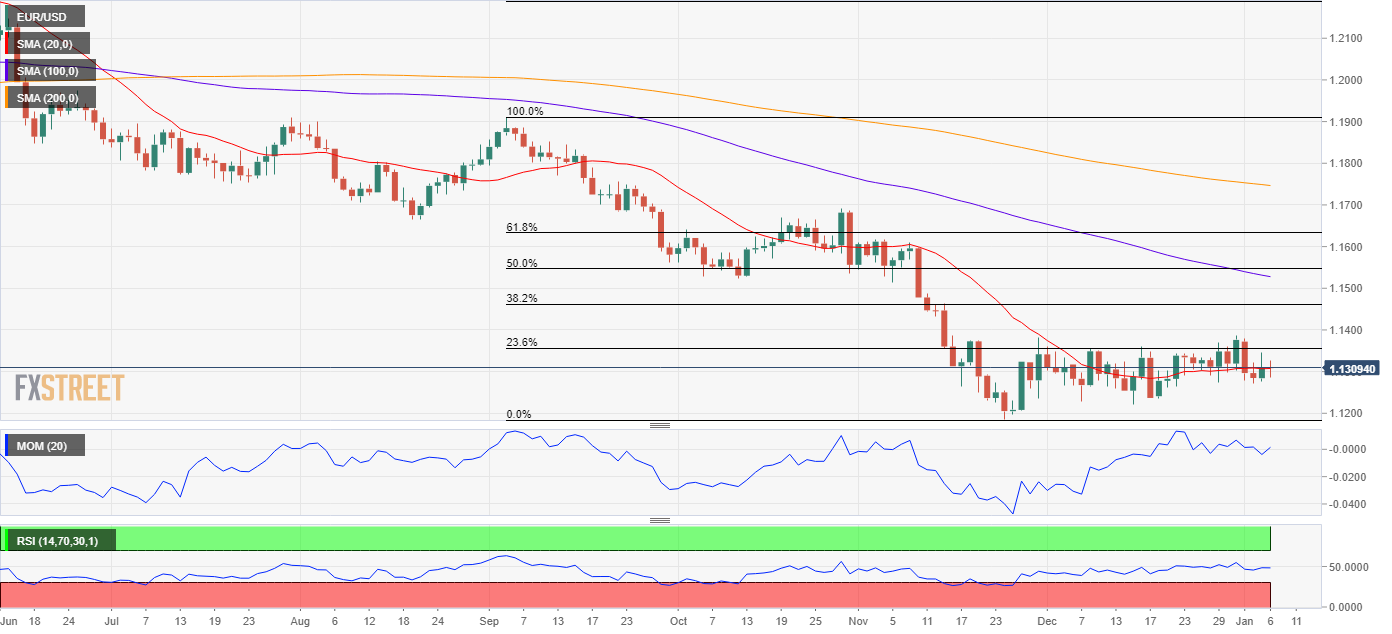
In the case of the EUR/USD dollar, December low at 1.1220 is the first support level, followed by the 2021 low at 1.1185. A weekly close below the level should end up with the pair testing the 1.1000 psychological threshold. On the other hand, the pair would need to break above 1.1385 to turn bullish, a quite unlikely scenario at this point.
Author

Valeria Bednarik
FXStreet
Valeria Bednarik was born and lives in Buenos Aires, Argentina. Her passion for math and numbers pushed her into studying economics in her younger years.














