NFLX, META and TSLA deliver earnings this week. The market's mood rides on three reports
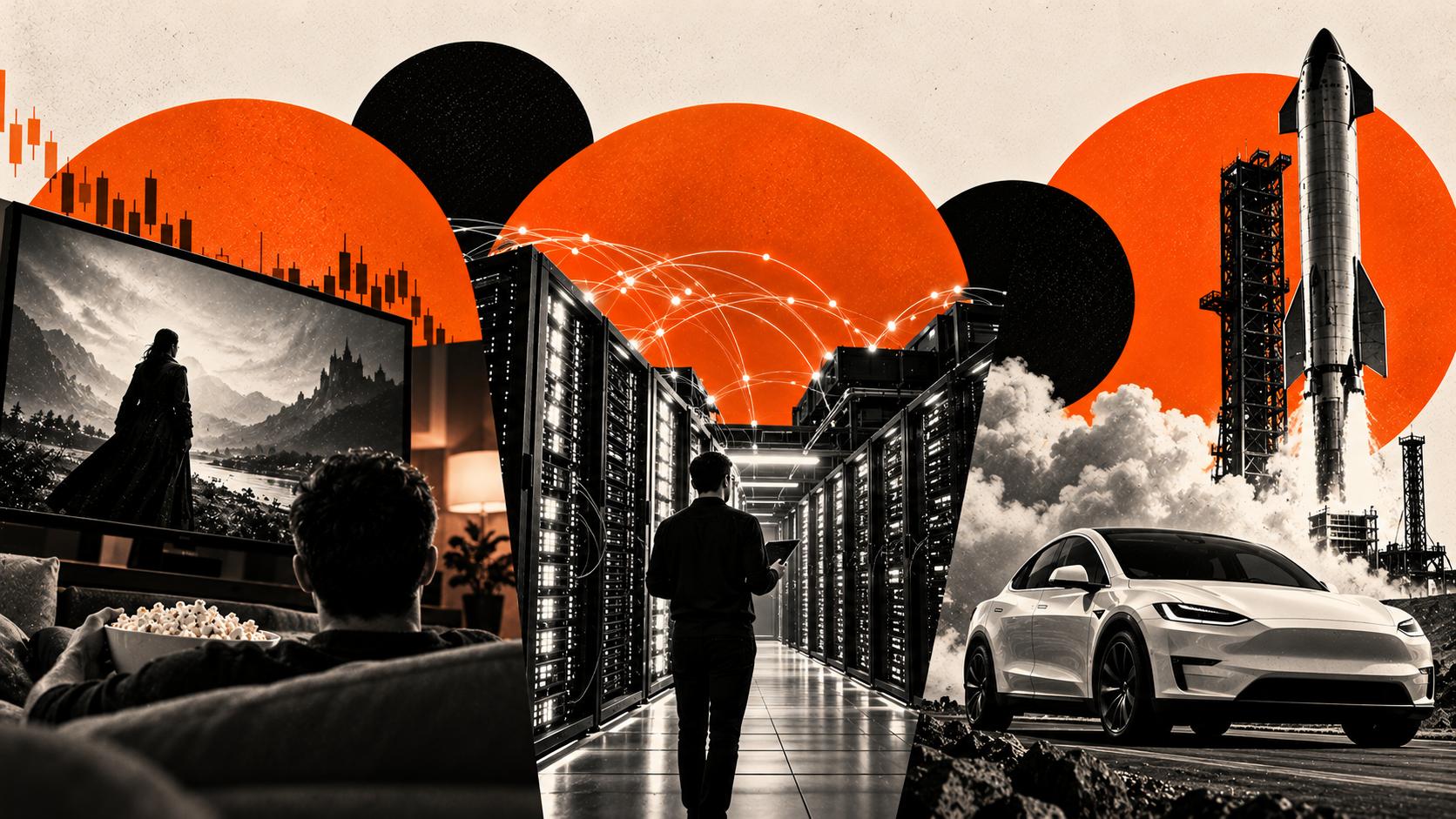
Netflix (NFLX), Meta Platforms (META) and Tesla (TSLA) all report earnings this week, and the market’s mood rides on three reports that could easily reset the tone for the entire market heading into the holiday season. Investors are heading into this stretch with a mix of anticipation and unease because each company represents a different pillar of market sentiment.
All three have much to prove.
- Netflix shapes the narrative around consumer strength and whether or not a former industry leader can turn around its slowing revenue growth.
- Meta drives expectations for a robust digital advertising business, but investors wonder whether it will be strong enough to power the company’s heavy investment in AI.
- Tesla needs to show that its Robotaxi and Optimus robot projects are on schedule, but many investors will simply wait to see if Elon Musk and company address the speculation that it will merge with SpaceX.
When these three speak, the market listens because together they touch nearly every major theme investors care about right now.
Netflix: Subscriber growth and ad momentum in focus
Netflix enters earnings with questions about subscriber momentum and the durability of its ad-supported tier. The company has been pushing pricing power and content discipline, but investors want proof that these strategies can keep revenue growing without sacrificing engagement.
Any sign of slowing subscriber additions or weaker guidance could ripple across the entire streaming sector. On the other hand, a strong beat would reinforce the idea that streaming is safe from the anxieties of a stressed consumer.
“It’s very clear that investor sentiment has turned against this company right now, and it’s up to [Netflix] to give investors something to be excited about,” said Robert Fishman, senior analyst at MoffettNathanson, in a CNBC segment.
With falling revenue growth rates, Fishman says that investors need to see that Netflix can halt the drift lower and find a firm and sustainable growth rate.
Netflix’s recent shakeup of the C-suite and layoffs of about 1,000 employees show that the company is bent on change, but the unimpressed share price tells us that the market remains uncertain about how to measure those policies.
Over the weekend, Netflix fired top film executive Dan Lin, and that high-profile decision follows former Chief Content Officer Bela Bajaria and VP of Film Doug Belgrad heading for the exit this past quarter.
Largely, the market views these personnel changes as a sign that things are not going well for the company that invented the modern streaming ecosystem.
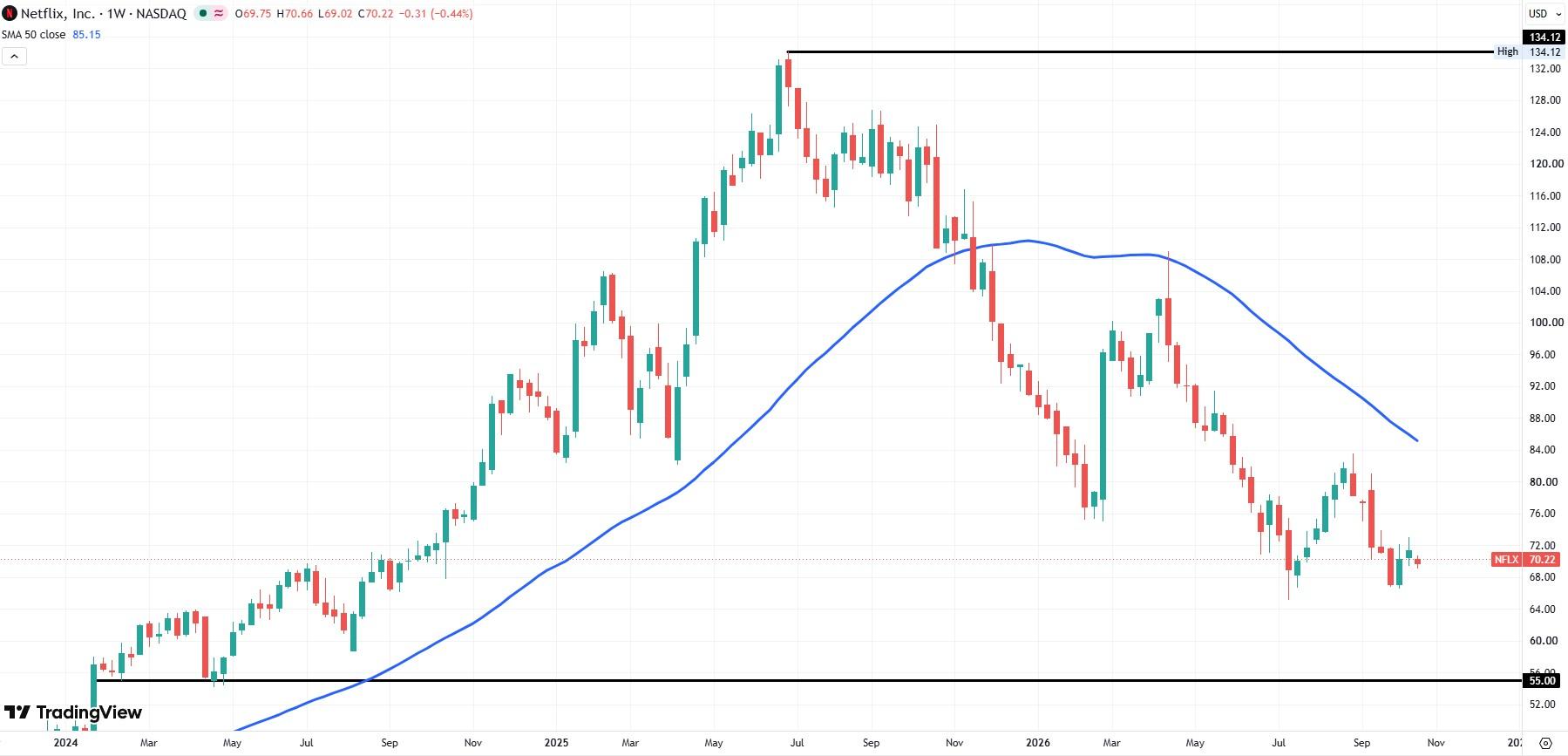
As it stands, Netflix will issue earnings after the close on Tuesday, and Wall Street expects adjusted earnings per share (EPS) of $0.82 on $12.87 billion in revenue.
Analyst Brent Thill at Jefferies advises sticking with Netflix, which he gives an $85 price target. Thill believes Netflix will sustain 11% revenue growth over the next three years but expand operating margins and increase share buybacks.
Meta Platforms: Investors weigh AI ambitions against rising costs
Meta’s Wednesday report carries even more weight. The company has been riding a wave of advertising strength and aggressive cost control, but the spotlight is shifting toward its massive AI investments, in particular excitement over its Muse AI agent.
But CEO Mark Zuckerberg’s social media powerhouse might have to address questions about further lawsuits as Australia confirmed this week that it will be subjecting Facebook to yet another courtroom brawl concerning the company’s lax age-verification technology. Reporting from Bloomberg says that Australia has determined that Facebook allowed underage teens and children to retain their social media accounts despite earlier legal agreements.
Instagram, TikTok, Snapchat, and YouTube are also likely to be hit with similar lawsuits. This new round of government wrangling comes after Meta already agreed to pay upward of $18-20 billion to satisfy complaints from US states regarding child safety on its platforms.
But outside of the new legal troubles, investors want Zuckerberg to offer clarity on AI spending discipline and whether AI-driven ad tools are meaningfully boosting revenue or just inventing another cost center.
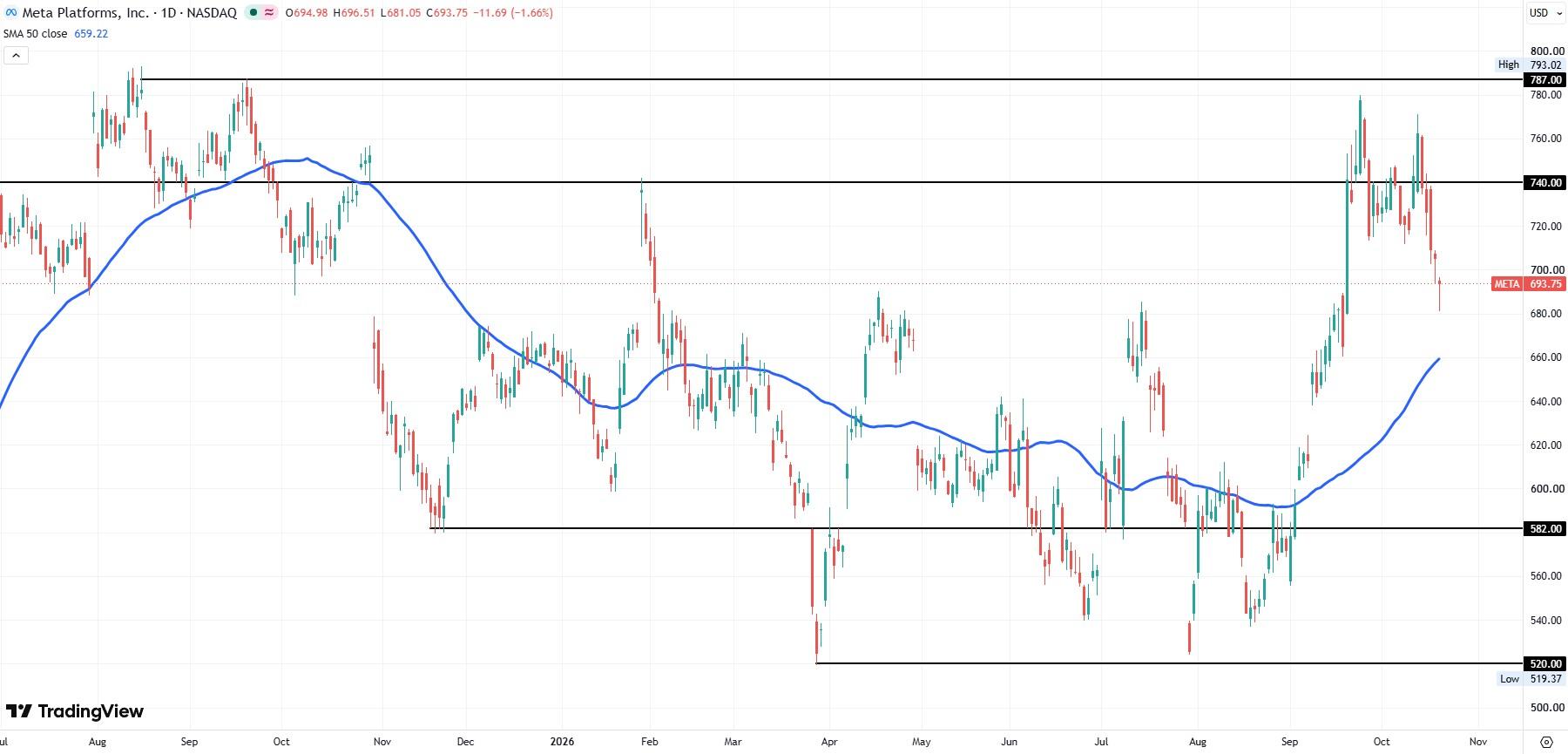
While Wall Street’s consensus for the third quarter calls for $6.80 in adjusted EPS on revenue of $63.4 billion, investors will note that the profit line is a notable falloff from the $7.25 Meta posted one year ago. After producing a wide EPS miss in Q2, traders will likely want to steer clear of this name on earnings day due to the high level of uncertainty on the bottom line.
What is certain is that the most significant catalyst for the Meta earnings call will be the roadmap management lays out concerning its Muse and related AI models. Veteran tech stock analyst Dan Ives argues that Meta’s ownership of Instagram and Facebook gives Muse the best chance of monopolizing the personal AI agent space through its distribution lead. The thinking goes that these platforms’ billions of free users will choose to test out Muse first before other competitors and are likely to translate into paying users over time.
“Zuckerberg’s comment that Meta has reached the frontier and is already working on the next step up is that message that investors have waited for, and we believe it reframes the $130 billion to $145 billion 2026 capex envelope as spending behind products already in market rather than a bet on products still to come,” Ives wrote in a recent investor note.
And that’s the primary reason that Meta has seen its stock price climb in recent months. Bulls believe that Meta will convert from a business model that largely relies on advertising to one that offers a fast-growing paid subscription service for AI tools.
Tesla: Earnings focus shifts from EV margins to AI and SpaceX merger rumors
Tesla’s earnings may be the most emotionally charged of the three. The company has faced margin compression, rising competition and questions about demand in key markets. Investors are watching vehicle margins in hopes that the company’s primary product becomes more profitable.
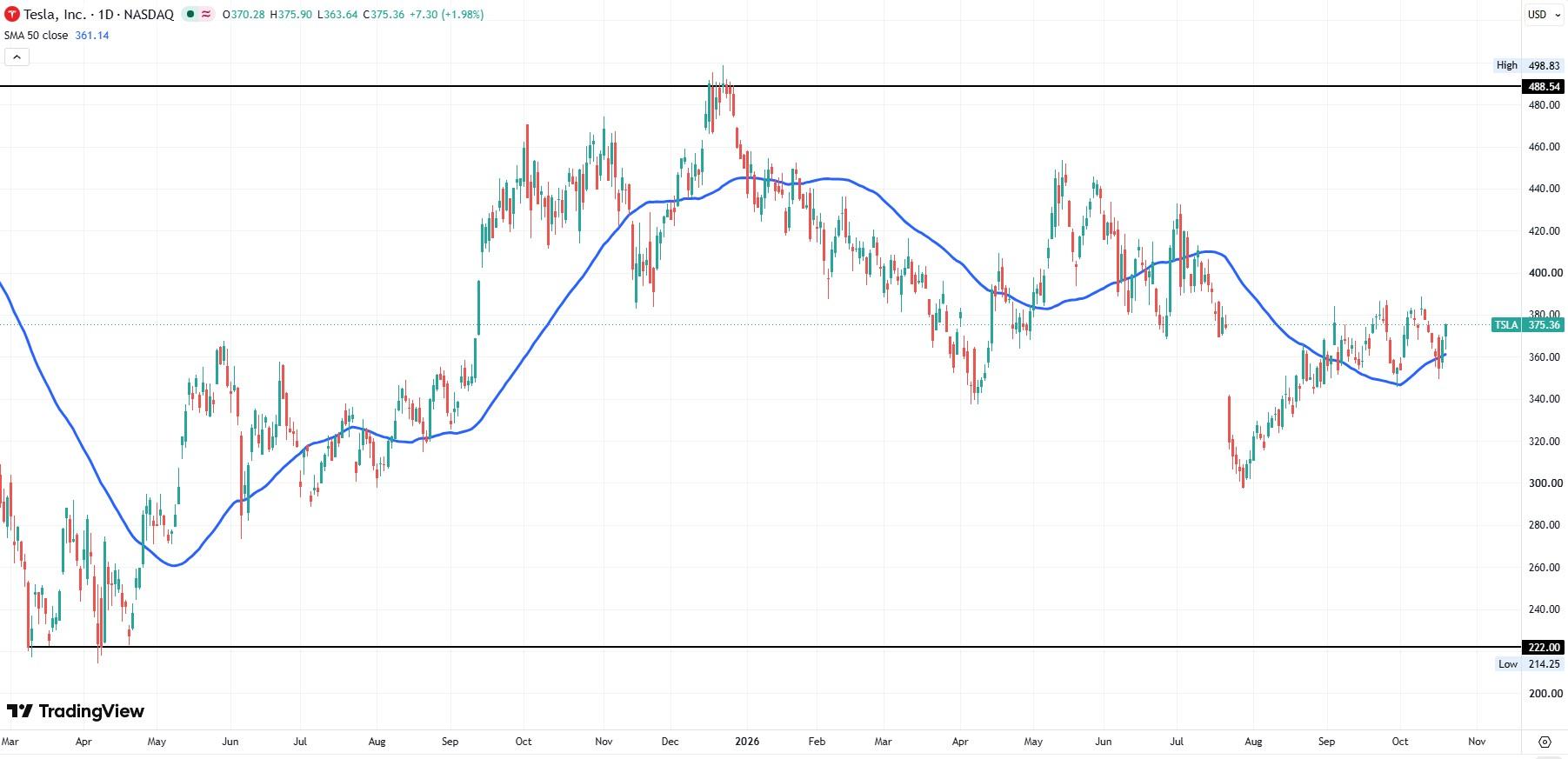
Wall Street expects the company to deliver adjusted EPS of $0.45 on revenue of $28.2 billion, which isn’t much different from its performance a year ago. While the company’s battery business continues to expand successfully, the EV business has begun to look lackluster. Most serious investors likely care more about Tesla’s capex figure since it tells them how much Elon is spending on the robotaxi, Cybercab, Tesla Semi and Optimus robot side quests.
Tesla delivered 486,532 vehicles in Q3, beating the consensus, but that figure was down about 2% from a year earlier.
"We continue to see Tesla as a physical AI platform with a vehicle business underneath it. The vehicle business is the base; the value is being determined by autonomy, robotaxi, and Optimus, which carry roughly two-thirds of our $500 price target," writes original Tesla bull Dan Ives in his pre-earnings commentary.
But the rumors overshadowing earnings are probably more important than what Elon Musk’s company serves up on the bottom line. That’s because expectations are growing that Musk’s larger public company, SpaceX (SPCX), will merge with Tesla sometime in the next year.
Both Tesla and SpaceX are now investing gargantuan figures into AI development. The thinking goes that it would make more sense to bring both AI projects under one roof since it would unify Musk’s focus on one rather than two trillion-dollar companies.
During Tesla’s Roadster showcase last week, the newest version of the sports car prototype used SpaceX-designed thrusters to land the vehicle after driving up a vertical ramp. This demonstrates that there is already a partnership between the companies’ engineering teams.
Barclays analysts have even suggested an announcement could arrive ahead of Tesla’s annual shareholder meeting on December 3. So why would shareholders want to ditch Tesla if Musk could signal his intent for a merger any day now?
Tesla’s commentary often influences sentiment far beyond autos because it reflects broader trends in manufacturing supply chains and consumer willingness to spend on big ticket items. And experienced investors know that Tesla makes up over 13% of the MSCI World Consumer Discretionary Index.
Author

Clay Webster
FXStreet
Clay Webster grew up in the US outside Buffalo, New York and Lancaster, Pennsylvania. He began investing after college following the 2008 financial crisis.