Markets question Fed's inflation resolve after July FOMC meeting
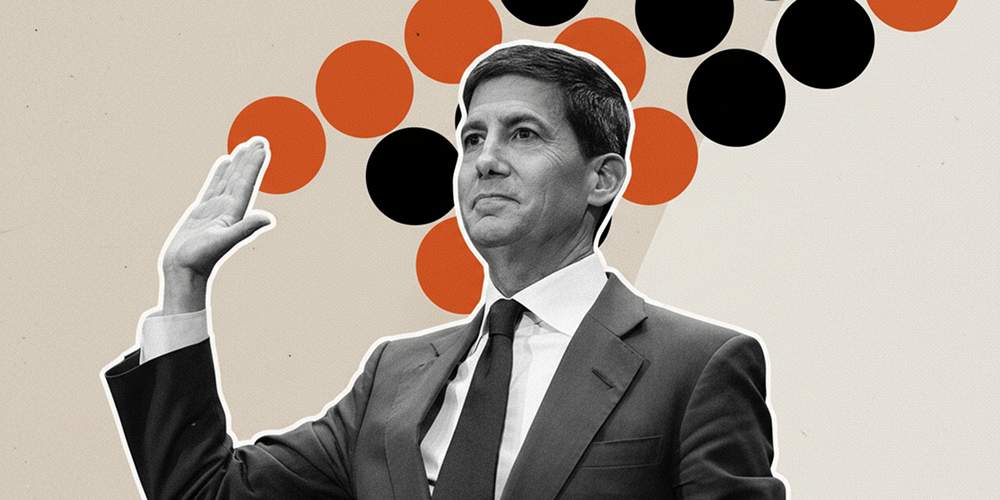
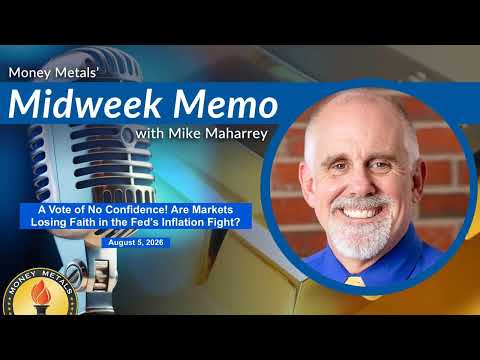
Federal Reserve Chairman Kevin Warsh continues to project a tough stance on inflation, repeatedly promising to restore price stability and keep inflation anchored at the central bank's longstanding 2% target. But according to Mike Maharrey in this week's Money Metals Midweek Memo, markets are beginning to judge the Fed by its actions rather than its rhetoric—and so far, they aren't convinced.
Drawing on the old adage "less talk and more action," Maharrey argues that while Warsh has made forceful public statements about fighting inflation, the Federal Reserve has yet to take any meaningful policy steps to support those promises. That disconnect, he says, is beginning to influence bond markets and could ultimately strengthen the case for owning precious metals.
Fed holds rates steady despite internal division
The Federal Open Market Committee (FOMC) concluded its July meeting by leaving the federal funds rate unchanged at 3.50% to 3.75%. Although the decision was widely anticipated, it marked the second meeting under Chairman Kevin Warsh and featured the first significant public disagreement within the committee.
Three policymakers—Cleveland Fed President Beth Hammack, Minneapolis Fed President Neel Kashkari, and Dallas Fed President Lorie Logan—voted in favor of a 25-basis-point rate hike, while the remaining nine members voted to keep rates unchanged. Warsh characterized the debate as a "good family fight," emphasizing open discussion rather than unanimous agreement.
Despite the divided vote, Maharrey contends that the practical outcome remained the same: the Fed continued talking aggressively about inflation without actually tightening monetary policy.
A new communication strategy leaves markets guessing
One of Warsh's biggest departures from former Chairman Jerome Powell is his rejection of extensive forward guidance.
Under Powell, markets typically had a clear idea of the Fed's intentions well before policy meetings. Warsh has intentionally abandoned that approach, shortening official FOMC statements from more than 300 words under Powell to roughly 130 words, arguing that policymakers should provide facts rather than forecasts.
Maharrey notes that while less guidance may give the Fed greater flexibility, it also creates greater uncertainty. Investors inevitably attempt to anticipate future policy, and when official guidance is sparse, markets become more volatile as participants fill in the blanks themselves.
Some economists have already criticized the new approach. Capital Economics argued that Warsh's intentionally vague answers have made forecasting future Fed actions even more difficult.
Tough inflation talk without tough inflation policy
Throughout his press conference, Warsh repeatedly pledged that the Federal Reserve would restore price stability, insisting, "We will deliver price stability," while acknowledging the process would take time and describing the July meeting as only "the beginning of the story."
Maharrey, however, argues that those assurances ring hollow because the Fed has not raised interest rates at all under Warsh.
He contrasts today's Fed with former Chairman Paul Volcker, who famously pushed interest rates to nearly 20% in 1980 to break inflation. By comparison, Maharrey says Warsh's inflation-fighting credentials remain untested because no comparable policy action has accompanied the rhetoric.
Bond markets signal growing skepticism
Perhaps the strongest evidence that investors doubt the Fed's resolve came from the Treasury market following the July meeting.
Instead of falling, longer-term Treasury yields climbed. The 10-year Treasury yield rose 5 basis points to 4.657%, while the 30-year Treasury yield jumped 9 basis points to 5.193%. Maharrey interprets this move as a sign that investors increasingly believe the Fed is finished raising rates even though inflation risks remain elevated.
Reuters described the shift as reflecting expectations for persistent inflation rather than additional Fed tightening.
Former Federal Reserve economist Nathan Sheets, now Global Chief Economist at Citi, argued that markets are effectively casting a vote of no confidence in the Fed's inflation strategy. According to Sheets, Warsh has identified the inflation problem without presenting a credible roadmap for solving it, while also facing political pressure from the White House, which has favored lower interest rates.
Balance sheet expansion sends mixed signals
Maharrey also points to another contradiction in the Fed's messaging.
While officials speak aggressively about controlling inflation, the Federal Reserve has continued expanding its balance sheet through bond purchases—effectively engaging in quantitative easing. He argues that these purchases help support Treasury markets at a time when demand for U.S. government debt has weakened, and federal borrowing continues to expand by hundreds of billions of dollars each month.
According to Maharrey, buying government bonds while simultaneously claiming to wage war on inflation sends conflicting signals and further undermines the Fed's credibility.
Could the Fed redefine inflation?
Another concern raised during the episode involves how the Federal Reserve measures inflation itself.
Historically, the Fed has targeted 2% core Personal Consumption Expenditures (PCE) inflation. During his confirmation process, Warsh expressed interest in using trimmed averages, which exclude both the highest and lowest price changes in an effort to smooth inflation readings.
Although Warsh stated that PCE remains the Fed's preferred measure for now, he also suggested that task forces reviewing Fed strategy could recommend changes after January.
Maharrey argues that altering the methodology rather than lowering inflation itself would amount to moving the goalposts, allowing policymakers to claim success without materially reducing inflation.
Implications for Gold and Silver
Maharrey believes precious metals have spent the past several months trading sideways largely because investors expected the Fed to keep interest rates higher for longer.
Gold has found support around $4,000 per ounce, recently rebounding toward $4,200 amid optimism surrounding the Strait of Hormuz reopening and weaker-than-expected employment data.
If markets continue losing confidence in the Fed's willingness or ability to control inflation, Maharrey argues the environment could become increasingly supportive for both gold and silver through expectations of higher inflation, a potentially weaker U.S. dollar, and eventual monetary easing if economic conditions deteriorate.
Why real interest rates matter
A key part of Maharrey's analysis centers on real interest rates, which subtract inflation from nominal yields.
Using current figures, he notes that with the federal funds rate at 3.5% and CPI inflation also at 3.5%, the real policy rate is effectively 0%. If inflation rises even modestly, real interest rates become negative despite positive nominal yields.
Because gold earns no yield, critics often argue that higher interest rates are bearish for precious metals. Maharrey counters that what truly matters is purchasing power. If inflation consumes all of an investor's nominal return, the opportunity cost of holding gold becomes far less significant.
Inflation metrics and the case for Sound Money
The episode concludes with a discussion of inflation measurement.
Maharrey explains the distinction between the Consumer Price Index (CPI) and the Personal Consumption Expenditures (PCE) index, noting that the Fed prefers PCE because of methodological differences that generally produce lower inflation readings. He argues that neither index measures inflation in its classical sense, which he defines as expansion of the money supply rather than rising consumer prices alone.
Pointing to continued growth in the M2 money supply, Maharrey maintains that monetary inflation remains ongoing and that even achieving the Fed's stated 2% inflation target still implies a steady erosion of purchasing power over time. He concludes that investors should consider holding physical gold and silver as long-term stores of value that cannot be devalued through monetary expansion.
To receive free commentary and analysis on the gold and silver markets, click here to be added to the Money Metals news service.
Author

Joshua D. Glawson
Money Metals Exchange
Joshua D. Glawson is a writer on such topics as philosophy, politics, economics, finance, and personal development. He graduated with a Bachelor in Political Science from the University of California Irvine. His website is JoshuaDGlawson.com.















