Low metals supply could support prices despite the manufacturing downturn
-
Recent downturn in metal prices reflects rising recession risks, which weigh on the demand outlook. Tight supply still points towards metal prices remaining at elevated levels, while Chinese infrastructure stimulus provides backdrop for demand.
-
Russia is not the only factor weighing on supply: Covid-disruptions, earlier underinvestment, strikes and social unrest due to rising costs of living in EM producer countries all contribute toward metal supply remaining below pre-Covid trend.

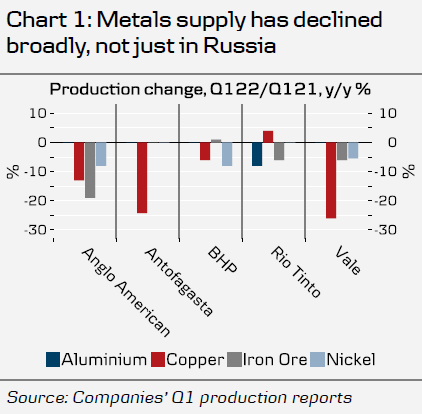
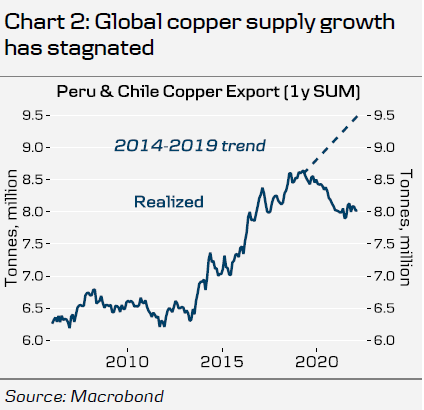
Commodity markets continue to balance between global, and not least Chinese slowdown risks weighing on demand, and the decline in supply amplified by sanctions on Russia following the war in Ukraine. However, Q1 production reports of several large miners point towards a plethora of other factors weighing on global supply as well (Chart 1). Some are arguably only temporary, such as weather-related effects like unusually heavy rainfall in Brazil, but others could end up being more persistent. Earlier Covid-restrictions have led to labour shortages in Australia and South America, which are not expected to reverse quickly even if lockdown measures have been eased. Rising food prices have fuelled protests in Peru, leading to a 20% decline in the country’s copper output. Similarly, labour strikes continue to disrupt production in neighbouring Chile. Production of metals is in many cases geographically concentrated, for example a 10% decline in the combined copper output of Chile and Peru is already larger than the loss of entire Russian supply (Chart 2).
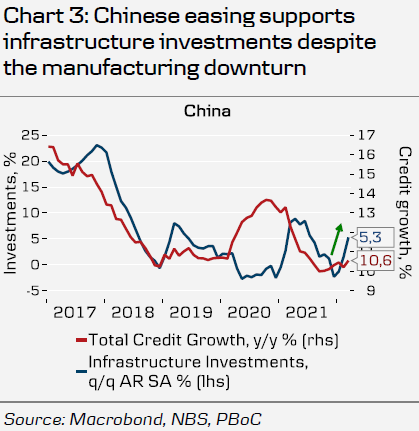
Despite the most recent decline, commodity prices broadly remain clearly above pre-covid levels, and we still see majority of the rise as demand-driven. The recent deterioration of leading manufacturing indicators might overestimate the drop in demand, as China has compensated for the weaker activity by ramping up stimulus via infrastructure investments (Chart 3). China consumes 50% of global copper and 70% of global iron ore, and thus has an outsized impact on global metal price developments.
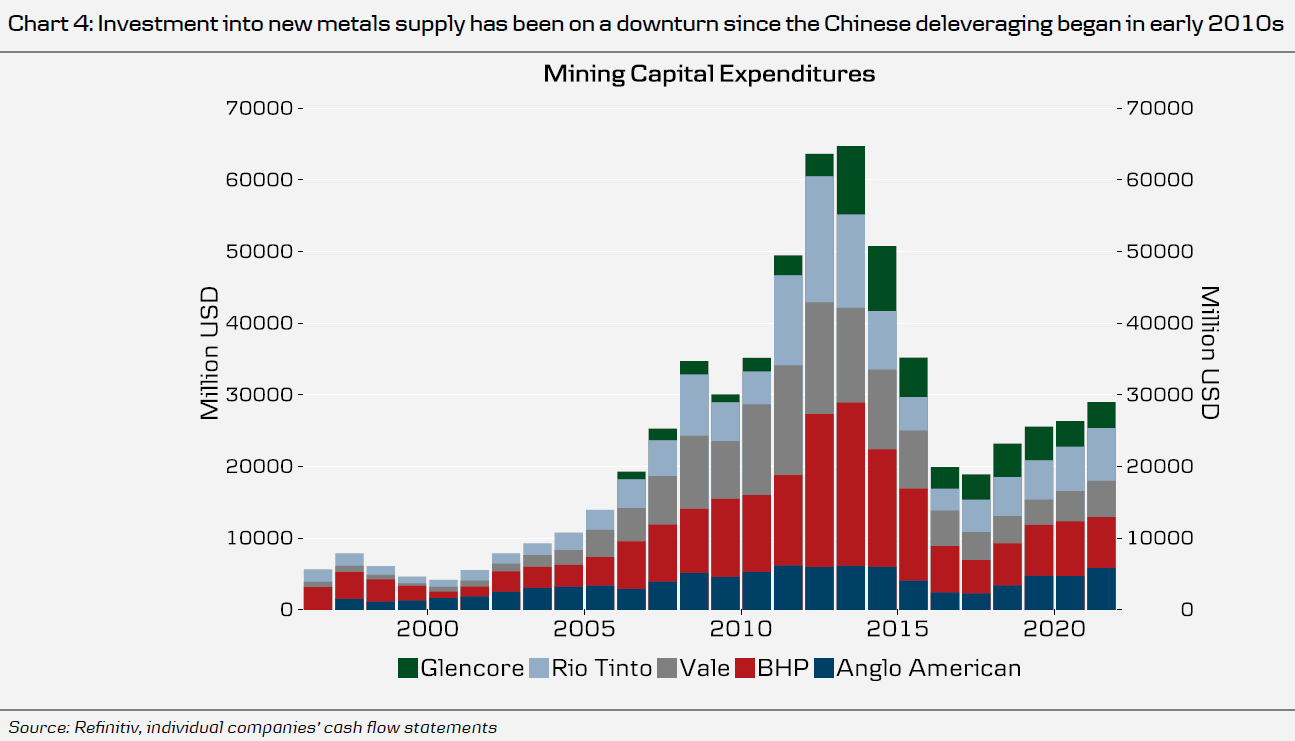
Given the background of a decade of deleveraging in China, investments into metal production remain subdued compared to the peak of the previous supercycle in early 2010s (see p. 2 for Chart 4). Despite the moderate recovery in recent years, it is difficult to see supply catching up to still unusually elevated demand given the lengthy process of investing into new mining capacity. Even if global growth slowdown brings demand back to more normal levels, supply remains clearly below pre-covid trends, with no quick fixes available.
As we wrote back in FX Strategy - Oil diplomacy, 1 March, other producer countries will likely be able to compensate for the persistent drop in Russian crude oil supply over time. For metals, no such resolution is available, largely due to the fact the drop in supply is not driven by just Russia, but global 2nd round effects of rising costs of living, pandemic and consequent social unrest. We hesitate to see this as a beginning of a new ‘super-cycle’, given that we do not foresee a significant turn towards credit expansion in China or elsewhere in the world. That being said, increased investment into alternative energy sources in Europe combined with the persistent supply challenges will likely maintain metal prices clearly above pre-covid lows for the time being.
Author

Danske Research Team
Danske Bank A/S
Research is part of Danske Bank Markets and operate as Danske Bank's research department. The department monitors financial markets and economic trends of relevance to Danske Bank Markets and its clients.