J’Hole deep dive: S&P 500, Nasdaq, Crypto rally on dovish speech

When Fed Chair Jerome Powell stepped up at Jackson Hole in August 2025, he didn’t announce sweeping changes or bold new plans. Instead, he dropped a single subtle phrase — that policy “may warrant adjusting.”
Those three words were enough to send shockwaves through global markets. Stocks ripped higher, the dollar slid, bonds rallied, and crypto went into overdrive. Let’s unpack what happened, why it matters, and what it means going forward.
What Powell actually said
We know that job numbers haven’t been good as of late; NFP revisions down at the beginning of August signalled that much. When jobs are soft, rate cuts can help bolster the economy and help businesses grow — but at the expense of rising inflation.
When jobs are soft, rate cuts can help stimulate the economy and support business growth, at the risk of fuelling inflation. This highlights the Fed’s dual mandate: encourage growth while keeping inflation close to its 2% target.
The dilemma is clear — cut rates to save companies, or hold rates to tame prices?
Powell’s words gave a clue. He suggested that current inflation and labour market conditions could justify tweaking policy. Traders read this as a dovish signal, and are now widely referring to this Jackson Hole speech as a dovish pivot: a shift away from hawkish inflation-fighting and towards more growth-friendly easing.
The market reaction
Markets reacted swiftly to Powell’s words, rallying in a single day on Friday, August 22nd.
Here are the highlights:
Stocks: The Dow surged 860 points (+2%), S&P 500 up ~1.5%, Nasdaq +1.45%. Tech leaders like Tesla (+6%), NVIDIA (1.72%), and Apple (1.27%) led the charge. Housing and construction stocks soared 5–8% on hopes of cheaper borrowing.
Bonds & FX: The US dollar index (DXY) fell by 0.90%, Euro climbed to $1.17, and the 2-year Treasury yield dropped 10bps — a clear nod to easing expectations.
Crypto: Bitcoin jumped to ~$117,000, triggering $379m in short liquidations. Ethereum broke its 2021 ATH, hitting $4,885 (+14%) with ETF volumes rivaling Bitcoin’s. Altcoins like SOL, XRP, and BNB rallied 5–10%, with BNB setting a record at $900.
DXY analysis
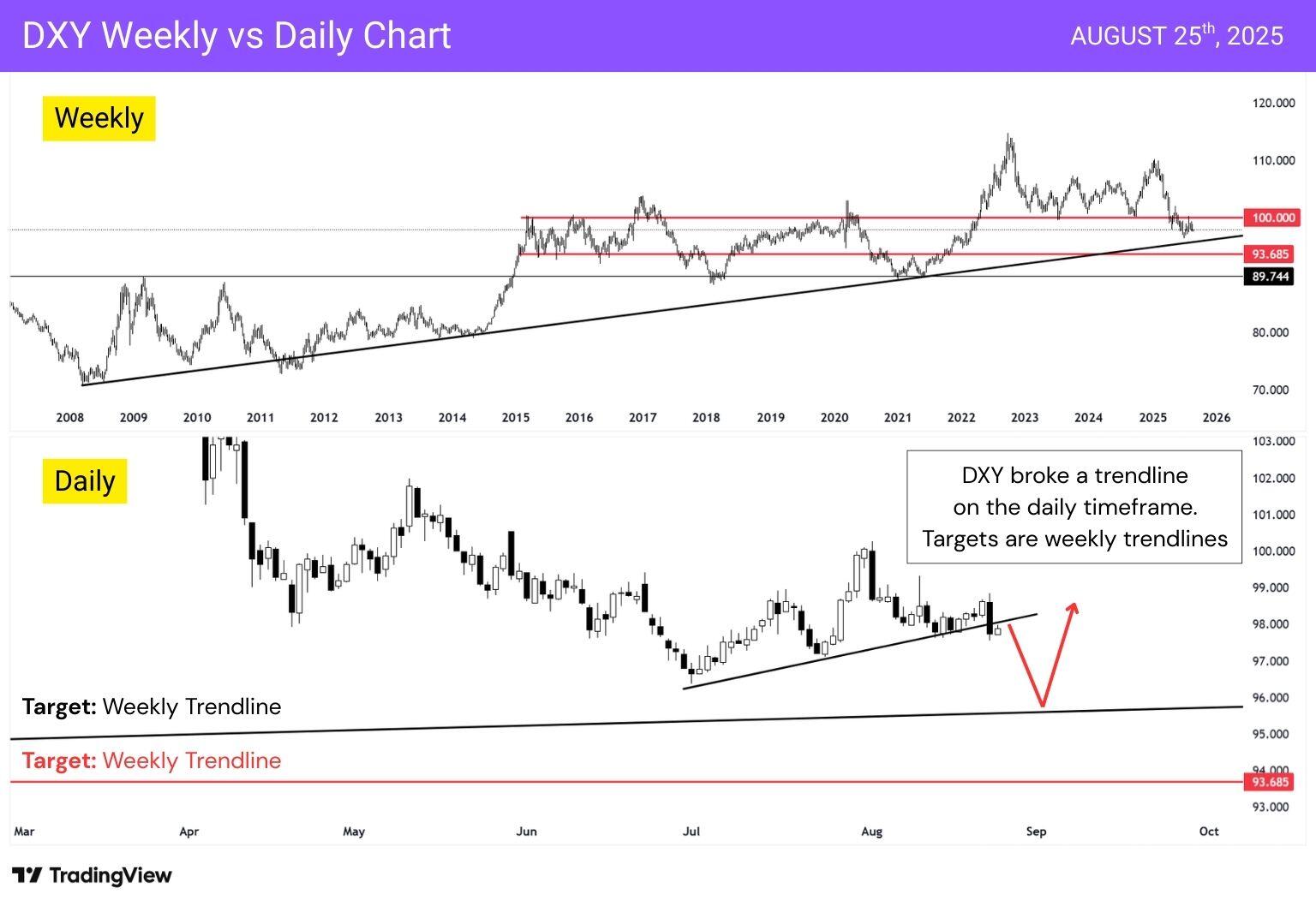
The dollar index broke down from a daily timeline after falling 0.90% on Friday, after Powell’s Jackson Hole statements.
This is a bearish indication that the dollar could continue to weaken, especially towards the lower weekly trendline at ~96.00. Another key zone to watch is around 93.685, which is the approximate range low from 2015 to 2016.
Should the dollar continue to weaken, Euro, Gold, and equities across the board could grind higher. But, be cautious of corrections along the way, as the markets moved volatilely last Friday.
Why markets reacted this way
Markets are always forward-looking, and Powell’s phrasing was enough to tilt expectations towards easier policy. Traders quickly began positioning for a rally into year-end, or at least into September when the next Fed decision looms.
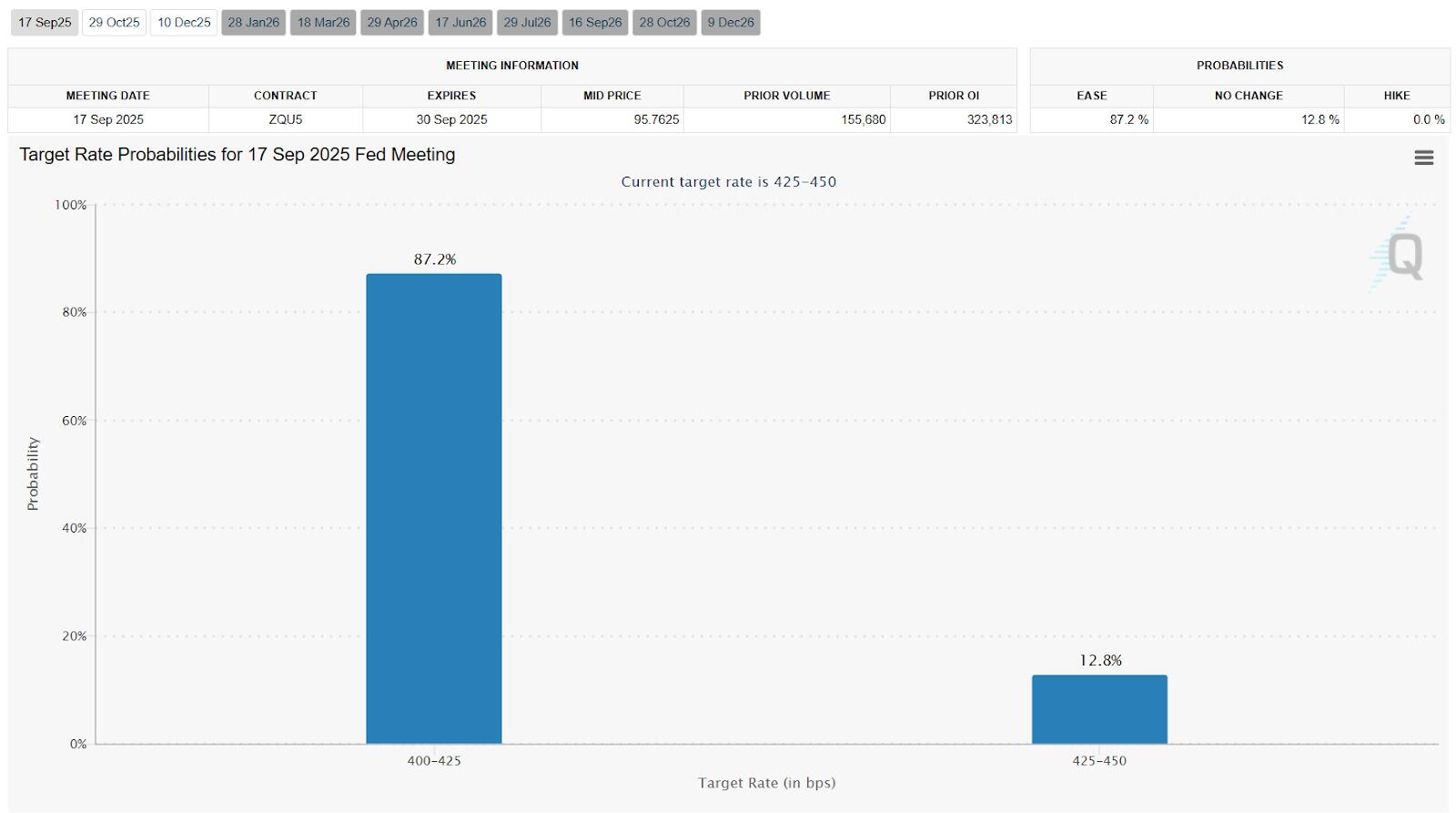
The CME FedWatch Tool captured this shift clearly: rate cut odds jumped from ~70% the week before to ~87% at the start of the new week. This surge in expectations reinforced a risk-on mood across asset classes.
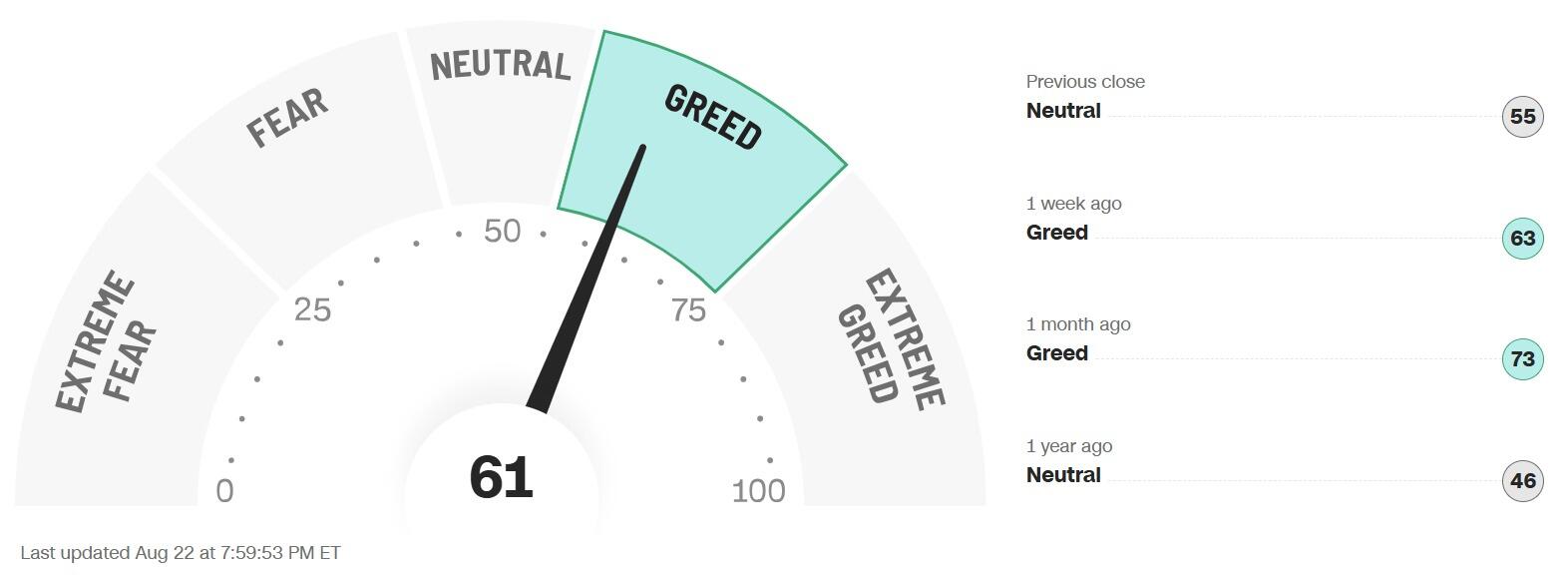
Sentiment gauges echoed the shift. CNN’s Fear & Greed Index climbed from neutral (55) to greed (61), reflecting a return of investor confidence.
This combination of Fed policy repricing and sentiment recovery explains the breadth of the rally. Equity markets surged on the prospect of cheaper borrowing costs and stronger earnings. Bonds rallied as yields fell in anticipation of looser monetary conditions. The dollar weakened, lifting commodities and risk assets abroad. And crypto, with its high beta to liquidity shifts, saw some of the sharpest gains.
Was it retail or smart money behind this move?
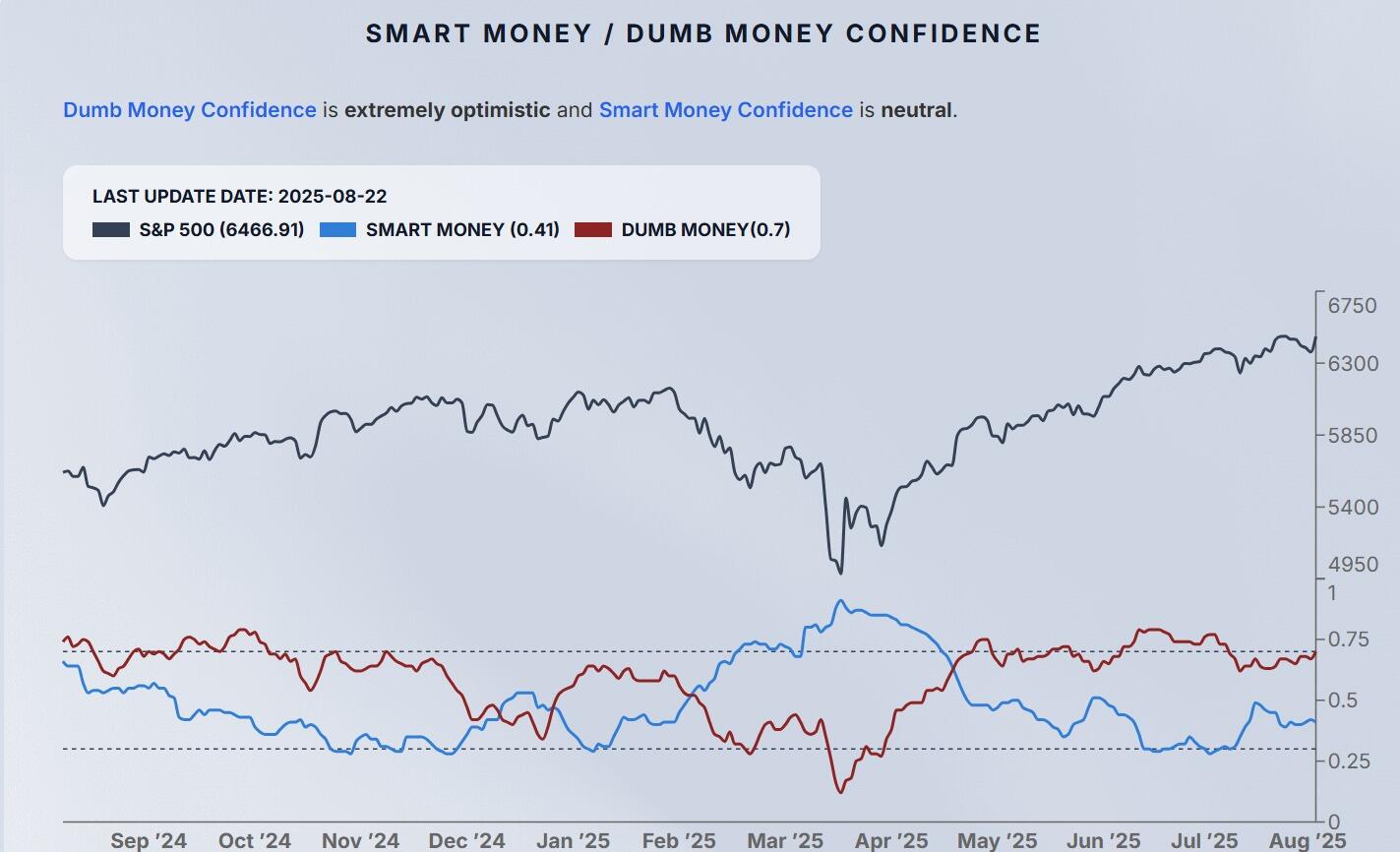
If you want more context on this, Sentimentrader is an interesting free tool to use. This reflects the accumulation and distribution behaviours of institutions (Smart Money) vs retail (Dumb Money).
As of writing this article, the data has not yet been updated since August 22nd, 2025 (Friday), when the Jackson Hole speech took place. So here’s what you can expect based on the next batch of data…
What we want to see:
Blue line ticks higher (Smart Money is accumulating), red line ticks lower (Retail is selling)
What we don’t want to see:
Blue ticks lower (Smart Money is selling), red line ticks higher (Retail is buying)
Based on what we see next, it could imply if a correction is coming next, or a continued rally would happen in the immediate short term.
Politics in play
Fed independence is under pressure. President Trump has repeatedly criticised Powell, demanded lower rates, and even threatened to fire Governor Lisa Cook. Powell insists decisions remain “data-dependent,” but the tension is real. Adding to uncertainty: Powell’s term ends in May 2026. A Trump reappointment or replacement could steer Fed policy in a very different direction.
Final word
Powell’s understated comments poured fuel on a global rally, proving again that markets trade perception as much as reality. Traditional finance and crypto are no longer separate arenas — they are deeply interconnected, moving together on Fed signals. The lesson? Don’t just watch the charts. Watch the Fed, the data, and the fine print in Powell’s words.
Author

Zorrays Junaid
Alchemy Markets
Zorrays Junaid has extensive combined experience in the financial markets as a portfolio manager and trading coach. More recently, he is an Analyst with Alchemy Markets, and has contributed to DailyFX and Elliott Wave Forecast in the past.