Is Vietnam the next great investment in Asia?
-
Recent Chinese regulatory crackdown has investors worried.
-
The latest moves are a signs greater state control over the economy.
-
Vietnam stands as prime beneficiary of investment flows away from China.

The recent Chinese regulatory crackdown on a variety of companies from Didi to its education sector has many investors worried about the prospect of capital assets in Asia causing Chinese equity markets to dip over the past few weeks as traders reassess the risks. But while China is clearly experiencing a power struggle between the CCP and the country’s fast growing tech sector, Vietnam may be a safer and better bet for longer term investment in Asia.
China is clearly experiencing a power struggle at this time as the CCP tries to cement its grip over every aspect of life and most importantly over the capital allocation decisions of some of the country’s fastest growing companies. The recent spate of draconian regulatory constraints against Ant Financial, Didi and the country’s whole private education sector which managed to wipe out more than three quarter of a trillion dollars in capitalization from those stocks not only shows the triumph of political power over market economics but it also raises very serious long term concerns about viability of the Chinese economic model which tries to combine iron fisted state control over corporate policy within a free market structure.
Up to now the Chinese model which allowed great freedom in the economic sphere while tightly controlling the political life of its citizens has been wildly successful in modernizing the country and putting it on a path towards becoming the biggest economy in the world. However as the country’s current President Xi Jinping has taken a stranglehold on power effectively becoming a ruler for life for the first time since the reign of Mao, China has lurched into a much more authoritarian mode most evident in its complete political crackdown in Hong Kong.
The impulse to control and impose the will of the state has now spilled over into the Chinese economy and this new shift in policy could have a chilling effect on innovation and more importantly on foreign direct investment as the idea of property rights is now put in doubt.
With many corporations now questioning their future investment commitments to China and looking to diversify their manufacturing footprint, Vietnam is beginning to look more and more as an attractive alternative in Southeast Asia. While the country is much smaller than China and could never offer the scale and scope of the Chinese economy it nevertheless may benefit from the shift in attitude of investors that want to take advantage of its friendlier economic climate and young dynamic population.
Some of the global multi-nationals have already started to diversify production to Vietnam with Nintendo, Alphabet and Intel just some of the names that have set up shop in the country. American imports from Vietnam have jumped markedly, tripling in growth over the past several years and the trend is likely to continue as the country’s favorable demographics with 70% of the population under 35 make it a prime center for both production and consumer growth. The fact that a large portion of the younger generation is fluent in English only adds to the attractiveness of the investment thesis.
Although Vietnam’s political structure is also communist, the party has allowed a great degree of freedom in economic development and the government has allocated more than 5.7% of Vietnam’s GDP to infrastructure – the largest spend in the region that should soon provide benefits in productivity and growth.
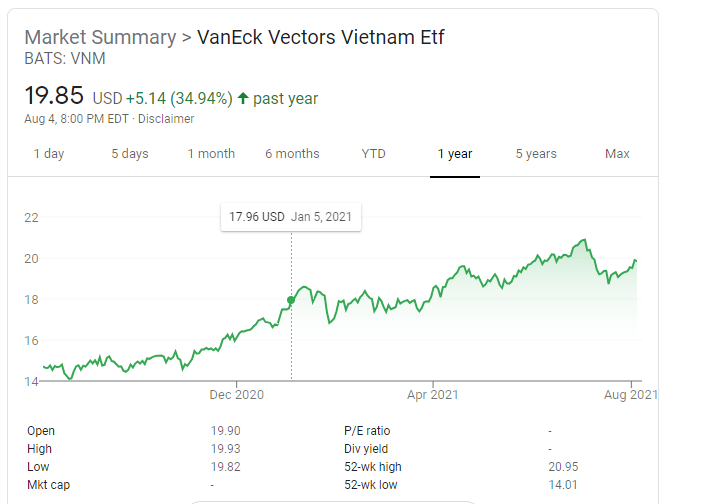
With competitive wages, young English speaking populace and a business friendly climate Vietnam stands to become one of the biggest beneficiaries in the cooling of US-Sino relations. The simplest way to participate in the growth story is through the VNM ETF which has appreciated 70% over the past year. The Vietnam growth story is just beginning and the stock could be triple bagger over the next 5 years as the country’s economy continues to develop.
Author

Boris Schlossberg
BKTraders and Prop Traders Edge
Boris Schlossberg was key speaker at the FXstreet.com International Traders Conferences 2010. Mr. Boris Schlossberg is a leading foreign exchange expert with more than 20 years of financial market experience.
















