Is the U.S better positioned to resist a trade war better than anybody else?

Outlook:
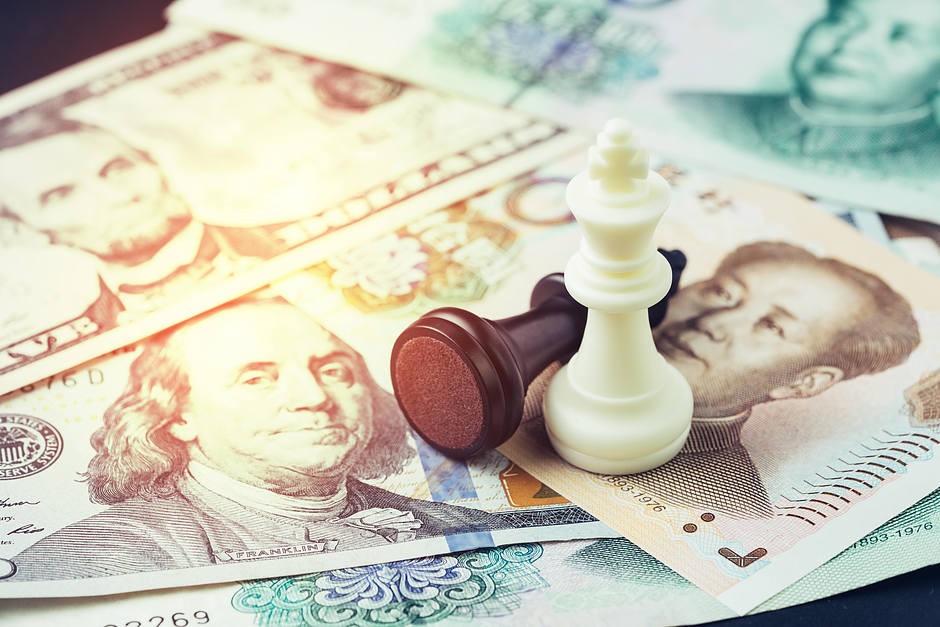
The US trade deficit narrowed in May by 6.6% to $43.05 billion, with exports up 1.9% and imports up by lot less, 0.4%. It’s the smallest deficit since Oct 2016, for what that’s worth (not much). It’s likely that commercials front-loaded exports ahead of the tariffs. Trump is sure to claim credit, and while we are loathe to admit it, he probably deserves it. As everyone has been saying all along, trade wars are bad for everyone. Nobody sees Trump retreating anytime soon, and the latest bombast about $500 billion in tariffs on Chinese goods—more than they actually export to the US—is ridiculous but also a sign of resolve.
Mohammed el-Erian says the size of the US and other factors lead him to accept that the US can, indeed, “win” the trade war. At least it’s better positioned to hang on for a longer time than anyone else, especially China. The consumer never wins, of course, and it’s a pity the trade war is being fought against traditional allies (Canada, Europe) as well as the cheating’ Chinese, but that’s more a question of style than of substance. The US has been drawing the short end of the stick on trade as well as funding things like Nato and the WTO. Trump may be a jackass but he has a point.
We are not so sanguine. For one thing, insulted allies like Germany may decide to retaliate. How about closing that biggest BMW plant in the world in a southern state? For another, we have yet to see how the soybean farmers, the symbol of the beleaguered exporters, decide to vote. Assuming the summer is a miserable one for those newly impacted by tariffs, public sentiment can turn on a dime. We could start seeing concessions already in August or at least by the time the crops come in in the fall.
As noted above, the stock market is shrugging off the trade war. The bond market is not, nor is the FX market. We see no reason for the dollar to be slumping except for the bond market’s skepticism about that forth hike—and positioning. When it comes to the horse having the bit in his teeth, you never know when he will drop it. Maybe the chart holds the answer—a Fibonacci retracement level, maybe, or the classical 50% retracement. If so, that means 1.2034.
This is an excerpt from “The Rockefeller Morning Briefing,” which is far larger (about 10 pages). The Briefing has been published every day for over 25 years and represents experienced analysis and insight. The report offers deep background and is not intended to guide FX trading. Rockefeller produces other reports (in spot and futures) for trading purposes. To see the full report and the traders’ advisories, sign up for a free trial now!
This is an excerpt from “The Rockefeller Morning Briefing,” which is far larger (about 10 pages). The Briefing has been published every day for over 25 years and represents experienced analysis and insight. The report offers deep background and is not intended to guide FX trading. Rockefeller produces other reports (in spot and futures) for trading purposes.
To get a two-week trial of the full reports plus traders advice for only $3.95. Click here!
Author
Barbara Rockefeller
Rockefeller Treasury Services, Inc.
Experience Before founding Rockefeller Treasury, Barbara worked at Citibank and other banks as a risk manager, new product developer (Cititrend), FX trader, advisor and loan officer. Miss Rockefeller is engaged to perform FX-relat

















