INX bridges the gap between the stock market and the crypto world, becoming the world’s first SEC-approved Exchange Platform

The first regulated securities exchange platform
INX (INXD:CA) is paving the way to the future as it becomes the first SEC-regulated platform to trade digital securities and cryptocurrencies. Prior to INX obtaining SEC approval, individuals wishing to trade cryptocurrency were only able to trade on unregulated and sometimes fraudulent exchanges and investment firms were limited to trading futures on Bitcoin.
In completing its SEC registration last year, INX has removed the barriers that institutional and individual investors faced around legality, making safe, secure access to crypto trading available to all.
INX began working with the SEC to obtain approval on the first regulated crypto exchange in 2018. The company faced significant public scrutiny and internal pressure, as gaining that approval meant paving the way for future platforms and changing trading groundwork. In 2020, INX was granted Form F-1 filing approval from the SEC, after a 950-day effort. Since then, the company achieved another first when it became authorized by the SEC as a Financial Industry Regulatory Authority (FINRA), allowing INX to issue tokens as securities to raise capital and facilitate trade.
Since April of 2021, when INX closed its first IPO after raising over $84 million from more than 7,200 investors, the company went on to raise an additional $40 million on the Canadian NEO Stock Exchange. INX had previously secured state money transmitter licenses allowing them to trade crypto in 31 states in 2021. In addition, INX spent the year acquiring and forming partnerships with multiple firms, including IPEX and Entoro Capital, which catapulted growth and led to more attention from growth-minded investors. The SEC certification, plus the acquisitions and new partnerships have given analysts enough evidence to predict that INX will become one of the top ten regulated blockchain-based exchange platforms in the next five years.
Bridging the gap between stocks and cryptocurrencies
The INX exchange platform provides enterprise-level security and transparency to institutions and independent investors. As a result, crypto operators and traditional institutional investors can benefit from the safety and security of traditional exchanges, while still taking advantage of the income potential of the growing cryptocurrency market. The licensed platform at INX permits investors to trade both cryptocurrencies and digital securities using INX Securities. Since becoming regulated, the exchange offers WebSocket and trading API to access real-time market data. INX promotes safety, ensuring institutional firms, through a cash Fund to safeguard platform capital.
INX is positioned to be a dominating brand in the future of finance. Crypto skeptics should feel a little less confident in their stance now that regulated trading is available, while hesitant traders can breathe a sigh of relief knowing that they can now enter the world of crypto with greater transparency and security.
INX key statistics (at 02/1/2022)
|
Market Cap |
183.7 Million |
|
Price/Earnings (trailing) |
-- |
|
Price/Earnings (forward) |
-- |
|
Price/Book (mrq) |
19.3589 |
|
EPS (ttm) |
-0.04 |
|
Shares outstanding |
12.98 Million |
|
Enterprise Value |
-- |
|
Enterprise Value/EBITDA |
-- |
|
52-week high |
$1.50 (listing price) |
|
52-week low |
$.86 |
|
Short ratio (12/31/2021) |
-- |
|
Price Target |
$1.11 |
INX Stock Forecast: Key Price is $1.11
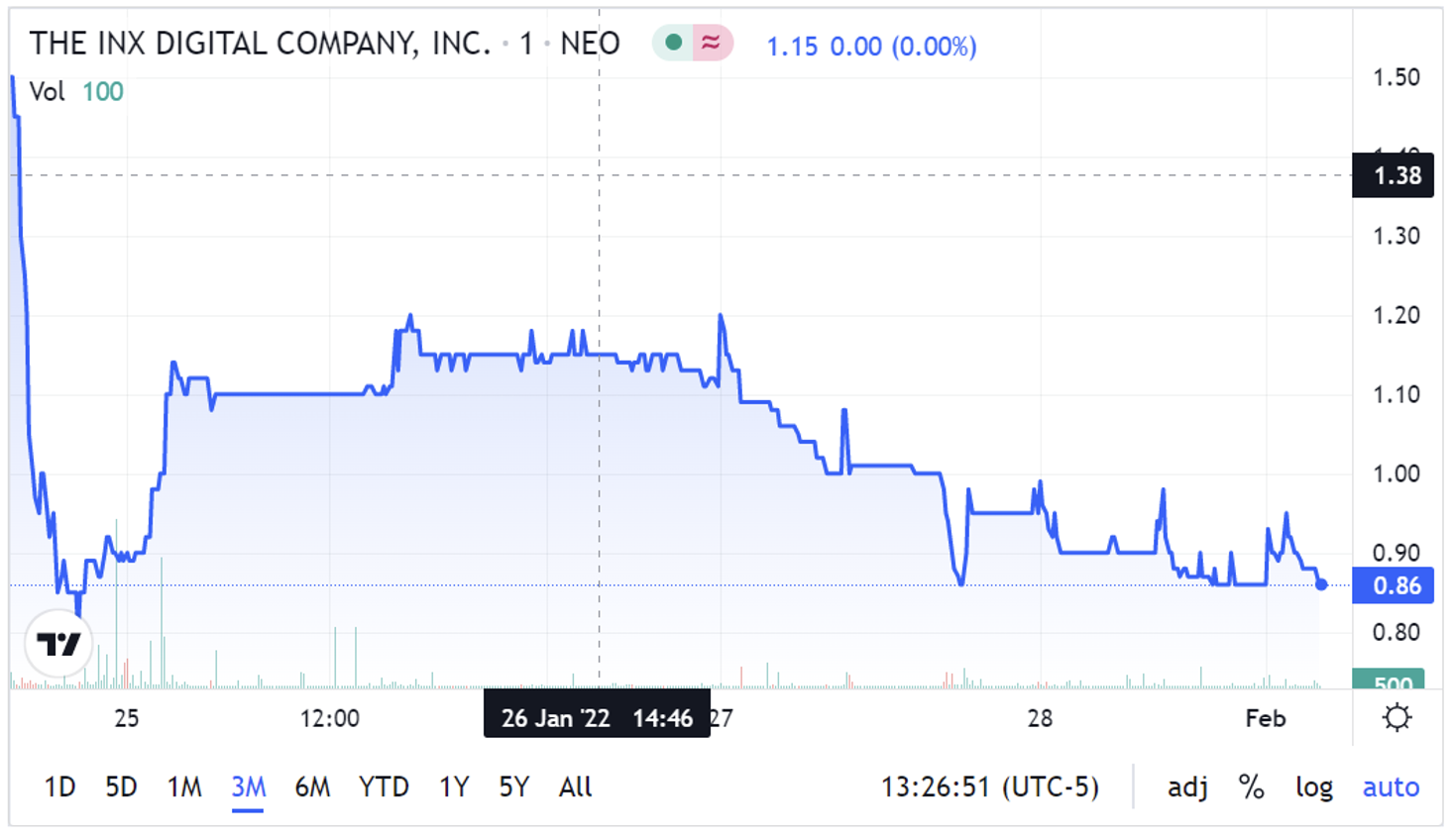
Post IPO, January 26th, 2022 marked the high point for INXD stock, as the day closed at $1.11. The price has fluctuated downward since that high point, maintaining a price +/- .34. INXD is a young stock that has not caught the attention of analysts yet, but as first mover in SEC-regulated crypto, market leadership is INXD’s to lose and an upward trend in price should be expected.
Author

Joshua Horowitz
Independent Analyst
Joshua Horowitz a writer and blogger active in the fields of cyber, pharma, blockchain, cannabis and more. Josh is associated with the Future Markets Research Tank, a digital brand market thoughts and commentary on emerging technologies and markets.