Industrial production growth powered mostly by tech in 2025

Summary
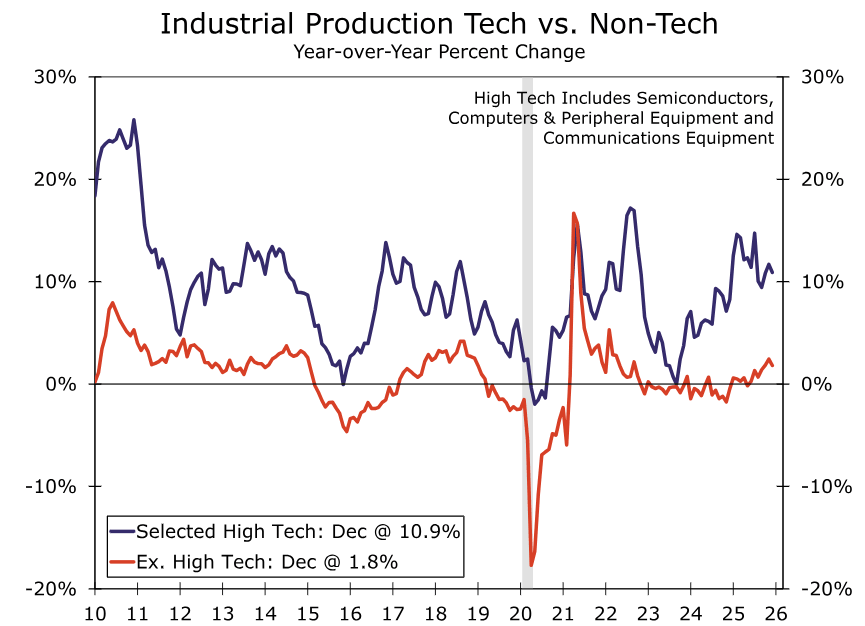
Overall industrial production finished 2025 up 2.0% for the year with select high-tech components up more than 10%. Big gains in the tech-sector paper-over smaller increases and outright decline in other areas.
Hitting the home stretch in stride
Industrial production made a sprint to the finish in 2025 with a better-than-expected December (+0.4%) coming on the heels of an upwardly revised November (also +0.4%). Overall output broke through the tape with a combined two-month gain that is about as strong as we saw all year.
The underlying details show a key theme from last year—everything high-tech and AI related outperformed. As seen in the chart above, production of things like semiconductors and computers rose at double-digit rates, while all other output has run at a historically-low clip. High-tech is small but mighty, representing just around 3% of domestic manufacturing today. We expect this trend to persist going forward, but it's also worth noting that the slow yet steady ascent in all other industrial production on a year-ago basis is a sign that broader activity may be starting to recover.
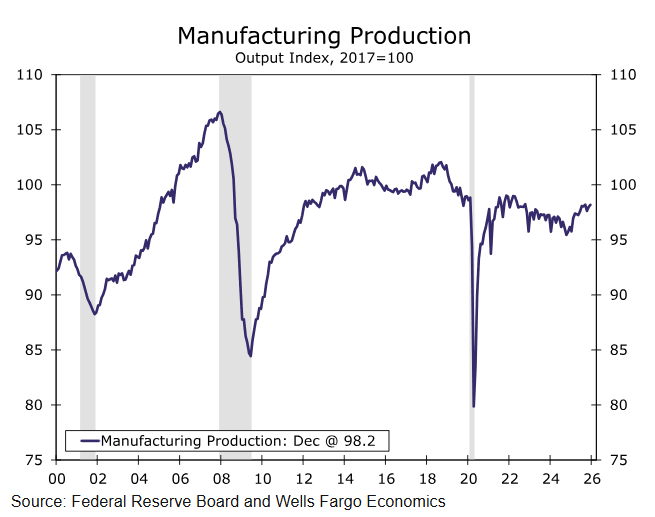
In case you missed it, over the holiday break in the last week of December, the Federal Reserve released a combined October & November industrial production report that showed output slipped in October and then ticked up in November. Along with upward revisions, the data show overall industrial production finished the year 2.0% higher from where it finished in December 2024. The same can be said for broad manufacturing activity, which turned higher toward the tail end of the year (chart) and was up a comparable amount. Utility output saw a larger gain, up 2.3% last year as insatiable demand from data centers continues to ratchet higher demand for power. Mining also rose 1.7% for the year despite finishing with declines in mining output in three out of the four final months of 2025. Capacity utilization inched up to 76.3% in December, but remains well below its long‑run average, underscoring persistent slack in the industrial sector.When it comes to broader cap-ex spending, we see some signs for relief this year. Businesses have dealt with a snowballing environment of uncertainty in recent years from the wake of the pandemic clouding the early 2020s, to the uncertainty around the outcome of the U.S. presidential election in 2024. Last year it was the expiring 2017 Tax Cuts & Jobs Act that led to some delay in broad capex, the focus on AI-specifically and more obviously tariff uncertainty.
There has been no shortage of reasons to delay big cap-ex plans. When we look out into this year though we expect some recovery in traditional investment. Trade policy will likely still be a source of concern, but we're not expecting as much tinkering to tariff rates as we saw last year. The One Big Beautiful Bill Act also made bonus depreciation permanent and included some favorable tax adjustments around expensing and deductions for firms that could support growth. We ultimately expect high-tech investment to be the main star of the show again this year, though traditional cap-ex is showing some signs of recovery around the margin.
Author
Wells Fargo Research Team
Wells Fargo