Industrial and tech demand for Gold surged in Q1
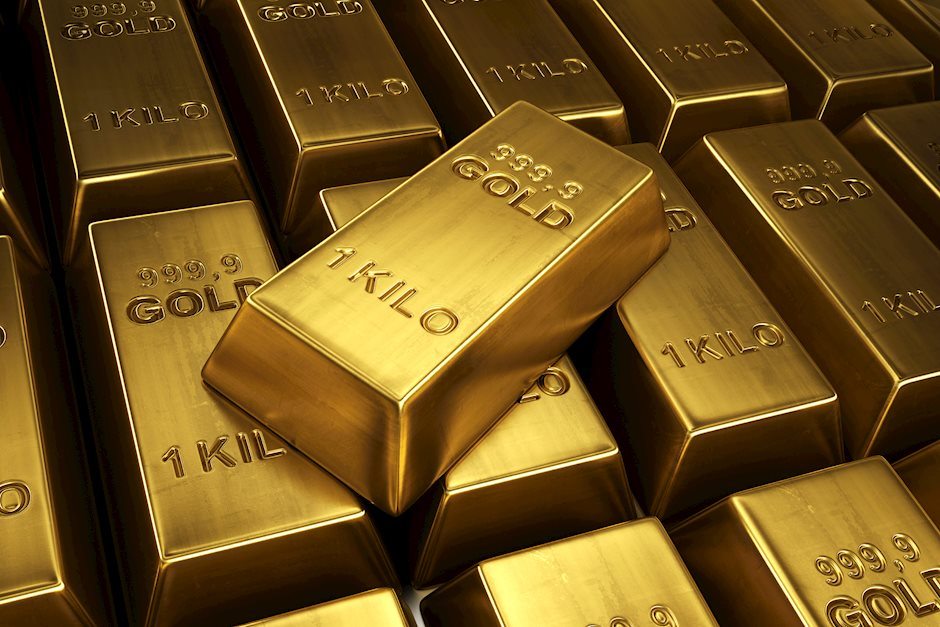

Industrial and tech demand for gold rebounded in the first quarter, rising 10 percent year over year.
Industrial and technological applications consumed about 79 tons of gold in Q1, according to data compiled by the World Gold Council.
At the aggregate level, all four major electronics fabrication hubs around the world recorded a year-on-year increase in gold demand during the first quarter.
- Japan – 19 tons (24.0% increase)
- South Korea – 6 tons (20.2% increase)
- The US – 17 tons (1.6% increase)
- Mainland China and Hong Kong – 17 tons (18.5% increase)
A recovery in the electronics sector helped drive industrial demand for gold higher. Gold offtake for electronic applications rose 13 percent year-on-year to 64 tons.
Demand for gold in tech is expected to continue an upward trajectory thanks to the growth in AI-related devices and infrastructure. According to the WGC, “The rapid growth of cloud computing catalyzed by the AI boom boosted demand for high-end communication chips.”
There was also a strong rebound in demand for smartphones.
Gold is an important component in the manufacturing of light-emitting diodes. According to the WGC, industrial gold demand got a boost from a strong period of automotive demand, as well as a resurgence in demand for displays/panels, helped by the prospect of major events such as the Paris Olympics and Euro 2024.
Other industrial applications charted a 2 percent gain in the first quarter.
Gold is far from useless
Warren Buffett once said, “Gold gets dug out of the ground in Africa, or someplace. Then we melt it down, dig another hole, bury it again and pay people to stand around guarding it. It has no utility. Anyone watching from Mars would be scratching their head.”
You’ll often hear this notion that gold is “useless” from commentators on mainstream financial networks.
And it’s just silly.
Gold is one of the most useful metals in the world.
In the first place, gold is beautiful. That’s why people all over the world love to wear gold. About three-quarters of gold demand is for jewelry production. About 479 tons of gold were used in jewelry fabrication in the first quarter.
But gold isn’t just a pretty face. Because of its inherent properties, gold is used in many industrial and technological applications. Gold doesn’t corrode, it is an exceptional electricity conductor, it is malleable, and gold can be used to catalyze many chemical processes without being consumed.
This is why we see gold increasingly used in the tech sector. In fact, gold would probably be used even more if it weren’t so rare and expensive.
Gold is also important in the medical field. Its inherent stability and unique optical properties make it perfect for use in diagnostic testing. The World Gold Council said that gold is “at the heart of the hundreds of millions of Rapid Diagnostic Tests (RDTs) that are used globally every year.
“This well-established, and critically important, technology has changed the face of disease diagnosis in the developing world over the last decade.”
Gold nanoparticles are used in testing for malaria, HIV, hepatitis, and other illnesses.
Gold has even been used in some exotic applications. In 2018, a team of Chinese researchers partially restored the sight of blind mice by replacing their deteriorated photoreceptors – sensory structures inside the eye that respond to light – with nano-wires made of gold and titanium.
The point is gold is far from useless.
On top of that, gold is money.
To receive free commentary and analysis on the gold and silver markets, click here to be added to the Money Metals news service.
Author
Mike Maharrey
Money Metals Exchange
Mike Maharrey is a journalist and market analyst for MoneyMetals.com with over a decade of experience in precious metals. He holds a BS in accounting from the University of Kentucky and a BA in journalism from the University of South Florida.

















