Indian Gold demand remains strong despite price pressures

Investment demand for gold remained strong in India last month, even as post-wedding season jewelry demand was soft due to price pressure. Meanwhile, many Indians are taking advantage of higher prices and monetizing their gold.
India ranks as the world's second-largest gold market behind China.
Domestic gold prices in India followed global trends, gaining about 1 percent in May. Through the first two weeks of June, the yellow metal picked up another 4 percent.
To date, gold is up over 30 percent in rupee terms.
Gold investment demand firm as jewelry demand softens
The World Gold Council called Indian gold jewelry demand "underwhelming" as the wedding season came to a close. Late May and early June typically bring softer jewelry demand due to seasonal fluctuations. Moderating prices in May increased store traffic, but demand was subdued, and buying was generally limited to "need-based" purchases.
According to the World Gold Council, anecdotal evidence suggests that Indians are monetizing their gold jewelry by exchanging old pieces for new, liquidating it altogether, or using it as collateral for loans.
The Reserve Bank of India recently eased some gold loan regulations, and this move is expected to boost lending against the yellow metal.
As of the end of April, gold loans by commercial banks had surged nearly 120 percent year-on-year.
However, investment demand for physical gold remained strong. Coin and bar sales were sustained by positive price momentum and the expectation of continued price increases. According to the World Gold Council, demand for smaller coins weighing less than 10 grams has been exceptionally strong.
Coin and bar sales make up about 30 percent of Indian consumer demand.
Gold flowed into Indian-based ETFs in May, after two consecutive months of outflows, and analysts say it appears inflows continued into the first two months of June.
Assets under management by Indian ETFs rose by about $34 million last month with the addition of 0.2 tonnes of metal.
Total gold holding by Indian-based funds is 64.65 tonnes.
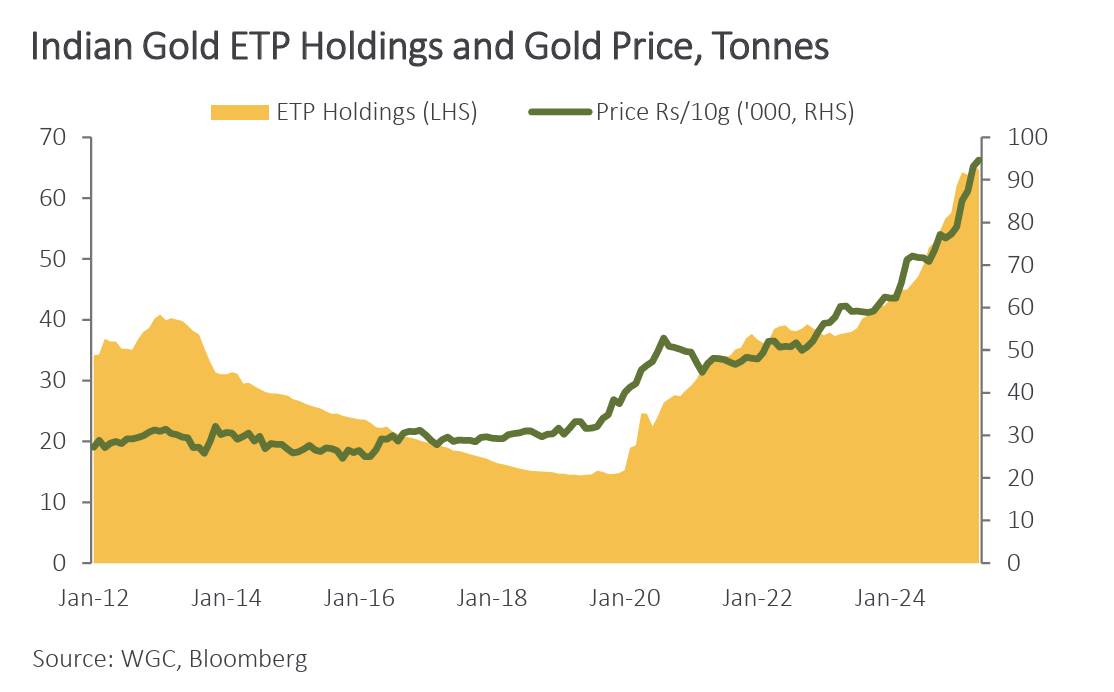
Investor participation also continued to grow, with 220,000 new accounts. So far this year, the number of ETF folios has grown by 38 percent. The World Gold Council says this signals "continued and broadening investor interest in gold as a financial asset."
A gold ETF is backed by a trust company that holds metal owned and stored by the trust. In most cases, investing in an ETF does not entitle you to any amount of physical gold. You own a share of the ETF, not gold itself. ETFs are a convenient way for investors to play the gold market, but owning ETF shares is not the same as holding physical gold.
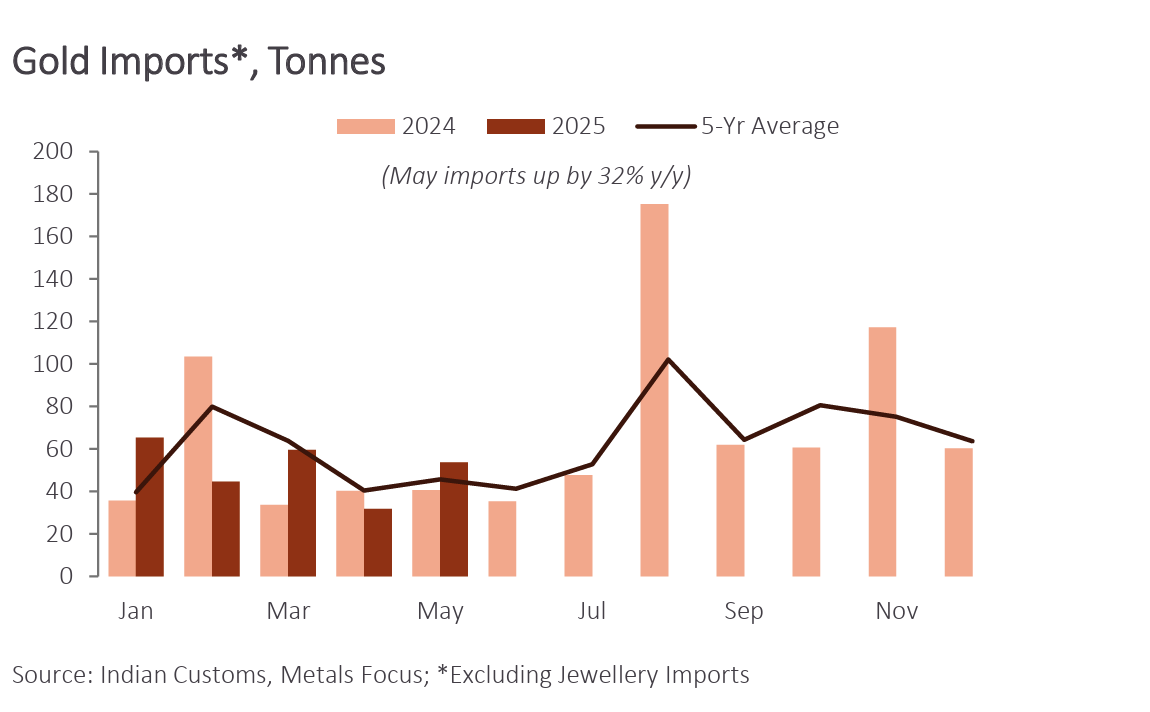
Gold imports were up by about 32 percent year-on-year in May, according to data collected by Metals Focus.
Indians have a longstanding love affair with gold.
The yellow metal is deeply interwoven into the country’s marriage ceremonies, along with its religious and cultural rituals. Festival seasons typically boost gold demand.
Indians have long valued the yellow metal as a store of wealth, especially in poorer rural regions. Around two-thirds of India’s gold demand comes from beyond the urban centers, where large numbers of people operate outside the tax system. Many Indians use gold jewelry not only as an adornment but as a way to preserve wealth.
In the West, gold is generally viewed as a luxury item. Not in India. Even poor Indians buy gold.
According to a 2018 ICE360 survey, one in every two households in India had purchased gold within the last five years. Overall, 87 percent of Indian households own some gold. Even households at the lowest income levels in India hold some of the yellow metal. According to the survey, more than 75 percent of families in the bottom 10 percent of income managed to buy some gold.
The yellow metal was a lifeline for Indians buffeted by the economic storm caused by the government's response to COVID-19. After the Indian government locked down the country, banks tightened credit to mitigate the default risk. Unable to secure traditional loans, Indians used gold to secure financing. As Indians endured a second wave of lockdowns, many Indians resorted to selling gold outright to make ends meet.
To receive free commentary and analysis on the gold and silver markets, click here to be added to the Money Metals news service.
To receive free commentary and analysis on the gold and silver markets, click here to be added to the Money Metals news service.
Author
Mike Maharrey
Money Metals Exchange
Mike Maharrey is a journalist and market analyst for MoneyMetals.com with over a decade of experience in precious metals. He holds a BS in accounting from the University of Kentucky and a BA in journalism from the University of South Florida.

















