Hormuz risk moves beyond Oil as refining margins and bond yields stay elevated

The oil market is beginning to price a more uncomfortable possibility: the disruption around the Strait of Hormuz may last longer than investors had hoped.
The 60-day negotiating window contained in the June US–Iran memorandum has now expired without a final settlement. The interim framework had already deteriorated well before the deadline, but its expiry removes another potential route towards a quick normalisation of Gulf energy flows. Meanwhile, shipping through Hormuz remains severely restricted, with only six commodity vessels recorded crossing on Monday and no VLCC crude carriers or LNG tankers recorded.
Brent crude has responded accordingly, climbing for a third consecutive session and trading around $91 per barrel this morning.
But crude itself may no longer be the most interesting signal.
The bigger story is increasingly what is happening downstream in refined products and across the bond market.
Brent pushes higher, but resistance is approaching
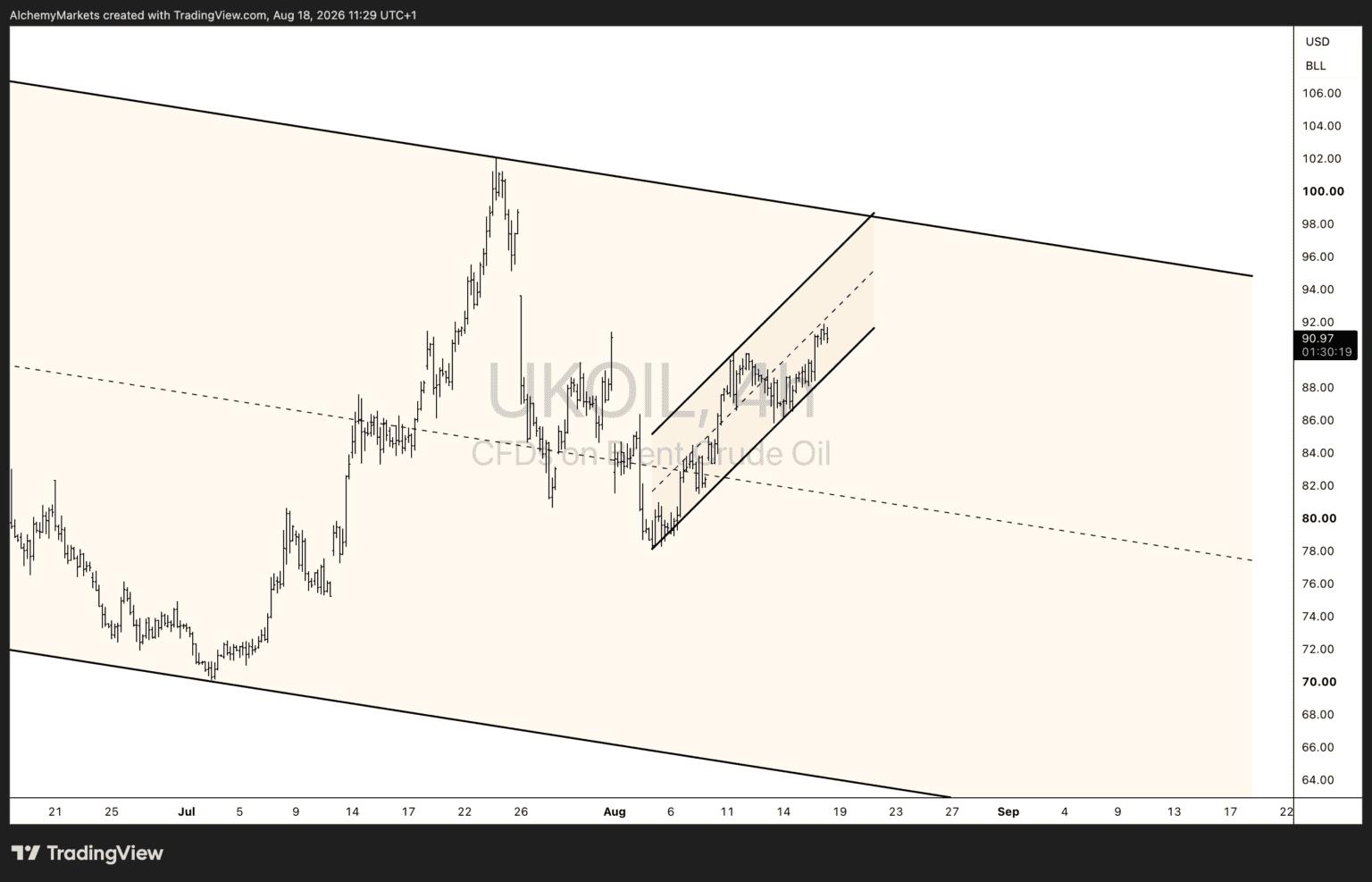
Brent has recovered strongly from its early-August low around $78–80 and is now trading close to $91.
Technically, crude remains inside the ascending channel that has developed since the August low. Price is continuing towards the upper portion of that structure, while the much larger descending trendline overhead creates another important resistance area towards the upper-$90s.
For now, that keeps the near-term bias moderately bullish rather than bearish.
Fundamentally, the reasoning is straightforward:
Hormuz flows remain impaired → available Gulf supply remains constrained → geopolitical risk premium remains supported.
The risk is that quite a lot has already been repriced. Brent traded close to $79 earlier this month when hopes of a diplomatic breakthrough were stronger. A return towards $91 therefore represents a substantial reversal in expectations.
That makes further upside increasingly dependent on continued physical disruption, rather than simply more political headlines.
Refining margins show where the real stress is
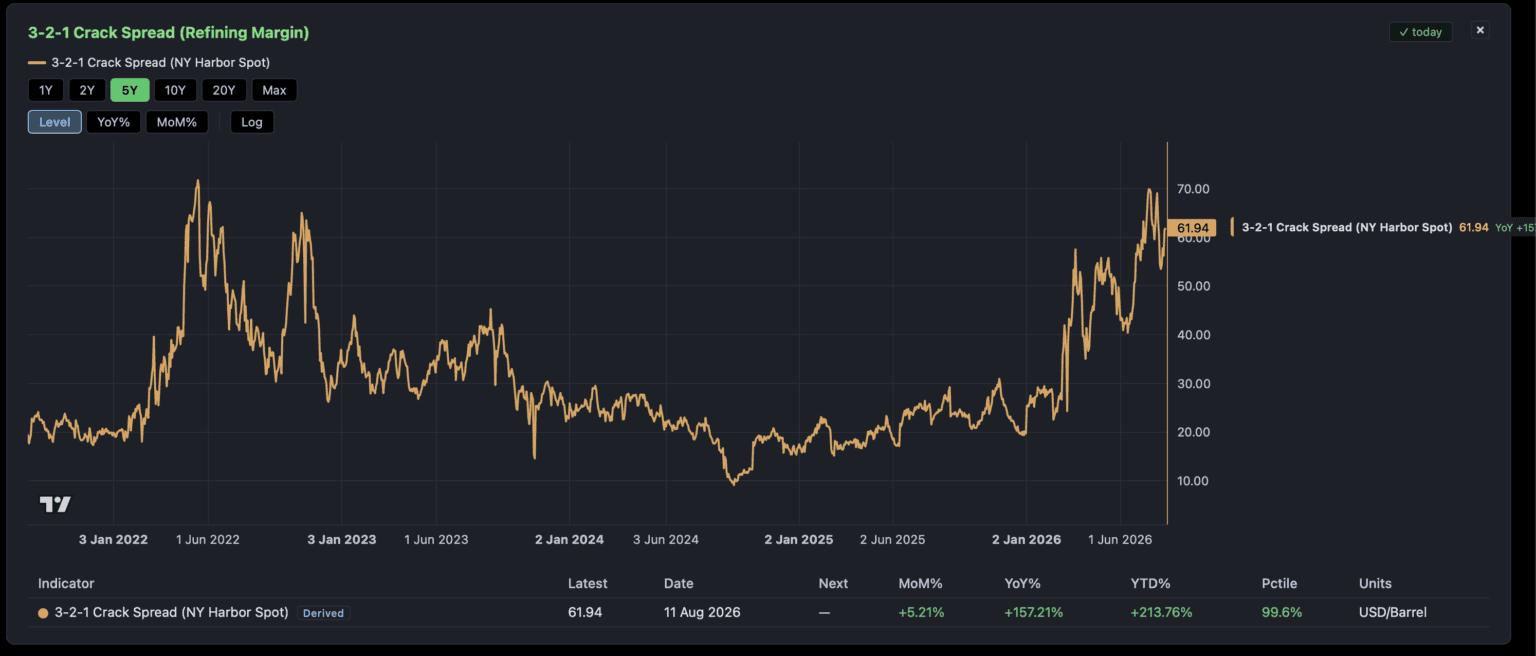
The more striking chart is the US 3-2-1 crack spread.
This is a rough measure of what a refinery earns from turning crude into petrol and distillate products such as diesel.
The spread currently sits around $61.94 per barrel, up roughly 157% year-on-year and more than 200% year-to-date. On the five-year history shown here, that puts it in approximately the 99.6th percentile.
That is an extreme reading.
Importantly, the message isn’t that refinery margins are suddenly accelerating today. The spread has pulled back from peaks around $70.
The message is that:
Even after that pullback, refining economics remain exceptionally tight.
That suggests the energy shock is no longer just about obtaining crude oil. There is also a shortage premium attached to turning that crude into usable fuels.
Inventories help explain why
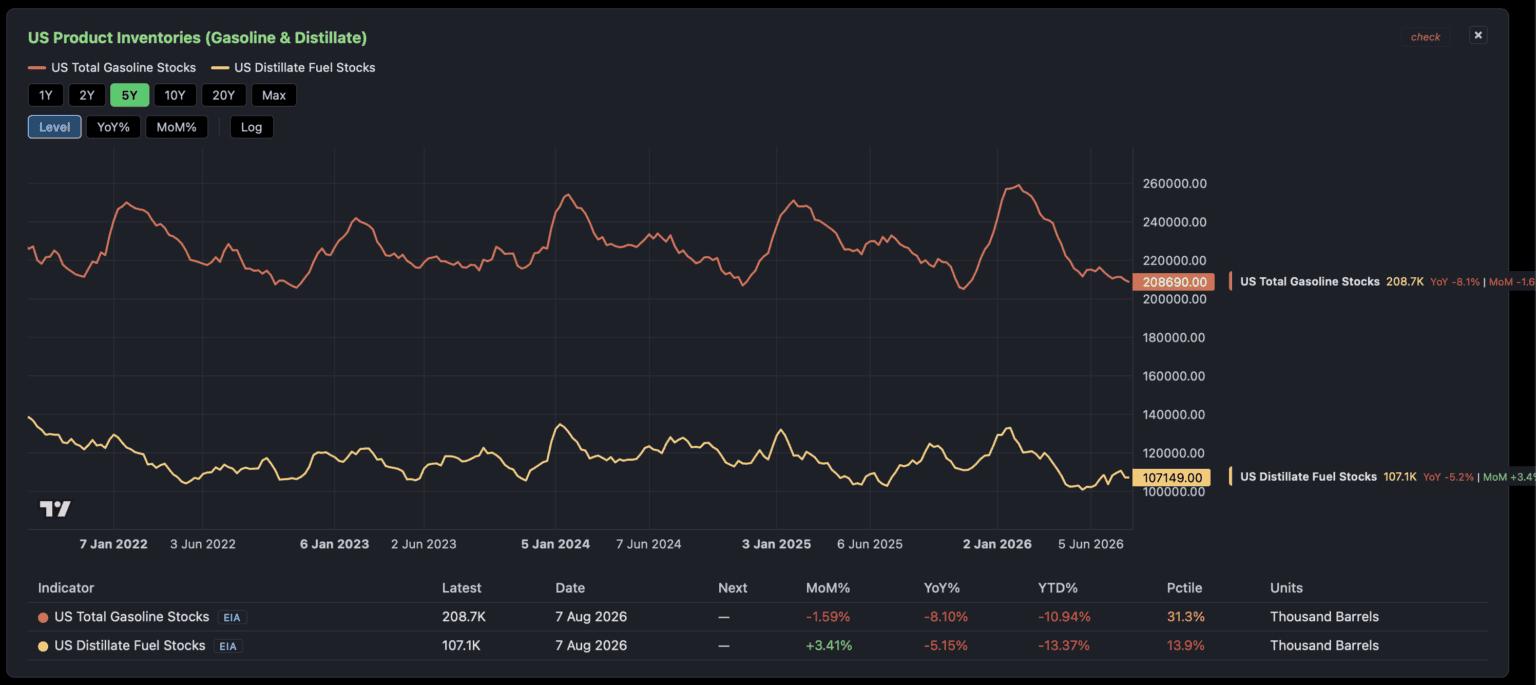
The inventory picture backs that up.
US distillate stocks sit at roughly 107 million barrels, around 5% below last year and in only the 13.9th percentile of the five-year range shown.
Gasoline stocks are also relatively subdued at around 209 million barrels, approximately 8% lower year-on-year.
Distillate inventories have risen modestly over the latest month, so this isn’t a picture of inventories collapsing uncontrollably.
But the absolute starting point remains low.
That combination matters:
low product inventories
- disrupted refining and shipping
- strong crack spreads
= limited cushion if the Hormuz disruption worsens again.
For the broader economy, this is where the oil story starts becoming an inflation and margin story.
Diesel feeds into trucking, agriculture, construction and manufacturing. Jet fuel affects airlines. Petrol hits consumers directly.
So a prolonged refined-product squeeze can travel through the economy even if Brent itself stops rising.
Bond yields are moving — But inflation expectations tell a more nuanced story
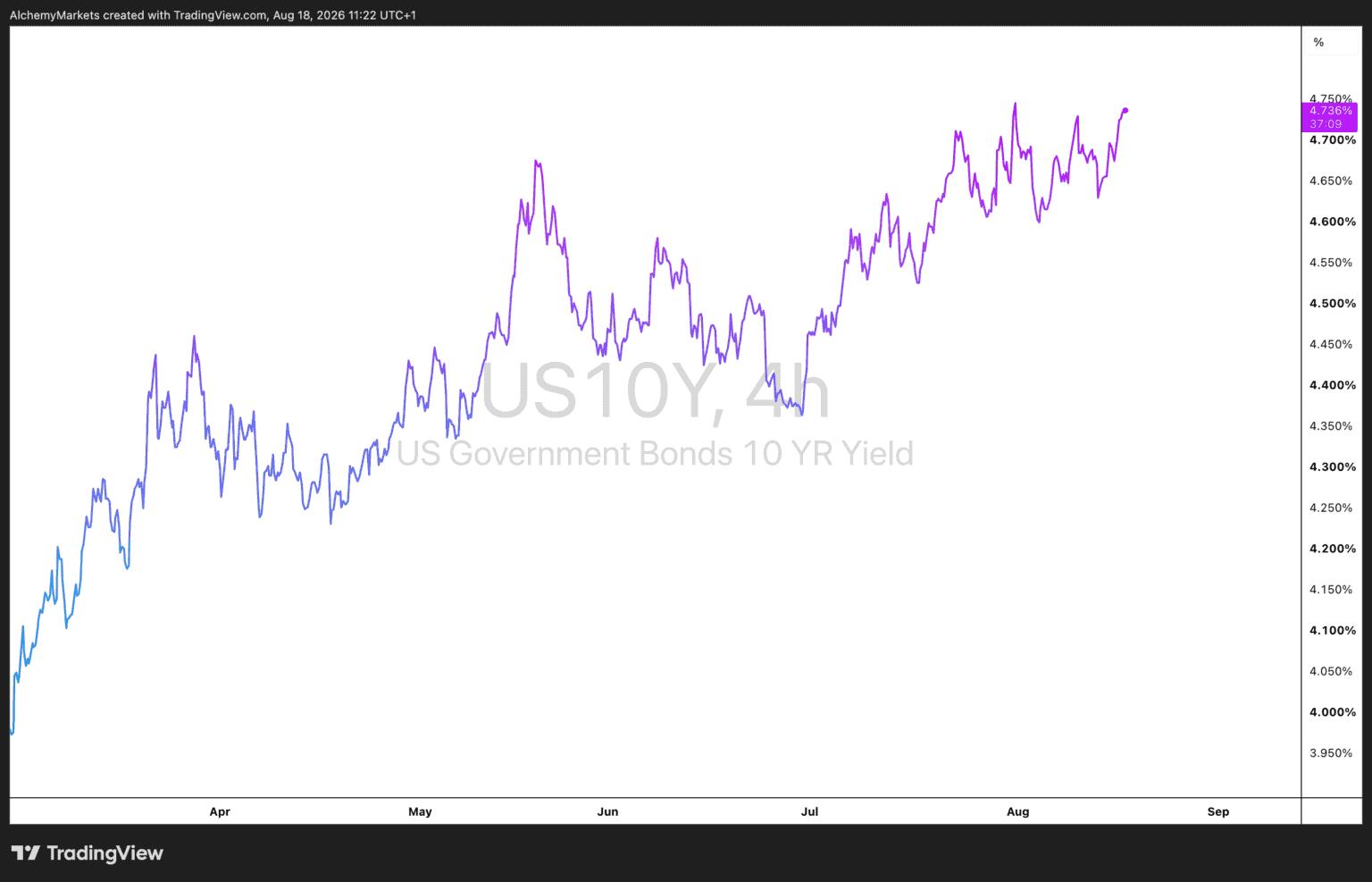
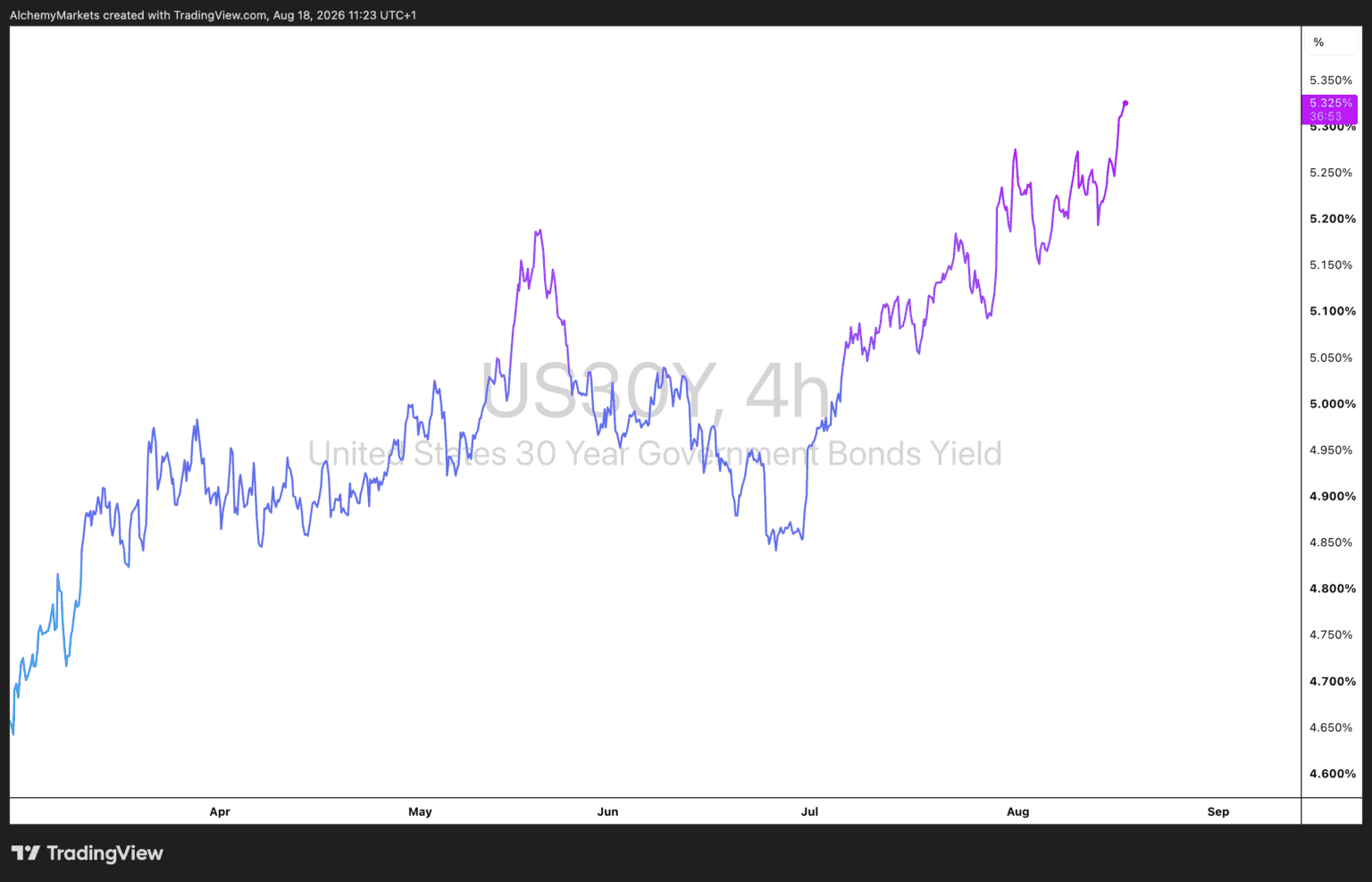
This morning the US 10-year yield is around 4.74%, while the 30-year has moved above 5.3%, its highest level since 2007.
At first glance, that fits the obvious narrative:
oil rises → inflation risk rises → bonds sell off → yields rise.
But there is an important cross-check.
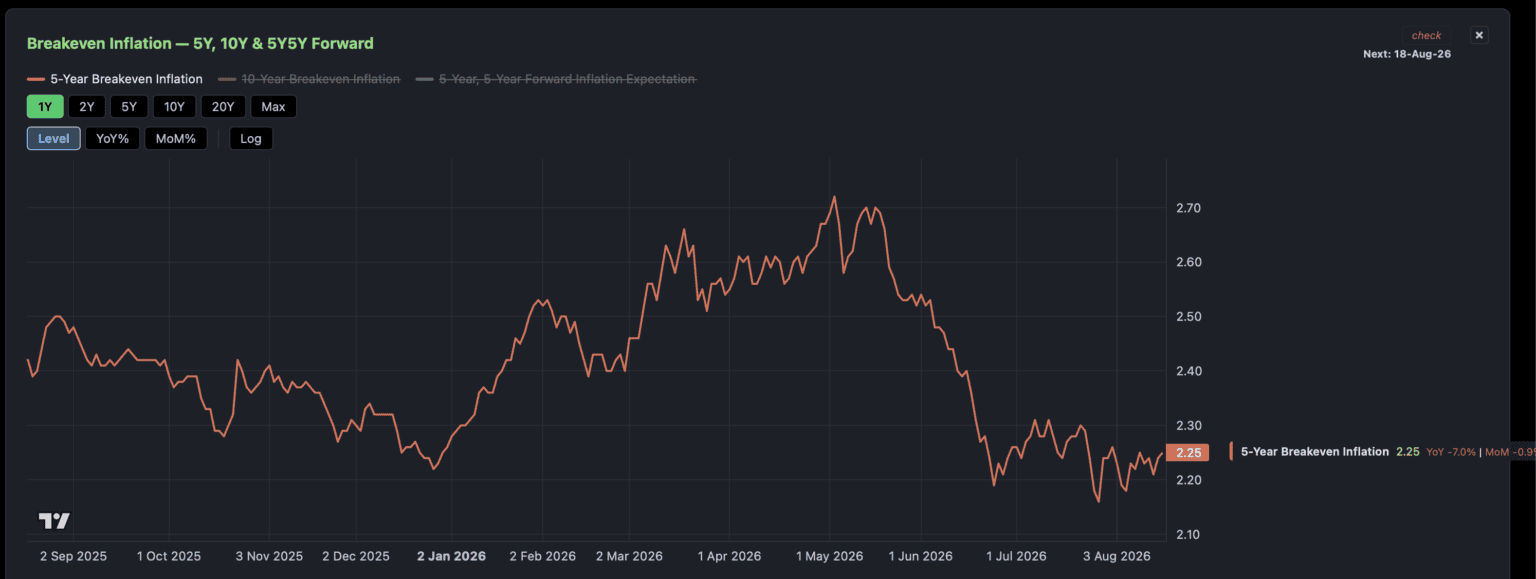
Five-year breakeven inflation is sitting around 2.25% and remains well below its May peak near 2.7%.
In other words, the bond market is not yet pricing a major lasting inflation shock.
That makes the rise in long-term yields more complicated.
Oil and geopolitical risk are contributing to the pressure, but the divergence between rising nominal yields and relatively contained breakevens suggests other forces — including real yields, term premium and concerns around debt supply — are also involved.
That’s an important distinction.
We are seeing inflation risk, but not yet an inflation panic.
What matters next
The market’s next decision probably comes down to whether the Hormuz shock continues to spread, or begins to normalise.
If shipping remains severely restricted, refined-product inventories stay low and crack spreads remain close to current extremes, Brent has fundamental support to continue testing the upper end of its current channel.
But the opposite is equally important.
A credible diplomatic breakthrough, improving vessel traffic or a sustained collapse in crack spreads would quickly challenge the idea that today’s disruption represents a new longer-lasting regime.
So the cleaner market read isn’t simply:
Oil is going higher.
It is:
The market is increasingly pricing a prolonged Hormuz disruption, and the most important confirmation is now appearing outside crude itself — in refining margins, fuel inventories and long-duration bond yields.
For Brent, the trend remains constructive.
But with crude already back above $90 and approaching important technical resistance, the next leg higher will need fresh fundamental confirmation, not simply another geopolitical headline.
Author

Zorrays Junaid
Alchemy Markets
Zorrays Junaid has extensive combined experience in the financial markets as a portfolio manager and trading coach. More recently, he is an Analyst with Alchemy Markets, and has contributed to DailyFX and Elliott Wave Forecast in the past.