Gold rebounds from support zone as Senate bill fuels US inflation concerns


Investors are turning to gold (XAUUSD) as inflation fears rise following the narrow Senate approval of a controversial bill. The proposed tax cuts and spending reductions have raised concerns about a ballooning US deficit. While gold gains appeal as a safe-haven asset, equity markets continue to rally, with major indices hitting record highs. Still, traders remain alert ahead of key economic data this week, including jobs reports and Fed commentary. These events could drive volatility and shift sentiment in both gold and currency markets.
Senate bill inflation fears boost Gold demand as stocks hit record highs
The proposed bill, which narrowly passed the Senate, has sparked concerns about significant inflation. Investors are wary that aggressive tax cuts, combined with reduced funding for green energy and healthcare, could widen the US deficit. This outlook has boosted interest in gold, as it is often seen as a safe-haven asset during periods of rising inflation and a weakening dollar.
Despite these concerns, equity markets continue to rally. Both the S&P 500 and Nasdaq reached new record highs on Monday, indicating that risk appetite remains strong. However, market participants remain cautious, aware that upcoming economic data could trigger volatility in the days ahead.
This week’s economic calendar is packed with key events. The June Nonfarm Payrolls (NFP) report, which was initially scheduled for release on Friday, has been moved to Thursday due to the holiday and will be closely watched. Investors will also focus on Fed Chair Jerome Powell’s speech on Tuesday, Wednesday’s ADP Employment data, and the latest inflation readings from the PCE price index. Any signs of slowing growth or dovish commentary from the Fed could pressure the US Dollar and lift Gold prices, especially if rate cut expectations strengthen.
Gold consolidates between $3,180 and $3,440 with breakout potential ahead
The gold chart below shows a well-defined consolidation pattern between $3,180 and $3,440. After a sharp rally in March and early April, prices entered a sideways range. They have remained trapped within this structure for nearly three months.
Currently, gold is trading above $3,330, just below the upper boundary of this range. Sellers have consistently stepped in near the $3,440 level, creating resistance that has yet to be broken. Buyers, meanwhile, continue to defend the $3,180 zone as key support.
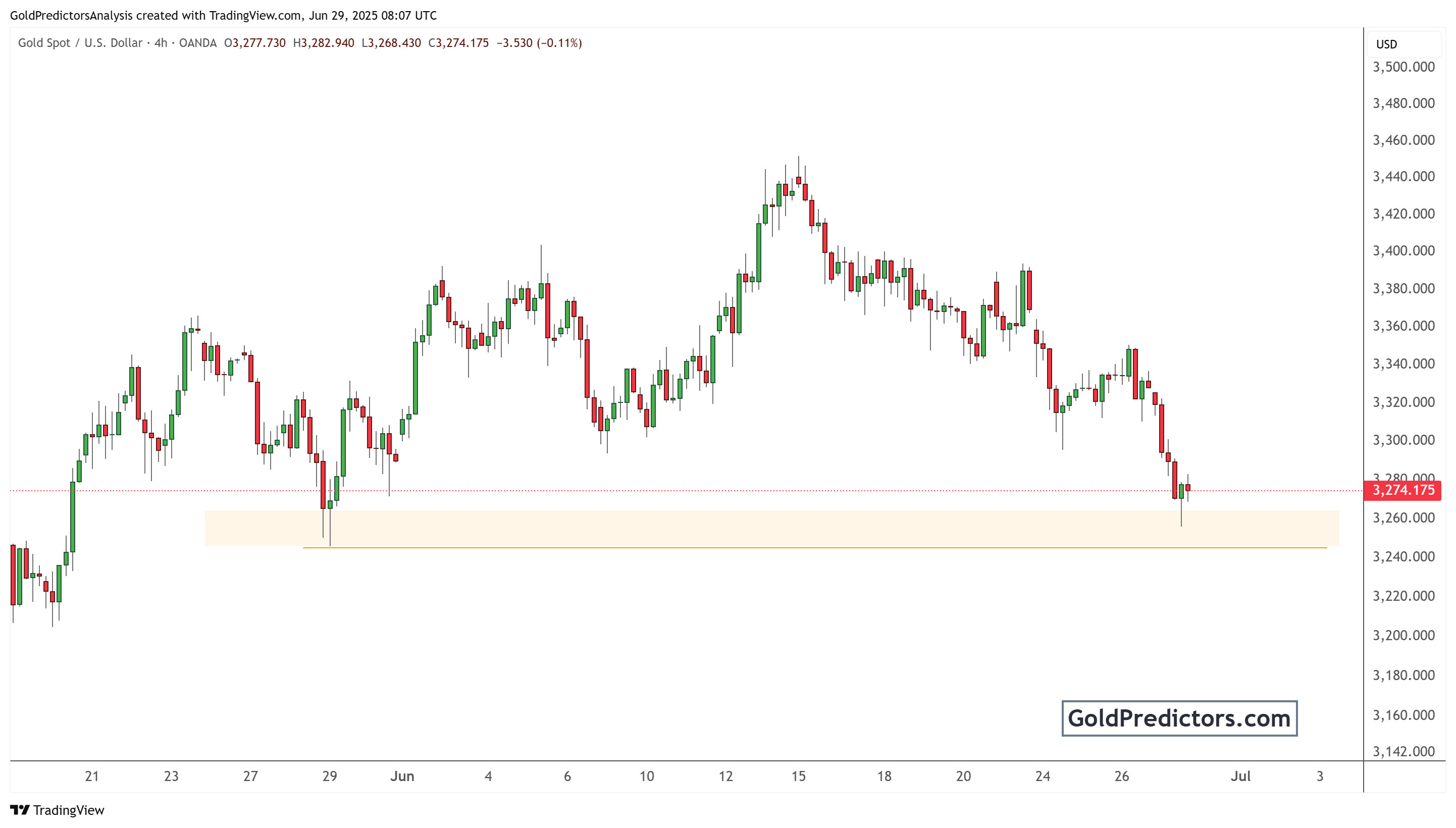
If prices break below the $3,180 region, this lower area could act as a strong floor, potentially halting further declines. On the upside, a breakout above $3,440 could pave the way for a fresh rally toward the projected target at $3,500.
The structure suggests that bulls are not giving up control, but they lack enough momentum to push higher for now. The longer gold stays in this consolidation, the more explosive the eventual breakout could be, especially with so many macro triggers on the horizon.
Conclusion
Gold remains delicately balanced as political uncertainty and the release of economic data create an unpredictable environment. With Trump’s bill potentially fueling inflation and weakening the US Dollar, gold could benefit as a safe-haven asset. However, a confirmed breakout from the current technical range will be key to determining the next major trend. Until then, gold traders are likely to stay cautious, watching both market developments and the charts for their next signal.
Unlock exclusive gold and silver trading signals and updates that most investors don’t see. Join our free newsletter now!
Unlock exclusive gold and silver trading signals and updates that most investors don’t see. Join our free newsletter now!
Author
Muhammad Umair, PhD
Gold Predictors
Muhammad Umair is a financial markets analyst and investor who focuses on the forex and precious metals markets.

















