|

Gold Price Forecast: Double Top breakdown confirmed, but $1,302 could be revisited

  • The gold weekly chart shows the double top bearish reversal.
  • 4-hour chart shows bullish RSI divergence, hence the neckline resistance - $1,302 could be put to test.

Gold (XAU/USD) is set to end the week well below $1,302, confirming a double top bearish reversal. The pattern indicates the rally from the December 2016 low of $1,122 has ended and the bears are back in the driver's seat.

Weekly chart
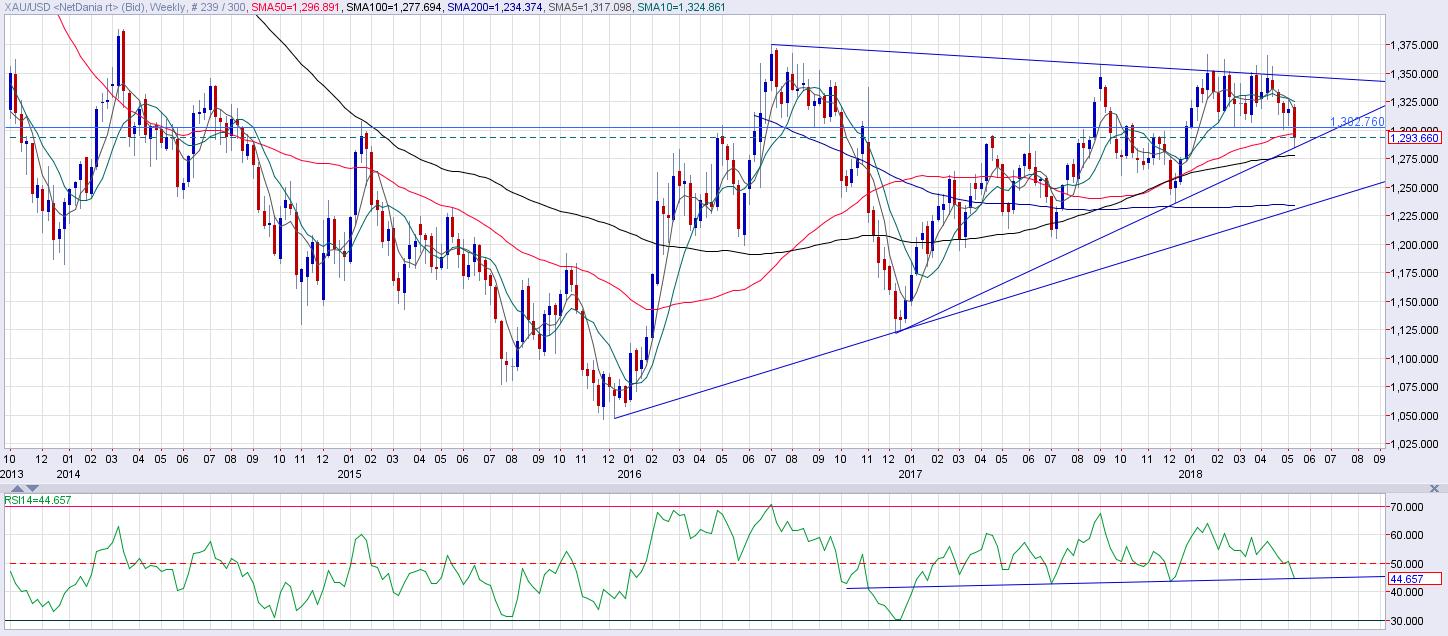
Chart source: Netstation, Netdania

The double top reversal has opened the doors to $1,240 - target as per the measured height method.

The 5-week moving average (MA) and the 10-week MA are sloping downwards in favor of the bears. Further, the relative strength index (RSI) is close to confirming a head-and-shoulders breakdown. Clearly, the odds are stacked in favor of the bears.

However, the metal may revisit the neckline resistance of $1,302 (former support) next week, the short-duration technical charts indicate.

4-hour chart
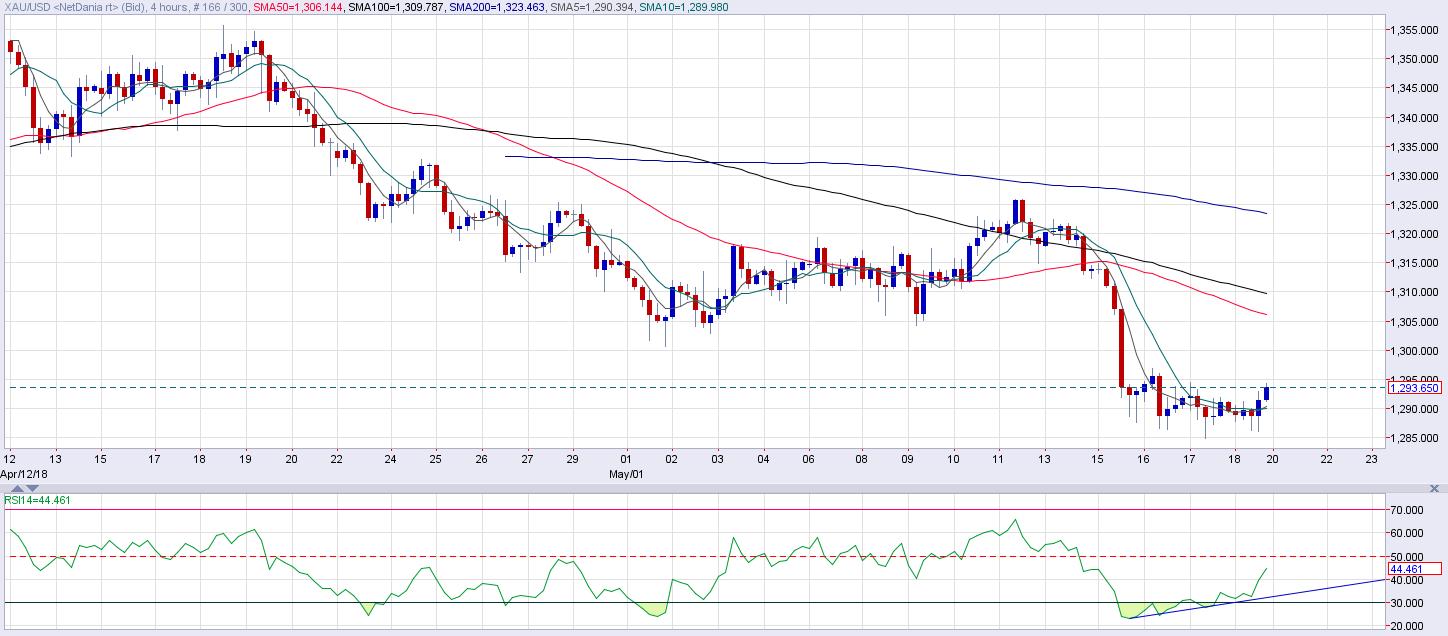
Chart source: Netstation, Netdania

The bullish price RSI divergence indicates a short-term bull reversal and also adds credence to the metal's defense of the ascending trendline (drawn from the December 2016 low and December 2017 low), seen in the weekly chart above. 

Daily chart
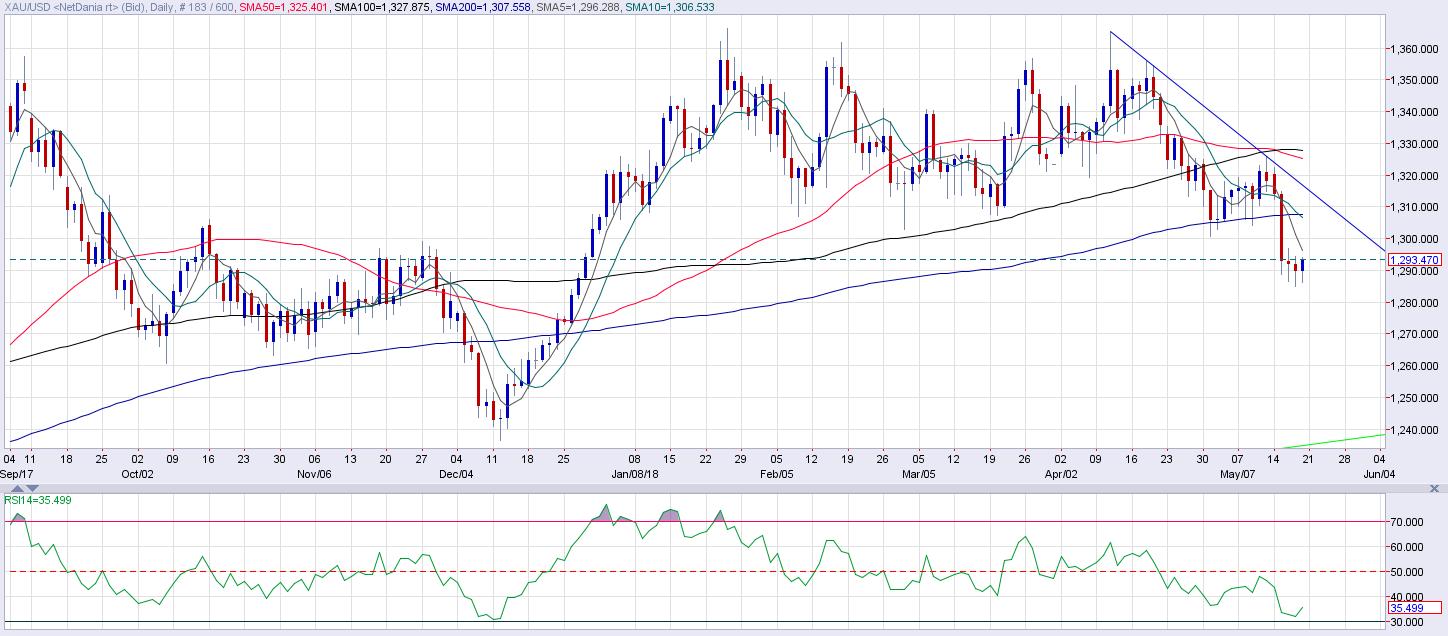
Chart source: Netstation, Netdania

The previous two daily candles have long lower shadows (wicks) which indicate bearish exhaustion. Meanwhile, the positive follow-through seen today has further strengthened the case of a corrective rally to $1,302.

That said, the break above $1,300 will likely be short-lived as the 5-day MA and 10-day MA are trending south, lower highs and lower lows pattern and 10, 200 DMA bearish crossover and 50, 100 DMA bearish crossover.

Only a sustained move above the descending trendline would shift the tide in favor of the bulls. 

Author

Omkar Godbole

Omkar Godbole

FXStreet Contributor

Omkar Godbole, editor and analyst, joined FXStreet after four years as a research analyst at several Indian brokerage companies.


More from Omkar Godbole
Share:

Editor's Picks

AUD/USD eyes 0.7150 barrier nine-day EMA

AUD/USD inches higher after registering modest losses in the previous day, trading around 0.7130 during the Asian hours. The technical analysis of the daily chart indicates that the pair is moving sideways within the rectangle pattern, suggesting a consolidation as neither the bulls nor the bears have enough momentum to take control of the market.

USD/JPY trades below 160.00 intervention threshold; bullish bias intact

The USD/JPY pair attracts some sellers during the Asian session amid fears that authorities will step in again to prop up the Japanese Yen. Furthermore, the Israel-Lebanon truce prompts some profit-taking around the US Dollar and exerts downward pressure on the currency pair.

Gold puts its 200-day SMA to the test near $4,420

Gold keeps the bullish stance in place in the latter part of Thursday’s session, although a convincing break above the key $4,500 mark per troy ounce still remains elusive. The precious metal’s advance comes amid the resurgence of some selling interest around the Greenback, improving risk sentiment, and declining US Treasury yields across the board.

Bitcoin’s massive storm is back: Why the sell-off is far from over

Bitcoin price action over the last few weeks has felt less like a normal, healthy correction and more like a slow grinding crash that continues to wreak havoc on holdings and trading accounts. And everything suggests that the dramatic crash isn’t over.

Nonfarm payrolls: Testing the limits of Fed policy patience

The upcoming nonfarm payrolls report for May will provide the final update on the US labor market before Kevin Warsh attends his first policy meeting as the new Fed Chair later this month.

Recession on paper: What really moves the Canadian Loonie now?

Statistics Canada handed the headline writers a gift and the analysts a headache. Real GDP shrank 0.1% on an annualized basis in the first quarter, and with the fourth quarter of 2025 revised down to a 1.0% contraction, that is two negative quarters in a row, the textbook definition of a technical recession and Canada's first since the pandemic.














