Gold nears historical peaks ahead of NFP data
-
The Nonfarm Payrolls report is expected to significantly impact the gold market, with a forecast of 175,000 job additions in July.
-
A weaker-than-expected job gains might weaken the dollar and boost gold prices due to its inverse relationship with the dollar.
-
The unemployment rate is projected to remain at 4.1%, and wage inflation is expected to decelerate to 3.7%.
-
Intensifying geopolitical crises and economic data releases increase market volatility, presenting challenges and opportunities for gold traders.
-
Technical price patterns indicate strong gold prices in the coming months.

The upcoming Nonfarm Payrolls report is anticipated to significantly impact the gold market, with expectations of the US economy adding 175,000 jobs in July following a stronger-than-expected gain of 206,000 in June. If the report meets or exceeds these expectations, it could bolster the US dollar, leading to a potential decline in gold prices due to their inverse relationship. Conversely, if the job gains fall short, the dollar might weaken, providing upward momentum for gold prices as investors seek the safety of the precious metal. Additionally, the unemployment rate is projected to remain steady at 4.1%, and a slight deceleration in wage inflation to 3.7% from 3.9% could further influence market sentiment. The labour market's performance will be closely scrutinized, especially in light of the Federal Reserve's recent policy stance, highlighting balanced attention to inflation and employment risks.
The Federal Reserve's decision to keep the fed funds rate unchanged at 5.25% to 5.5% while acknowledging progress toward its 2% inflation goal is crucial in shaping expectations for the gold market. Fed Chair Jerome Powell's cautious remarks about the normalization of the job market and the potential for future rate cuts, including a possible reduction in September, suggest a dovish outlook that could support higher gold prices. Market participants are also likely to be influenced by the ADP National Employment Report, which showed a lower-than-expected private sector employment gain of 122,000 in July, and the Job Openings and Labor Turnover Survey (JOLTS), which reported above 8 million job openings, slightly above expectations. Analysts from TD Securities expect payrolls to remain steady, with a risk of the unemployment rate dropping to 4.0% and a modest cooling in wage growth to 3.6% year-over-year. These factors combined indicate a complex and potentially volatile environment for gold, with the precious metal poised to respond dynamically to the labour market data and broader economic signals.
Gold approaching peak levels
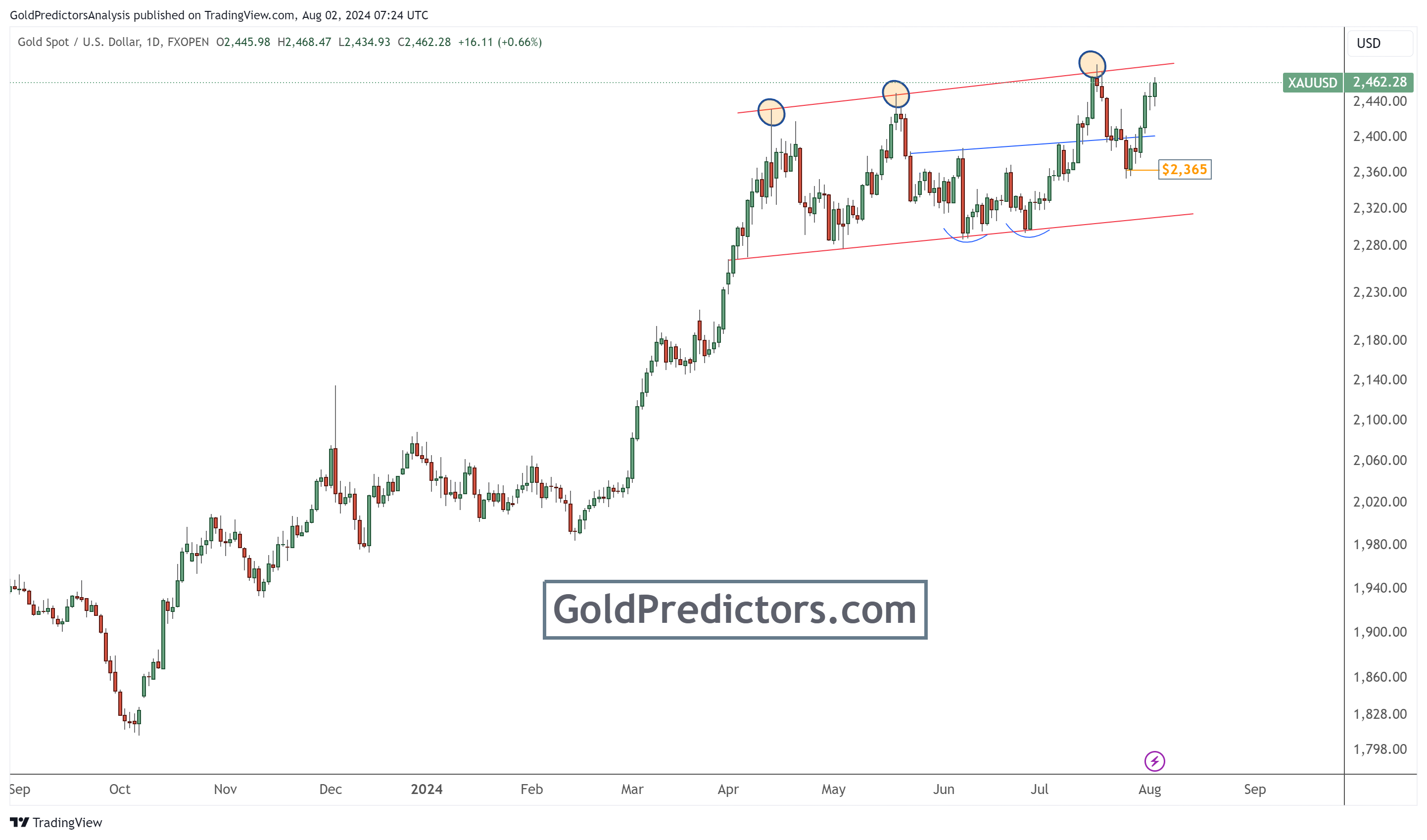
From the technical perspective, the gold is approaching a key resistance area ahead of the NFP release and looks poised to break record levels. The four-month consolidation within the channel is on the verge of breaking higher if the record highs are surpassed. However, it's important to note that intensifying geopolitical crises increase the risk of significant volatility in the market. This heightened volatility suggests that strong moves can develop in both directions, making it challenging for traders to identify the right move. As previously discussed, producing a double bottom in June 2024 indicates that the future direction of gold remains upward. Since the gold market bottomed at $2,353 within our identified support level of $2365, the market is now looking upward.
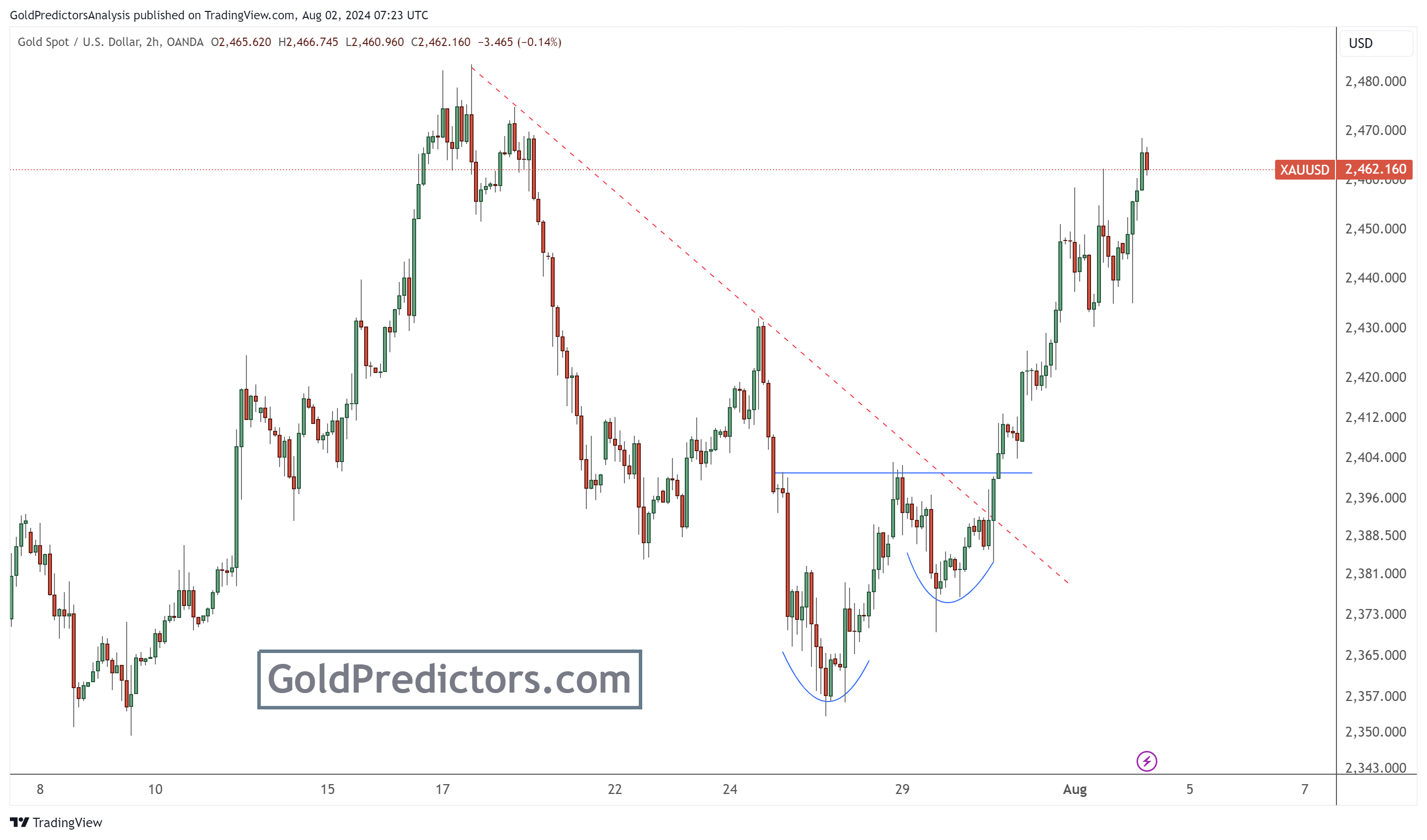
The hourly chart discussed in the previous update shows the bottom formation, highlighted by blue arcs indicating market strength. This was the reason to execute a long trade in the gold market. The breakout of the red dotted trend line in the chart below shows a target of $2,480, where a decision will be made during the NFP release if prices are going higher. The ongoing crises drive the gold market, and any price correction indicates a strong buying opportunity for traders.
Final words
In conclusion, the upcoming Nonfarm Payrolls report holds significant potential to influence the gold market, with job growth, wage inflation, and the unemployment rate critical to watch. The Federal Reserve's recent policy stance, combined with Chair Jerome Powell's comments on potential future rate cuts, suggests a dovish outlook that could support higher gold prices. Additionally, recent employment data, including the ADP National Employment Report and the JOLTS report, further complicate the market environment. As gold approaches key resistance levels, the heightened volatility due to geopolitical crises and economic data releases presents both challenges and opportunities for traders. Ultimately, the market's reaction to the Nonfarm Payrolls report will be pivotal in determining the future direction of gold prices, with any corrections potentially offering strong buying opportunities for traders and investors amidst the current uncertainties.
Unlock exclusive gold and silver trading signals and updates that most investors don’t see. Join our free newsletter now!
Unlock exclusive gold and silver trading signals and updates that most investors don’t see. Join our free newsletter now!
Author

Muhammad Umair, PhD
Gold Predictors
Muhammad Umair is a financial markets analyst and investor who focuses on the forex and precious metals markets.