Gold just cracked $4,200: Here's how far it could fall if the Fed keeps talking
Gold is trading below $4,200 an ounce for the first time since August 5, more than a quarter below its January record. All of its fall since late August has come while Federal Reserve (Fed) officials were making the case for rate hikes. The Fed's one actual move, a quarter-point hike on September 16, cost Gold almost nothing.
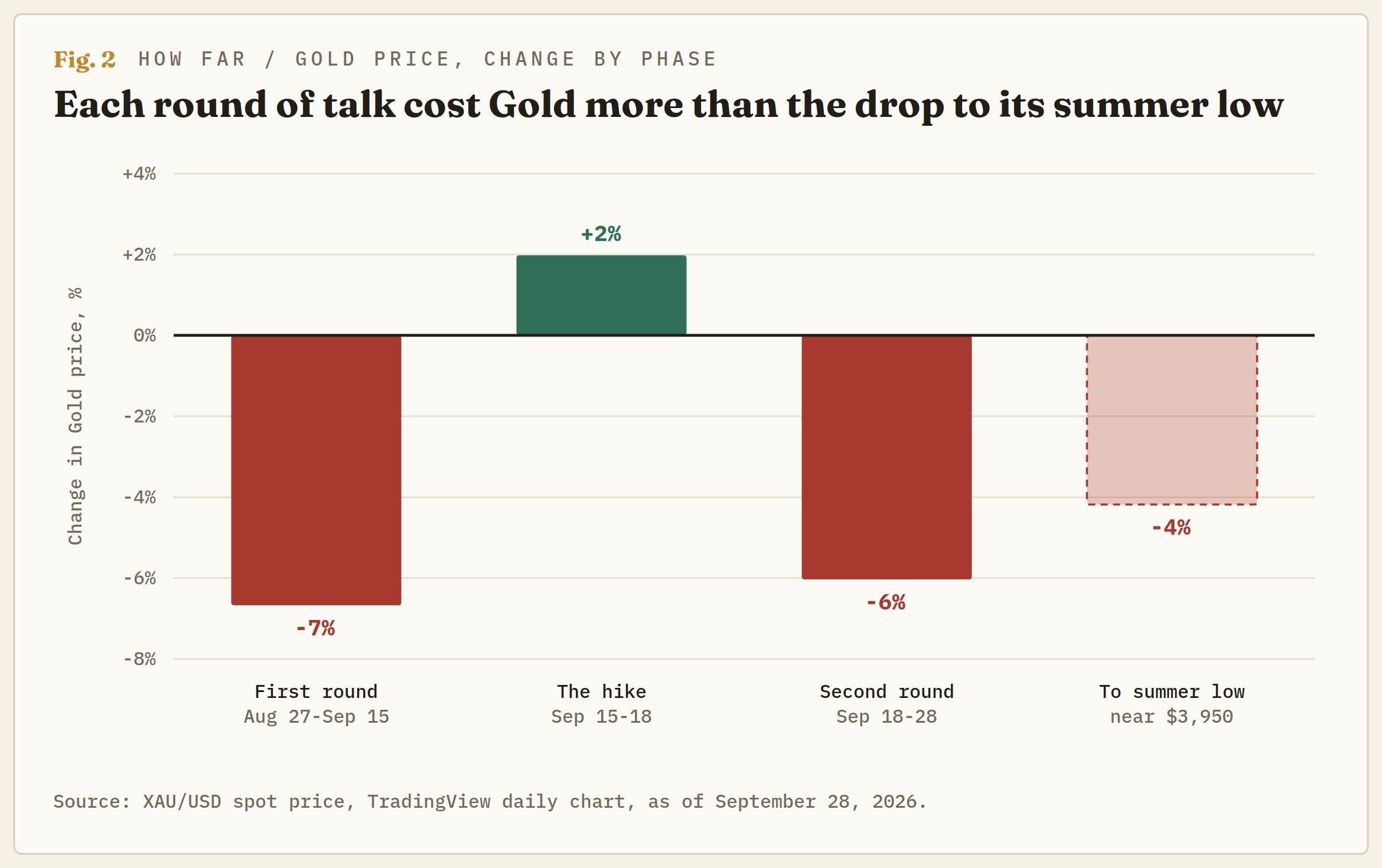
Each of those two rounds of talk, rather than the hike itself, has cost Gold 6%-7%. Its summer low near $3,950, the lowest point of 2026, is about 4% below where Gold is trading at the start of this week. Gold could fall to that low before the Fed's decision on October 28 if officials keep making the case for another hike. But the shiny metal should stop falling when they stop, and the 2-year Treasury yield, what the US government pays to borrow for two years, will show it first.
A speech can move Gold without a vote
Gold pays no interest, so owning it means giving up what the same money would earn in a safe US government bond. When investors expect the Fed to raise rates, those bonds pay more and owning Gold costs more in lost income. Some owners sell, and the price falls. That is how a rate increase the Fed hasn't made yet can already take money off Gold.
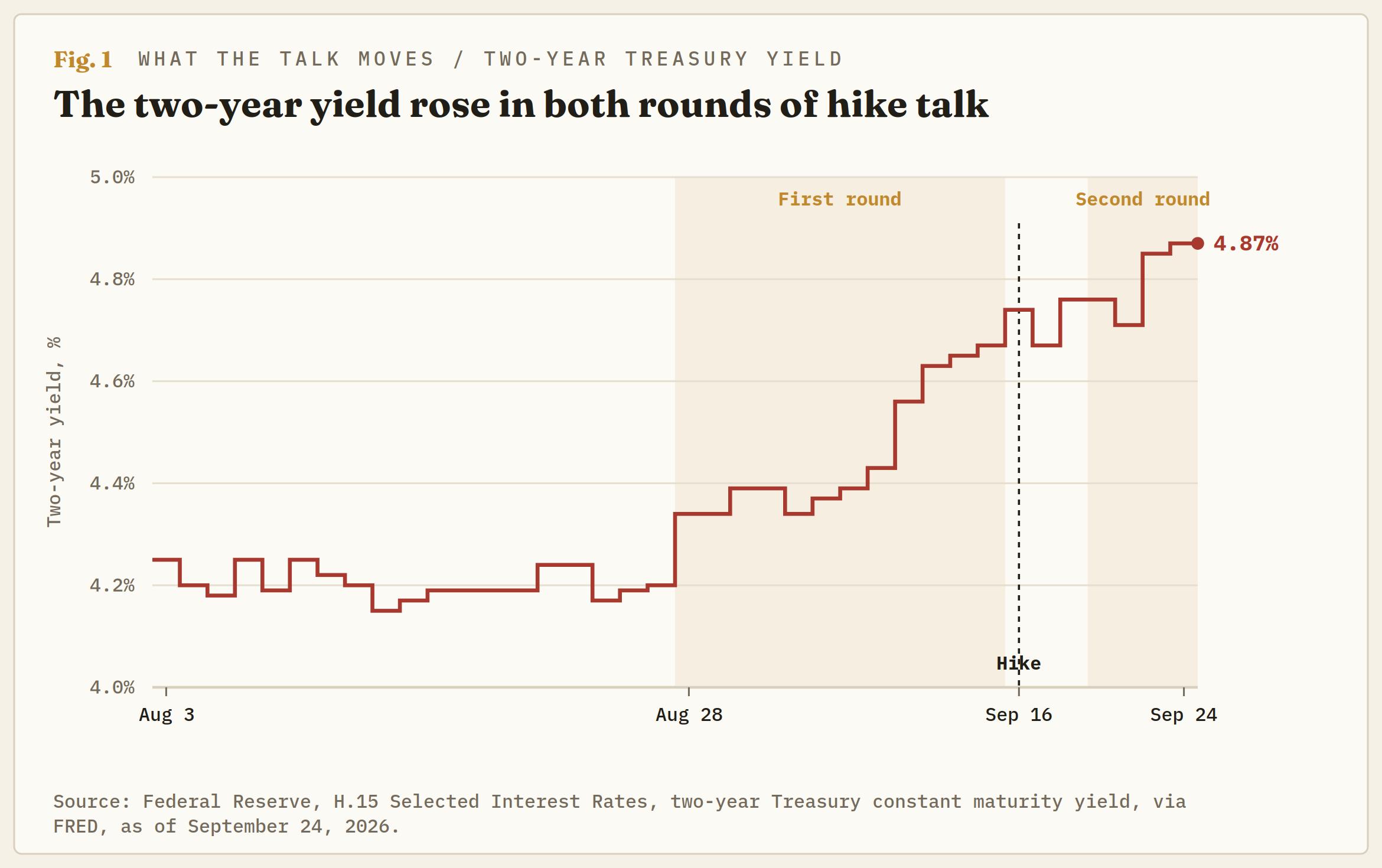
For Gold, what matters is what investors expect the Fed to do, and they take that as much from officials' words as from their votes. The clearest measure of those expectations is the 2-year yield, because it rises when investors expect higher Fed rates over the next two years. At about 4.9%, it is at its highest since mid-2024. A speech that makes a hike more likely lifts that yield, and with it the cost of owning Gold.
Fed Governor Barr said on September 23 that further hikes were likely to be needed. A business survey the same day showed US activity growing at its fastest pace in more than five years. The 2-year yield rose14 basis points, and Gold fell more than 1%. A speech and a survey moved the 2-year yield by more than half the size of the September hike in one day, and the Fed hasn't met since.
The Chair stopped forecasting, but the FOMC sure didn't
Fed Chair Warsh has stopped telling markets what the Fed plans to do next. He said in July that the Fed was not in the forecasting business and would stop hinting at where rates are heading. With nothing from the top, investors take their cues from other officials, so each speech counts more for the 2-year yield and Gold.
Between September 21 and September 24, at least five officials said more hikes may be needed, Governor Barr among them. Fed officials have about a dozen appearances scheduled between September 28 and October 1, and none of them feature Chair Warsh. Each is another chance to make the case for an October hike, and making that case has lifted the 2-year yield and cut the price of Gold since the September 16 hike.
Two rounds of talk cost Gold more than the hike did
The first round started with the nearest thing to a hint Chair Warsh has given. At the Fed's annual conference in Jackson Hole, Wyoming, on August 28, he said there was more work to do on inflation. The 2-year yield rose from 4.20% to 4.67% between the day before that speech and the eve of the September decision, with strong jobs and inflation numbers in between. Gold lost about 7% over the same stretch.
Gold dipped on the day of the hike and was back near $4,400 two sessions later, because investors had spent the first round expecting it. The second round started on September 21, when officials began making the case for October, and Gold has lost more than 6% from that post-hike high. This round has until October 28 to run.
The summer low is one round of hawkish talk away
Gold has now given back nearly four-fifths of the rally that took it from its mid-July low to its late-August high. A momentum gauge on the daily chart, which measures how stretched a move has become, hit its low around the hike and was rising again when the break came. The selling since September 21 is a fresh round, not the end of the last one.
The break also took Gold below its average prices over the past 50 and 200 trading days, which it had traded amongst earlier in September. It is trading just above its March low near $4,100. Below that, the next level is the summer low near $3,950, where the decline stopped at the end of June and again in mid-July. That is about 4% lower, less than either round of talk has cost, so the talk before October 28 could be enough to get Gold there.
A break below $3,950 would put Gold back near its price in September 2025, as if the run to January's record had not happened. That second step would need officials to start talking about hikes in 2027 as well. Their next chance to put those in writing is the Fed's new set of forecasts on December 9.
Expensive Oil keeps the officials talking
The officials are talking because expensive Oil keeps pushing US inflation up, and they want to stop it spreading into everything else. Gold is usually bought to protect against inflation, but this time the Fed is raising rates against it, so Gold has been falling when Oil rises.
The break below $4,200 came on September 28, when Iran said it would not soften its conditions for reopening the Strait of Hormuz. Oil and the 2-year yield rose together and Gold fell, because officials had already said that inflation like this would be met with hikes. Until the Strait reopens, each rise in Oil is another reason for them to keep talking.
Lower until the two-year yield turns
Gold is more likely to keep falling than to recover for as long as the 2-year yield keeps rising, and the summer low near $3,950 is the target. The next two tests are the Personal Consumption Expenditures Price Index (PCE), the inflation measure the Fed targets, on September 30, and the September jobs report on October 2. A hot inflation number or strong hiring would give officials more to talk about. A soft jobs number would let them say one more hike is enough, and the 2-year yield would fall first.
Author

Joshua Gibson
FXStreet
Joshua joins the FXStreet team as an Economics and Finance double major from Vancouver Island University with twelve years' experience as an independent trader focusing on technical analysis.