Gold awaits Fed decision as rising rate hike bets pressure prices

Gold (XAU/USD) continues to face weakness as markets prepare for the Federal Reserve’s upcoming policy decision. Elevated US inflation and higher Treasury yields have added pressure on precious metals. Expectations for a rate increase have also strengthened, keeping markets cautious about the path of interest rates. The upcoming Fed decision could play an important role in shaping gold’s next direction.
Gold remains weak as rising rate hike bets keep markets cautious
Gold remains under pressure and could face further weakness as markets prepare for the Federal Reserve’s monetary policy decision. The latest US Producer Price Index and Consumer Price Index reports showed that inflation remains elevated. Meanwhile, monthly core consumer inflation increased by 0.3%, above expectations and the previous 0.2% reading. These figures have increased concerns that inflation may remain difficult for the Fed to control.
Expectations for a Fed rate increase strengthened significantly after the inflation reports. According to the CME FedWatch Tool, markets now see an 86.5% probability of a rate increase at Wednesday’s meeting. Stronger expectations for higher interest rates have also lifted US Treasury yields. The 10-year Treasury yield remains elevated, placing additional pressure on gold because the metal does not provide interest income.
Political comments have also attracted attention before the Fed decision. President Donald Trump said he did not know whether policymakers would raise rates this week. However, he argued that the US should have the lowest interest rate in the world regardless of economic data. His comments add another layer of uncertainty as markets wait for the Fed’s policy decision and guidance on future interest rates. The Fed’s response to these developments could provide clearer direction for gold and other precious metals.
Gold price struggles below resistance as support comes into focus
The gold chart below shows price trading beneath a major descending resistance trendline. Gold has tested this trendline several times, with each test followed by a clear decline. The latest test came after price climbed toward the $4,600 region but failed to break above the trendline and moved lower. This rejection highlights the importance of the descending trendline as a key resistance level.
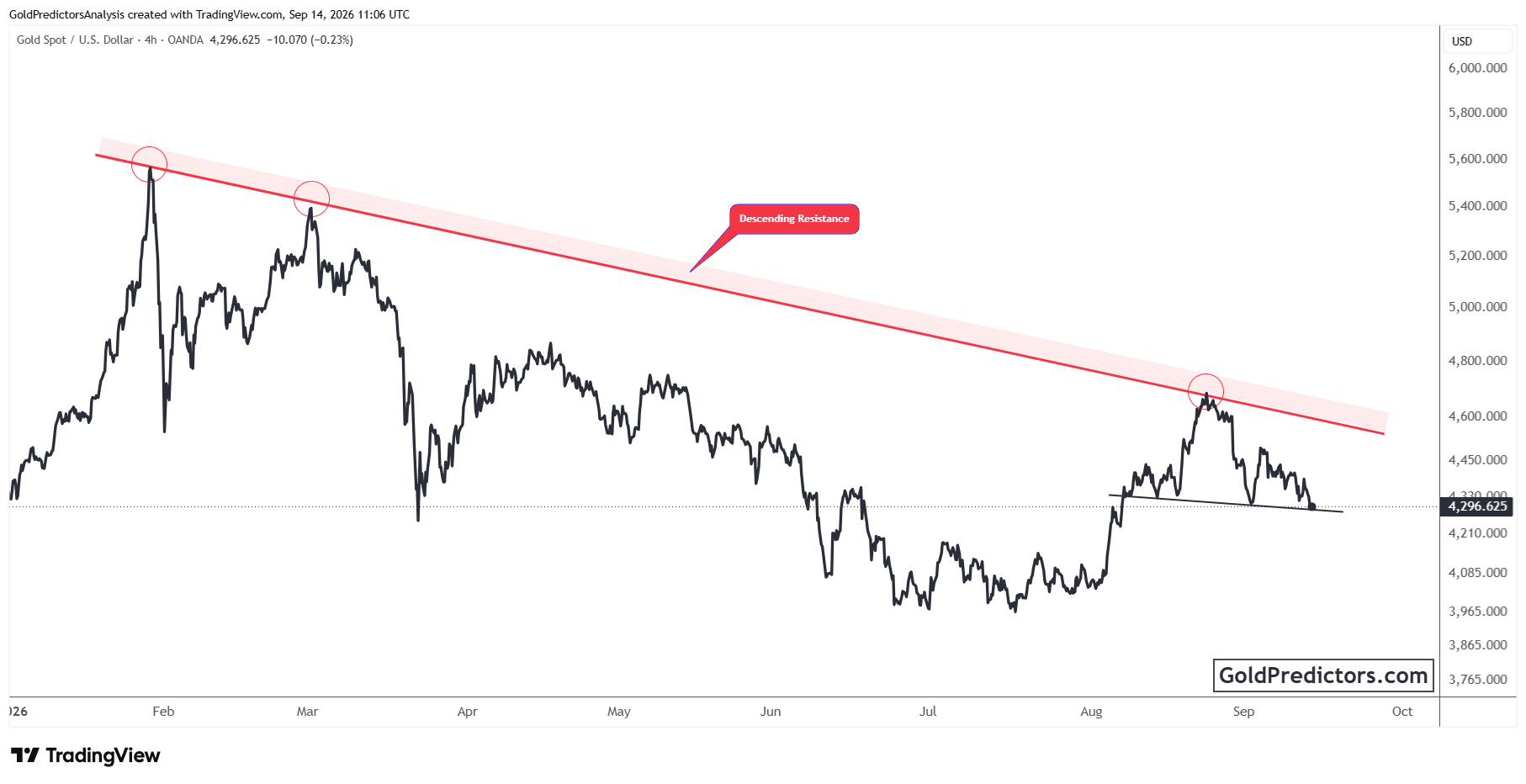
Following the rejection, gold continued to decline and returned to a key support trendline. Price is now testing this trendline after holding above it several times during recent declines. A clear break below the support trendline could open the way for a deeper correction. However, holding above it could help gold regain some stability.
Gold remains between the descending resistance trendline and the nearby support trendline. Repeated rejections from resistance continue to restrict price gains, while the support trendline remains important for the next direction. A break below this support could lead to a deeper decline. However, if the trendline holds, gold could regain strength and make another attempt to test the descending resistance trendline.
Gold outlook: Fed decision could determine the next direction
Gold remains under pressure as markets prepare for the Federal Reserve’s policy decision. Elevated inflation and higher Treasury yields have strengthened expectations for a rate increase, adding further pressure on gold. At the same time, price is testing an important support trendline after another rejection from descending resistance. The Fed’s decision and guidance could play an important role in shaping gold’s next direction.
Unlock exclusive gold and silver trading signals and updates that most investors don’t see. Join our free newsletter now!
Author

Muhammad Umair, PhD
Gold Predictors
Muhammad Umair is a financial markets analyst and investor who focuses on the forex and precious metals markets.