Gold: A deeper correction before prices can start to regain their all-time highs

European markets were mixed as investors figure out what to do next after the exuberant vaccine-induced rally and following a soft session on Wall Street. Central bankers warned that a vaccine was not enough to end all the economic challenges, whilst oil fell after a big build in crude stockpiles. The dollar was steady as US 10-year yields declined to 0.88%.
The FTSE 100 dipped under 6,300 and the DAX struggled to hold 13,000. Energy and financials were the weakest, with tech, utilities and healthcare strongest in early trade as investors took a more risk-averse approach. Yesterday the S&P 500 and Dow Jones both fell 1%. Whilst there is great hope for next year because of the vaccine, we are from out of the worst of the pandemic – US cases are surging at record levels and lockdown measures persist in Europe. Airlines and travel fell sharply as profits were taken after some very large moves this week. The question for investors is whether they think there are enough incremental buyers on the side lines to drive markets higher. The question is really one for the bond market - the wall of cash sitting idle will be deployed if rates stay low and go even lower.
WTI crude oil (Dec) declined to $40 after an unexpectedly large build in crude oil inventories. The EIA said crude stocks rose by 4.3m barrels in the week ended Nov 6th, at odds with the 5.1m barrel draw reported by the API. Shutdowns created by the pandemic are problematic for assessing oil demand and we note that industry groups have revised their demand forecasts down lately, signalling that it won’t be back to normal at least until the second half of 2021.
Donald Trump has taken a step back from stimulus talks, leaving it to Congress as he fights the election monitors. With Republicans arguing for $800bn and Democrats chasing $2.4tn it’s not likely that they will agree anything immediately. Meanwhile the president signed an executive order banning American investments in Chinese companies linked to the government or military. Shares in China Mobile, China Telecom and Hikvision fell.
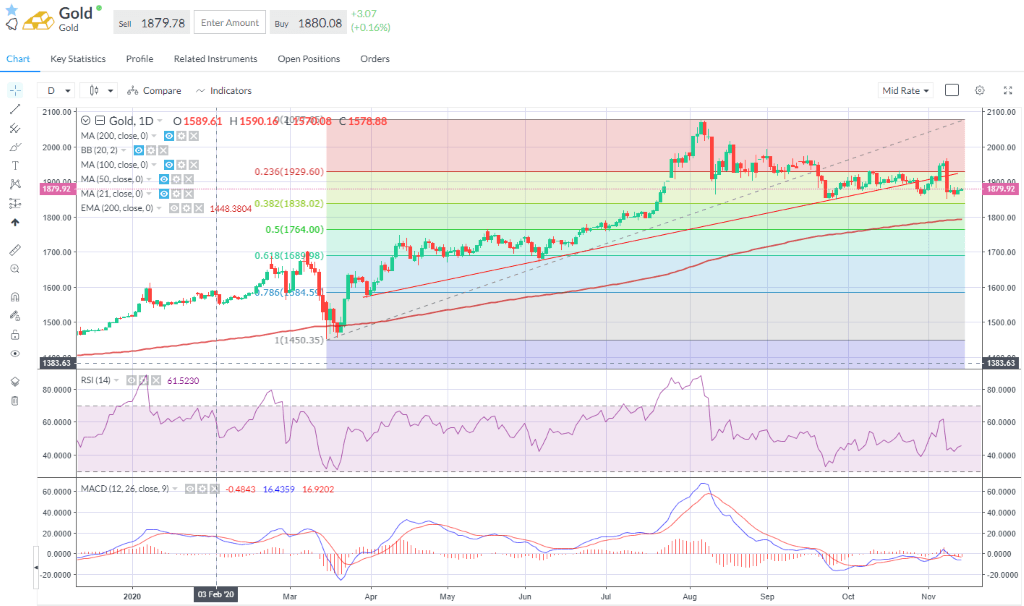
Gold is steady around the $1,880 level and whilst support around $1,850 is there, we may see a deeper correction before prices can start to regain their all-time highs. Goldman has a note out today saying gold can hit $2,300 next year on the reflation angle as real yields get pushed deeper into negative territory.
Author

Neil Wilson
Markets.com
Neil is the chief market analyst for Markets.com, covering a broad range of topics across FX, equities and commodities. He joined in 2018 after two years working as senior market analyst for ETX Capital.