Global markets find balance as US–China truce and central banks shape risk mood
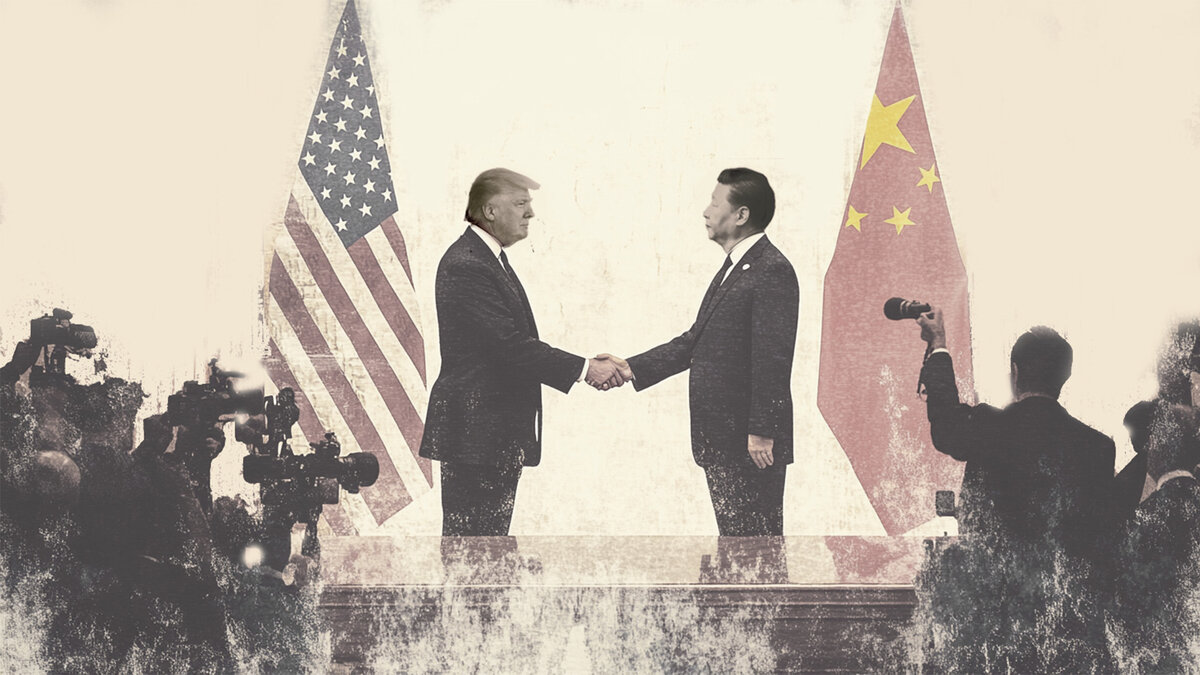

Global risk sentiment steadied this week as markets absorbed a series of high-stakes geopolitical developments and central-bank recalibrations. A temporary US–China trade truce, a measured OPEC+ pause, and renewed policy divergence between the Federal Reserve and Bank of England framed a complex yet stabilizing global backdrop heading into November’s first full trading week.
The overall tone across assets has shifted toward cautious optimism — bolstered by de-escalation between major powers — yet tempered by lingering inflation concerns, energy supply uncertainty, and uneven equity market participation.
US–China: From trade war to tactical truce
The Trump–Xi summit in Busan marked a notable pause in the trade standoff between the world’s two largest economies. China agreed to suspend new export controls on rare earths, gallium, graphite, and semiconductor materials for one year, and the US reciprocated by halving tariffs on fentanyl-related goods, suspending a proposed 100% tariff on Chinese imports, and extending Section 301 exclusions into late 2026. Both leaders also agreed to re-establish direct military communication lines as a trust-building gesture.
The accord relieves short-term supply chain strains for advanced manufacturing and semiconductor industries. Still, as a one-year deal, it’s only a pause — not peace. Structural rivalries in technology and defense persist, with both nations retaining restrictions on AI chips and other strategic sectors. Trump made clear the rare earth deal is designed to be “frequently extended as time progresses.”
Markets welcomed the thaw: Asian equities posted modest gains, industrial metals firmed, and China agreed to ramp up purchases of US soybeans and, reportedly, US energy. Yet traders remain mindful that strategic rivalry remains unresolved beneath the diplomatic gestures.
Trump’s Asia tour: Charm offensive, strategic rebalancing
Trump’s three-country Asia tour reinforced the truce by reassuring allies. Bilateral deals with Malaysia and Cambodia, frameworks with Thailand and Vietnam, and a 10-year defense pact with India signaled a pragmatic focus on regional stability. China countered by deepening ASEAN partnerships and supply-chain integration, underlining continued competitive coexistence in the region.
The result: a more stable backdrop for Asia-Pacific markets, but also a new era of “competitive coexistence.”
India’s rare earth ambition
India tripled support for rare-earth magnet manufacturing (₹70bn/$788M) to reduce reliance on China (which still provides about 90% of world processing). The program supports up to five domestic producers with subsidies as the country aims to evolve as an alternative base for critical minerals.
This aligns with Western efforts to diversify supply for electric vehicles and defense. While the plan remains nascent, it reinforces India’s emergence in the critical-minerals race.
Energy markets: OPEC+ takes a breather
OPEC+ will pause output increases in early 2026 after a modest December hike, reflecting caution amid demand risks and uncertainty from Russian sanctions. While the group talks of “healthy market fundamentals,” data suggest a growing surplus — estimates are for 3M+ bpd next year. Brent crude has fallen below $65, with further softness expected unless demand rebounds quickly.
OPEC+’s “calculated blink” buys the group time but highlights tension between price stability and fiscal needs.
Middle East risks return to foreground
Tension returned after Israel threatened more strikes on Hezbollah, warning Beirut to enforce the 2024 ceasefire. Markets remain sensitive to risks of broader conflict, watching for oil and safe-haven flows.
Monetary policy: Divergence returns
Federal Reserve: Hawks push back
Three Fed officials — Logan, Hammack, Schmid — publicly opposed more easing, citing inflation. Powell also called a December cut “not a foregone conclusion” and confirmed the end of balance sheet runoff (QT) by December 1 to address funding stress. The net effect is liquidity relief for markets, combined with greater restraint on future cuts. Dollar positioning remains firm as aggressive short bets unwind.
Bank of England: Cautious hold ahead of budget
The Bank of England is expected to hold its policy rate at 4% this week, ending a run of quarterly cuts amid still-elevated inflation and the autumn budget. Markets price a 60% chance of a December cut, pending data. Governor Bailey stressed fiscal clarity and wage moderation as prerequisites for renewed easing. Gilts had their best month in almost two years, though sterling remains exposed as yields fall and consolidation bites.
Equities: AI-driven rally masks fragile breadth
The S&P 500 is up 18% since Trump’s re-election, thanks to the “Magnificent Seven” tech names, now over 50% of total gains. An equal-weighted S&P is up just 5.2%, revealing narrow leadership. AI optimism offsets volatility, but the recovery is patchy below the surface — headline gains rank only eighth post-election, and valuation risk is climbing.
Despite turbulence, liquidity and AI keep investors engaged, with valuation caution rising.
Market sentiment snapshot
- Risk appetite: stabilizing on trade détente and policy clarity
- Dollar: supported by Fed hawkish dissent and growth resilience
- Commodities: oil capped by OPEC+ pause, industrial metals steadier as supply normalizes
- Bonds: gilts and Treasuries attract inflows on moderating inflation and fiscal caution
- Crypto y oro: modestly higher on liquidity stabilization and lingering geopolitical risk
Looking ahead
Looking ahead
- BoE rate decision (7 nov)
- RBA and Malaysia policy meetings
- Asia manufacturing PMIs and China inflation data
- US private payroll and services surveys
- OPEC+ monitoring and global reserves updates
Traders should expect volatility as policy divergence, fiscal risk, and global trade recalibration play out against a still-fragile recovery.
November opens in a state of tentative balance — some fires contained, but not out; central banks easing, but cautiously; risk appetite selective, not euphoric.
The tone now is tactical, data-dependent, and politically charged. For investors, opportunity lies less in momentum and more in navigating policy narratives with precision.
Author
Vrajeshwari Bhardwaj
SharmaFX
Vrajeshwari started SharmaFX in 2020. She holds a BA in Economics with a minor in Finance from San Jose State University. She is also pursuing an MS in Analytics with a concentration in International Economics and Markets from American University.

















