Gilts aren’t worried about local elections

Much has been made of the chances of Prime Minister Sir Keir Starmer resigning, or being forced out, following a likely washout for his Labour party in tomorrow’s UK local elections. Whilst I do not doubt that it will prove a bruising day for the Government, no Prime Minister has ever resigned directly because of a poor set of local election results. It may prove a reason in retrospect, but rarely proves the true cause. Indeed, there are two reasons that I suspect the Polymarket odds of a 70% chance of the PM being out of by January are overblown: resilience and practicality.
The Prime Minister has, by this point, endured multiple attempts on his premiership and one distinctive trait shines through, his resilience against pressure. When other Prime Ministers of the past would resign out of a sense of duty or pride, Starmer has shown a dogged ability to simply ignore such noise, waiting out the storm and continuing on.
The more practical point is that there is no direct and obvious leader in waiting, Starmer effectively blocked favourite of the left, Andy Burnham, from taking a seat in the Commons, whilst Angela Rayner remains divisive and wounded from her expenses scandal.
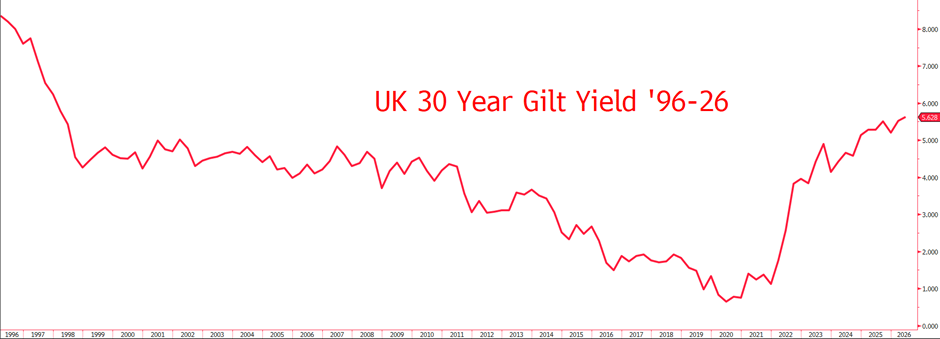
Whilst outside observers may eye the 30yr Gilt’s rise in yield to its highest since 1996 as a clear sign of anxiety over the PM’s future, this is only part of the picture. Such concerns that the fiscally predicable Starmer and his equally predictable Chancellor, Rachel Reeves, may be replaced by more freewheeling and unorthodox candidates are likely playing a role in this slide, but the ongoing reaction to the BoE meeting last week is a bigger slice.
The 30yr yield dropped 37bps in February, before the war, and only restarted its upwards grind as the longevity and severity of the coming energy shock become more clear. The Bank of England’s more hawkish than expected stance last week, suggesting 6.8% UK CPI by the end of this year in its most severe scenario, add fuel to the fire of the Gilt sell-off. The Italian 30 yr sovereign is only trailing the movement in Gilts by 15bps, still a wide spread but not so dramatic that Gilts stick out as especially impacted by political concerns.
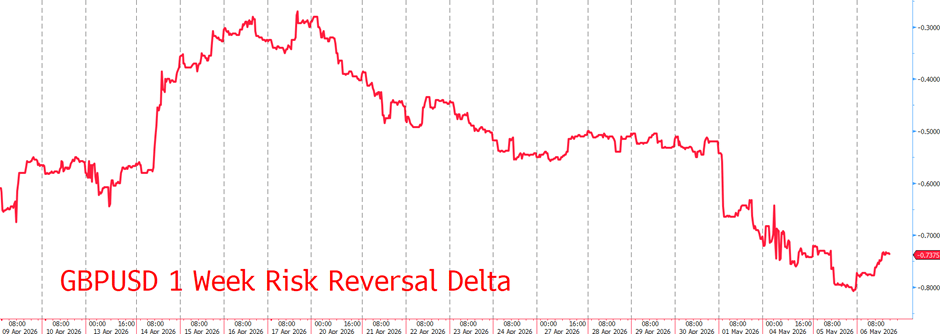
GBPUSD 1 week risk reversals, beyond the shock of the BoE that registered that big increase in demand for puts on the first of the month, remain relatively unmoved by the prospect of tomorrow’s elections.
GBPUSD breached the $1.36 today, for the second time this month, whilst GBPEUR traded mostly sideways. If concerns over Starmer’s future do abound in markets, Sterling certainly isn’t letting it show.
Author

David Stritch
Caxton
Working as an FX Analyst at London-based payments provider Caxton since 2022, David has deftly guided clients through the immediate post-Liz Truss volatility, the 2020 and 2024 US elections and innumerable other crises and events.