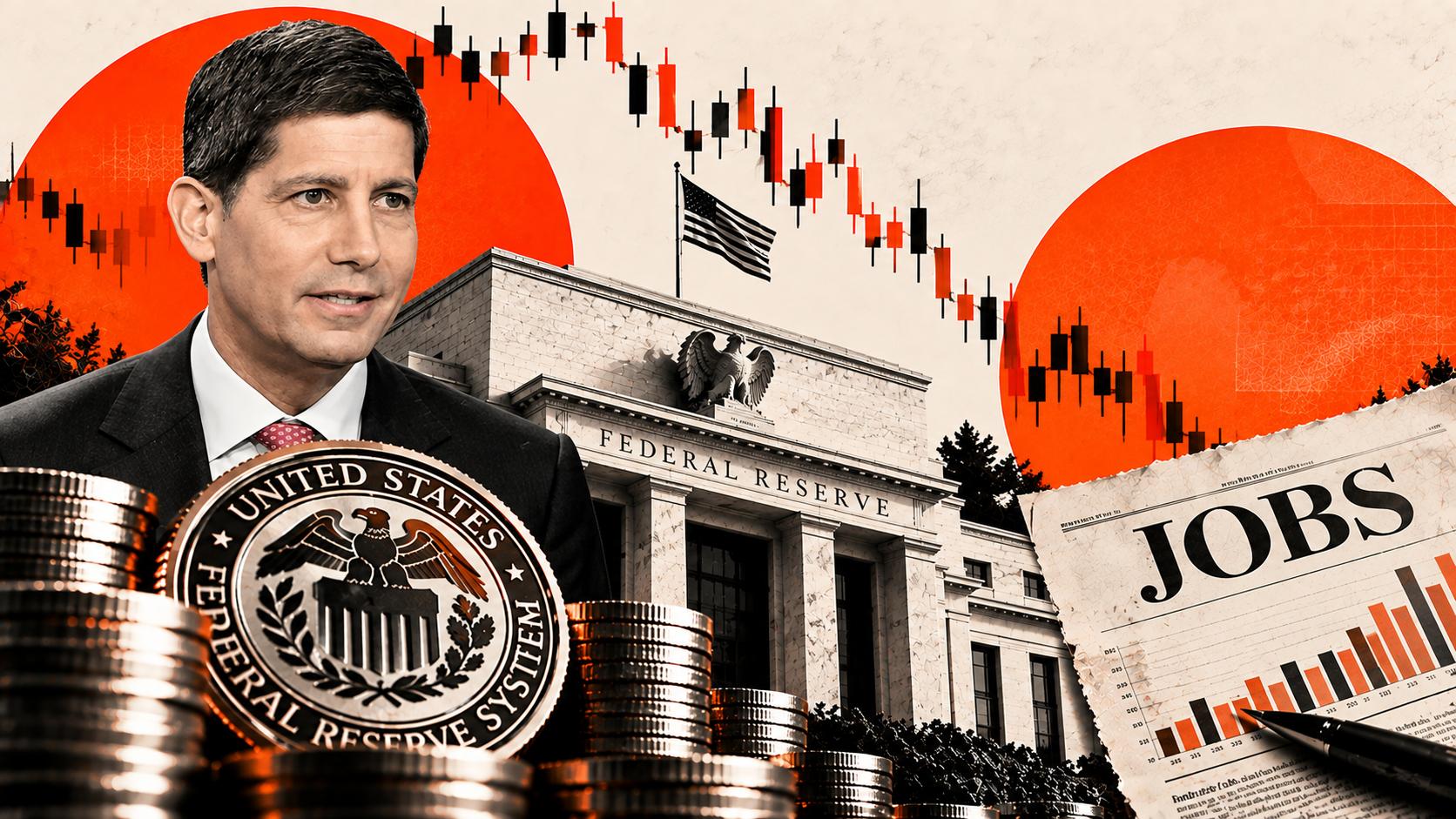
Gold Weekly Forecast: Hawkish Fed leads to third consecutive weekly loss
- Gold benefited from easing geopolitical tensions in the Middle East, but lost its traction after the hawkish message from the Fed.
- The technical outlook highlights a bearish stance as key resistance levels remain intact.
- An extended decline in crude Oil prices could help XAU/USD limit its losses.

Gold (XAU/USD) opened with a bullish gap and registered strong gains in the first half of the week, but a hawkish Federal Reserve (Fed) spoiled the party. Mid-tier macroeconomic data releases from the United States (US) and changes in crude Oil prices could impact XAU/USD’s action in the near term, while the technical outlook suggests that the bearish bias remains intact.
Gold makes a U-turn after hawkish Fed message
Gold started the week sharply higher and gained more than 2% on Monday as investors cheered the news of the US and Iran reaching an agreement on a framework deal to end the war. Both sides confirmed that the Strait of Hormuz will be reopened, and Oil prices dropped to levels not seen since the early days of the war.
As market participants moved to the sidelines on Tuesday in anticipation of the Fed meeting, Gold stabilized above $4,300 and ended the day with small gains. In the meantime, US President Donald Trump, Vice President JD Vance and Iranian Parliament Speaker Mohammad Bagher Ghalibaf virtually signed the agreement to end the blockade of Iranian ports, reopen the Strait of Hormuz and start 60 days of nuclear negotiations late Monday.
After spending the majority of the day in a tight range at around $4,300 on Wednesday, XAU/USD turned south in the American session as the USD rallied on Fed announcements.
The US central bank left the policy rate unchanged in the range of 3.5%-3.75%, as expected, and dropped the easing language from the statement. The revised Summary of Economic Projections (SEP) pointed to a 25 basis points of rate hikes in 2026, a significant change from the rate cut that was priced in in the previous SEP. .
In his first post-meeting press conference, Chairman Kevin Warsh, who did not offer an interest rate projection of his own, adopted a relatively neutral tone. The fact that he refrained from emphasizing a return to a policy-easing path, even after the US-Iran deal dragged energy prices lower, was assessed as a hawkish surprise. Combined with the SEP projections, the USD gathered strength and XAU/USD lost about 1.7% on the day, erasing a large portion of its weekly gains in the process.
Commenting on the market reaction to the Fed event, MUFG’s Lee Hardman noted that the Fed’s hawkish policy update should help to keep US rates and the US Dollar at higher levels heading into the summer.
“If the Fed follows through and hikes rates it would reinforce the Fed’s upward momentum. We are not convinced though that a rate hike will be required, but acknowledge that there is a higher risk of rate hike in the second half of this year,” Hardman added.
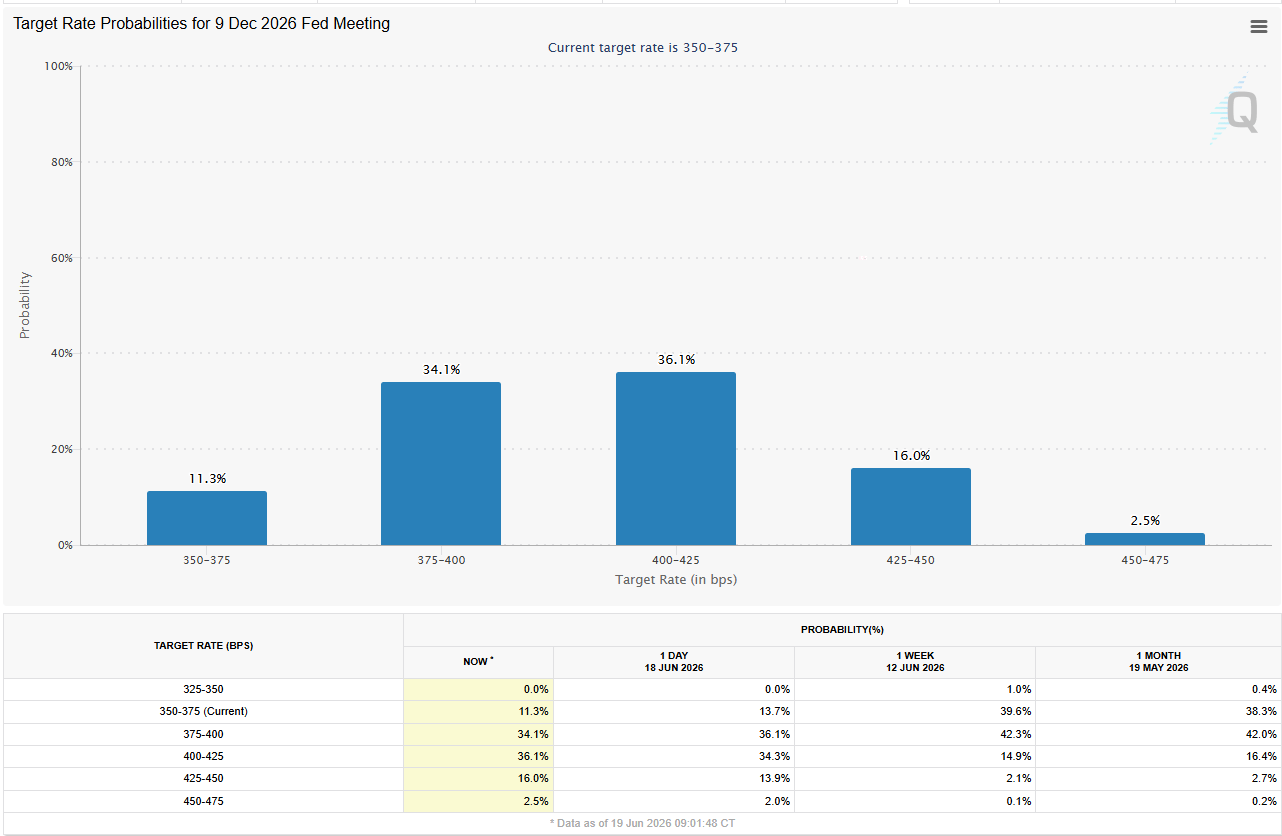
According to the CME FedWatch Tool, markets are currently pricing in about an 88% probability that the Fed will raise the rate by 25 bps at least once by end-2026.
The Swiss Foreign Ministry announced early Friday that the upcoming US-Iran talks will not take place as planned. US Vice President JD Vance cancelled his trip and Iran’s semi-official Tasnim news agency reported that there was no confirmation that Iranian negotiators would travel for talks, explaining that they first wanted to see that the condition about a ceasefire in Lebanon in the interim agreement is implemented. Investors adopted a cautious stance and Gold extended its slide to below $4,200.
Gold investors focus on Fed pricing
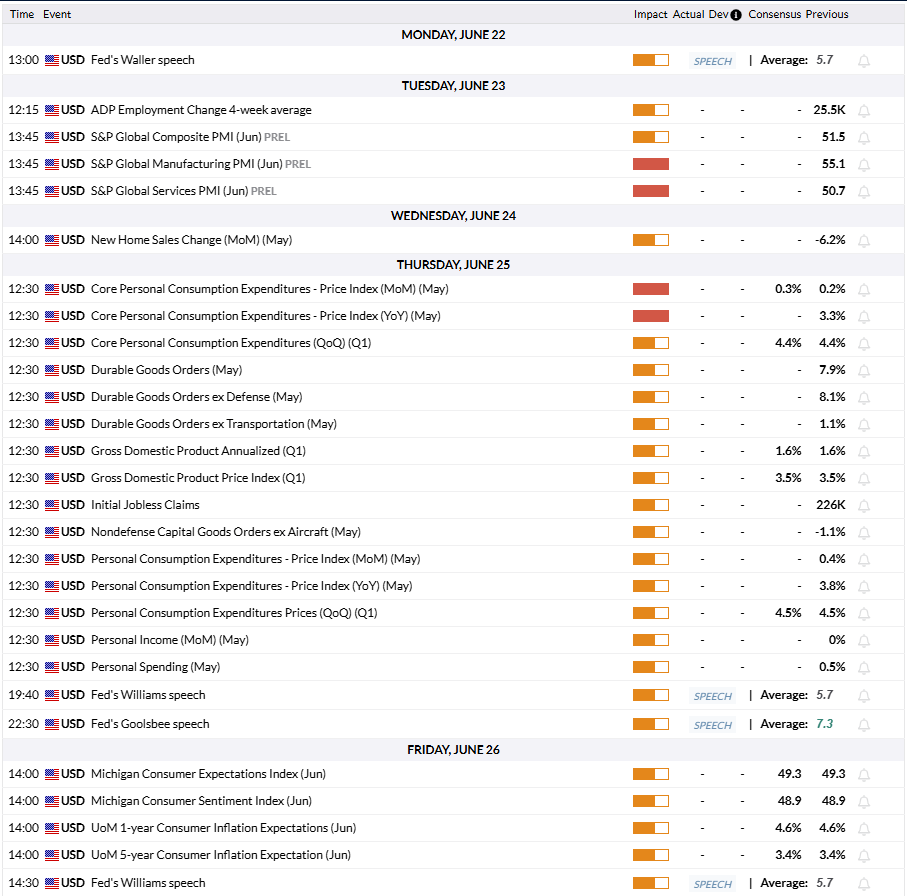
The US economic calendar will feature preliminary S&P Global Manufacturing and Services Purchasing Managers’ Index (PMI) data for June on Tuesday. In case either of the headline PMIs drops into the contraction territory below 50, the immediate reaction could cause the USD to weaken and help XAU/USD edge higher. If PMIs arrive near May’s readings, investors are likely to react to other details of the survey, especially the commentary about inflation and employment. If there is a noticeable softening in the private sector’s input cost pressures and concerning comments about hiring intentions, XAU/USD could gain traction. Conversely, investors are unlikely to change their minds about the Fed’s tightening prospects if the publication doesn’t offer any surprises.
On Thursday, the US Bureau of Economic Analysis (BEA) will release its final revision to the first-quarter Gross Domestic Product (GDP) growth and publish the Personal Consumption Expenditures (PCE) Price Index data for May.
Market participants will pay close attention to the monthly core PCE Price Index reading. In case this data arrives at or above the market expectation of 0.3%, the USD is likely to stay resilient against its peers and make it difficult for Gold to attract bulls. On the other hand, a reading below 0.3% could have the opposite effect on the precious metal’s valuation.
Investors will scrutinize comments from Fed officials throughout the week. If policymakers adopt an optimistic tone about the inflation outlook and push back against the strong market expectation of at least one rate hike later in the year, XAU/USD could gather recovery momentum.
The CME FedWatch Tool currently shows that there is about a 36% chance that the Fed could raise the interest rate by 25 bps at the next meeting in July. In case Fed officials leave the door open to a tightening step next month, the market positioning suggests that there is more room on the upside for the US Dollar. In this scenario, XAU/USD could have a hard time shaking off the bearish pressure.
In the meantime, an extended drop in crude Oil prices, with the US-Iran negotiations moving back on track, could ease inflation fears and cause investors to reassess the Fed policy outlook. Although markets are unlikely to suddenly start pricing in a Fed policy hold rather than tightening in the short-to-medium term, a steady decline in energy costs could remain supportive for Gold in the near future.
Gold technical analysis: Bears retain control
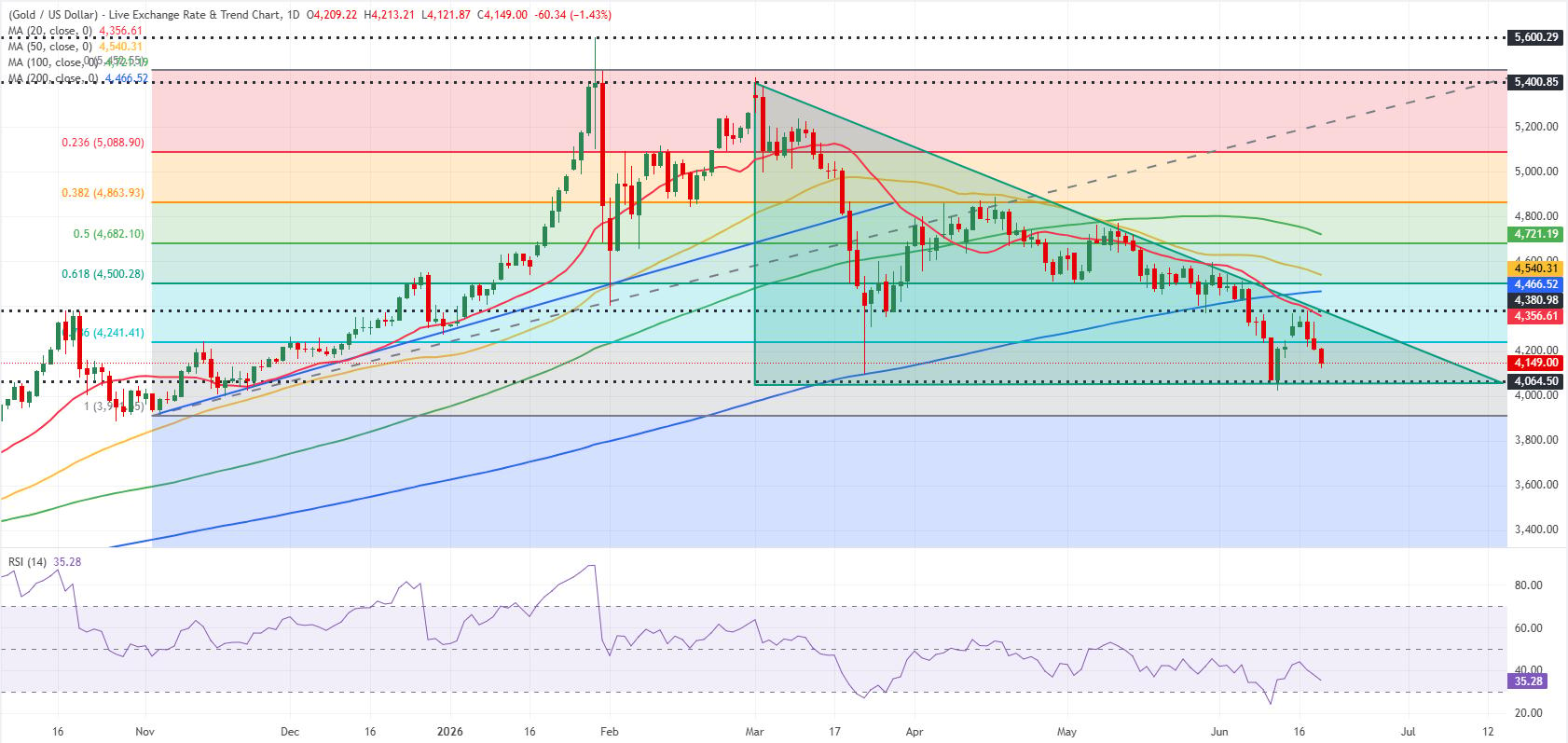
Gold failed to reclaim the 20-day Simple Moving Average (SMA) following the decisive rebound seen earlier in the week and the Relative Strength Index (RSI) indicator turned south before reaching 50, reflecting buyers’ hesitancy.
On the downside, $4,050-$4,000 aligns as the first support area, where the bottom line of the descending triangle meets the psychological level. Below this region, $3,900 (the beginning point of the November-February uptrend, round level) comes as the next support level ahead of $3,800 (static level, round level).
Looking north, the immediate resistance could be spotted at $4,350 (20-day SMA, descending trend line) before $4,470-$4,500 (200-day SMA, Fibonacci 61.8% retracement). A daily close above this hurdle could attract technical buyers and open the door to a leg higher toward $4,680 (Fibonacci 50% retracement, 100-day SMA).
Gold FAQs
Gold has played a key role in human’s history as it has been widely used as a store of value and medium of exchange. Currently, apart from its shine and usage for jewelry, the precious metal is widely seen as a safe-haven asset, meaning that it is considered a good investment during turbulent times. Gold is also widely seen as a hedge against inflation and against depreciating currencies as it doesn’t rely on any specific issuer or government.
Central banks are the biggest Gold holders. In their aim to support their currencies in turbulent times, central banks tend to diversify their reserves and buy Gold to improve the perceived strength of the economy and the currency. High Gold reserves can be a source of trust for a country’s solvency. Central banks added 1,136 tonnes of Gold worth around $70 billion to their reserves in 2022, according to data from the World Gold Council. This is the highest yearly purchase since records began. Central banks from emerging economies such as China, India and Turkey are quickly increasing their Gold reserves.
Gold has an inverse correlation with the US Dollar and US Treasuries, which are both major reserve and safe-haven assets. When the Dollar depreciates, Gold tends to rise, enabling investors and central banks to diversify their assets in turbulent times. Gold is also inversely correlated with risk assets. A rally in the stock market tends to weaken Gold price, while sell-offs in riskier markets tend to favor the precious metal.
The price can move due to a wide range of factors. Geopolitical instability or fears of a deep recession can quickly make Gold price escalate due to its safe-haven status. As a yield-less asset, Gold tends to rise with lower interest rates, while higher cost of money usually weighs down on the yellow metal. Still, most moves depend on how the US Dollar (USD) behaves as the asset is priced in dollars (XAU/USD). A strong Dollar tends to keep the price of Gold controlled, whereas a weaker Dollar is likely to push Gold prices up.
Author

Eren Sengezer
FXStreet
As an economist at heart, Eren Sengezer specializes in the assessment of the short-term and long-term impacts of macroeconomic data, central bank policies and political developments on financial assets.