GBP/USD Weekly Forecast: Correction set to extend in the US NFP week
- GBP/USD sold-off at 1.3300 as UK inflation, Ukraine crisis limit bulls.
- US NFP and BOE-speak eyed, as the UK docket lacks top-tier data next week.
- Geopolitical news-driven risk trends, Fed-BOE policy divergence to lead the way.

Clocks will turn forward in Europe and the UK next week but the corrective move in GBP/USD is unlikely to alter its course. Concerns over soaring inflation and Ukraine tensions resurfaced and crippled GBP/USD’s recovery rally from 2022 lows. GBP bulls lost conviction, as the central banks’ divergence returned to the fore. In the week ahead, the US Nonfarm Payrolls, Fed’s preferred PCE inflation and BOE-speak will hold relevance, as the Russia-Ukraine conflict rages on.
GBP/USD bulls gave into the bearish pressures
GBP/USD booked the second straight weekly gain, although remained well off the three-week highs of 1.3300. After a shaky start to a new week on Monday, GBP bulls fought back control and extended the previous week’s rebound well into early Wednesday, testing the 1.3300 psychological hurdle.
In the first half of the week, the US dollar staged a solid recovery, tracking the power rally in the Treasury yields to three-year highs, largely backed by the hawkish comments from Fed Chair Jerome Powell and his colleagues. Powell, in his prepared remarks at the National Association for Business Economics (NABE) conference, said that the central bank must move "expeditiously" to combat inflation, leaving doors open for 50-basis rate hikes, if needed. Taking his hawkish lead, officials at the world’s most powerful central bank also called out for aggressive tightening, as the US economy and its labor market remain healthy. In light of the hawkish pivot, the CME FedWatch tool now shows a 68.3% probability of a 50 bps rate hike at the May FOMC policy meeting.
Amidst the dollar’s strength, the British pound stood resilient in the face of the market optimism on the Russia-Ukraine conflict, as the Ukrainian President Volodymyr Zelenskyy was invited to address the NATO Summit scheduled on Thursday. Further, Zelenskyy said they were ready to discuss commitment not to join NATO and discuss the status of Crimea and Donbass after the ceasefire.
The relief rally evaporated on Wednesday after the UK inflation came in hotter than expected at 6.2% in February and at its highest level in 30 years. GBP/USD reversed sharply from multi-week highs and breached 1.3200 once again, as soaring UK inflation raised concerns about the country’s economic health while accentuating the BOE’s dilemma. The BOE had already turned cautious at its March policy announcement due to the negative impact of higher inflation on economic activity. The monetary policy divergence between the Fed and the BOE came into play and weighed heavily on cable.
On Thursday, in anticipation of the NATO Summit, markets remained optimistic, although the pair failed to capitalize on it amidst mixed UK Markit preliminary Manufacturing and Services PMI data. Meanwhile, a lack of progress on the Ukraine crisis coupled with stronger responses from the US and its NATO allies kept the risk sensitive GBP in a weak spot heading into the weekend. Markets ignored below-forecasts US Durable Goods Orders, as hawkish Fedspeak continued to boost the greenback at the pound’s expense. Friday’s disappointing retail sales from Britain for February also added to the weight on the major. The UK’s consumer spending unexpectedly fell by 0.3% MoM in February vs. 0.6% expected.
GBP/USD: Week ahead
Nothing will likely change fundamentally for GBP/USD in the week ahead, as developments surrounding the Ukraine conflict and the central banks’ divergent outlook will continue to drive sentiment.
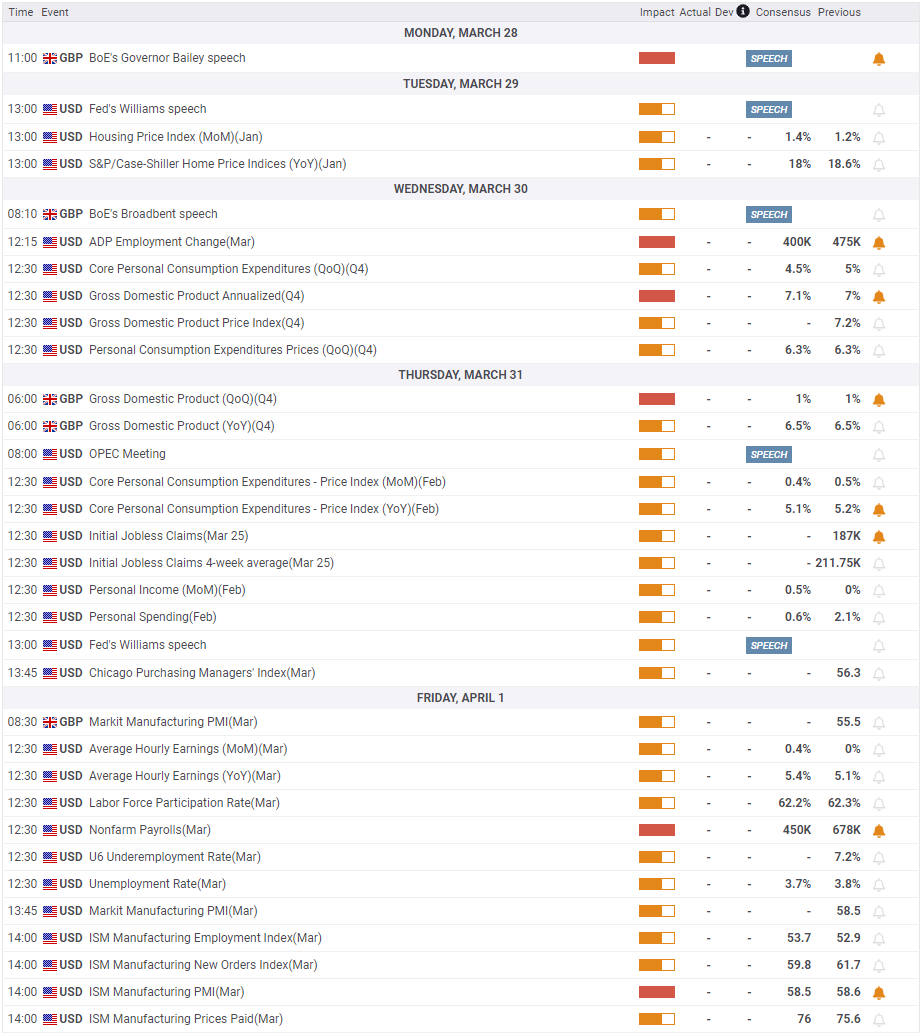
In the absence of any first-tier economic data from the UK, BOE Governor Andrew Bailey’s speech will be closely eyed for fresh hints on future policy path. Bailey is due to speak about macroeconomics and financial stability at an online event hosted by Bruegel on Monday. The Q&A session after his speech will be key to watch.
Next of relevance for the pair remains Wednesday’s US ADP Employment Change data while BOE Deputy Governor Ben Broadbent’s speech will also be followed. Investors are likely to pay a little heed to the final revisions of the UK and US GDP data.
Thursday’s US PCE inflation data and Friday’s all-important Nonfarm Payrolls will stand out and could trigger a fresh US dollar rally. Traders will also await the US ISM Manufacturing PMI report as the NFP week draws to an end.
GBP/USD: Technical outlook
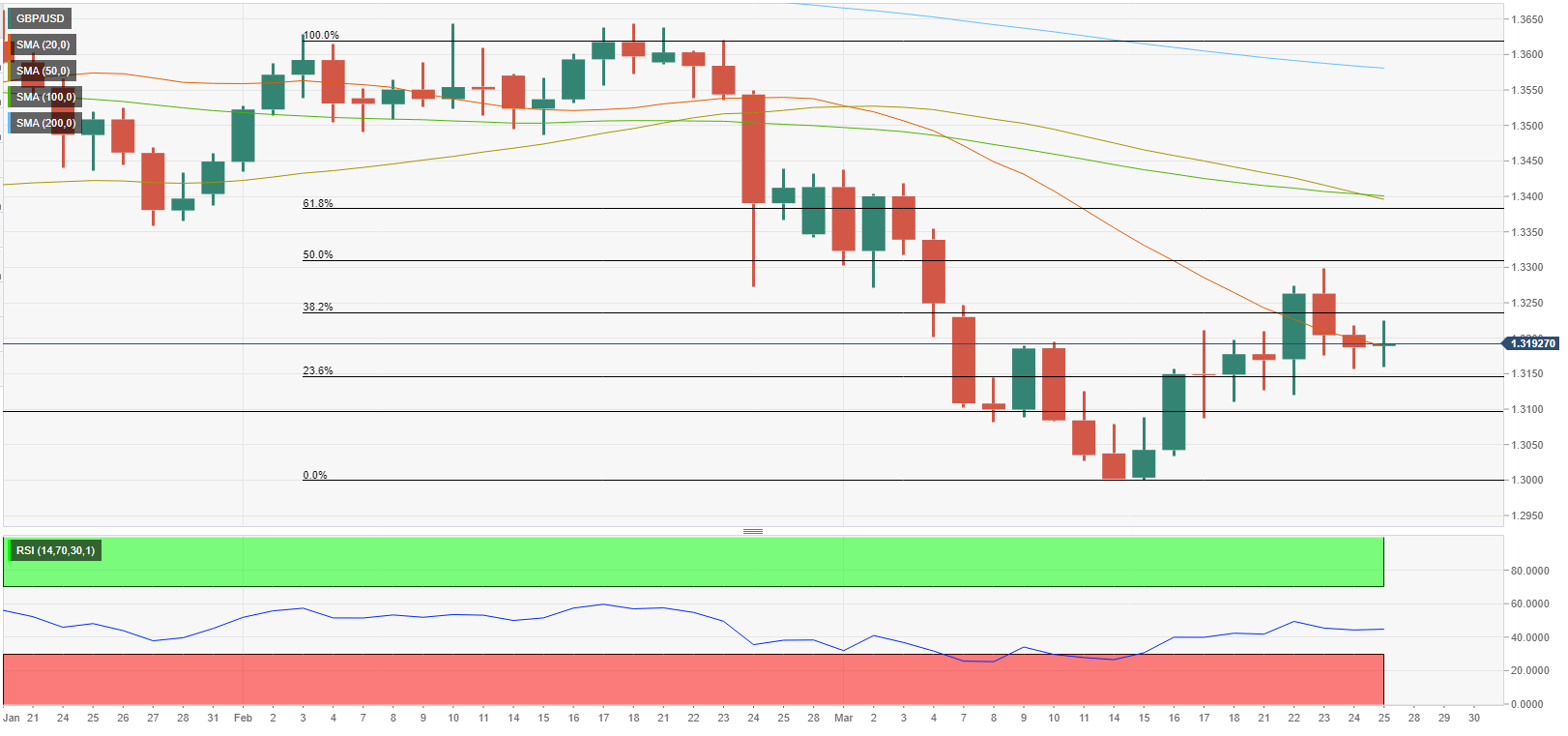
GBP/USD faces an interim resistance at 1.3250 (Fibonacci 38.2% retracement of the latest downtrend) before it can target 1.3300 (Fibonacci 50% retracement, March 23 high). A daily close above the latter could attract bulls and help the pair rise toward 1.3400 (Fibonacci 61.8% retracement, 50-day SMA, 100-day SMA).
On the downside, 1.3150 (Fibonacci 38.2% retracement) aligns as first support before the critical 1.3100 level, where the 200-week MA is located. In case sellers manage to drag GBP/USD below 1.3100 and hold it there, 1.3000 (psychological level, static level) could be seen as the next bearish target.
GBP/USD: Sentiment poll
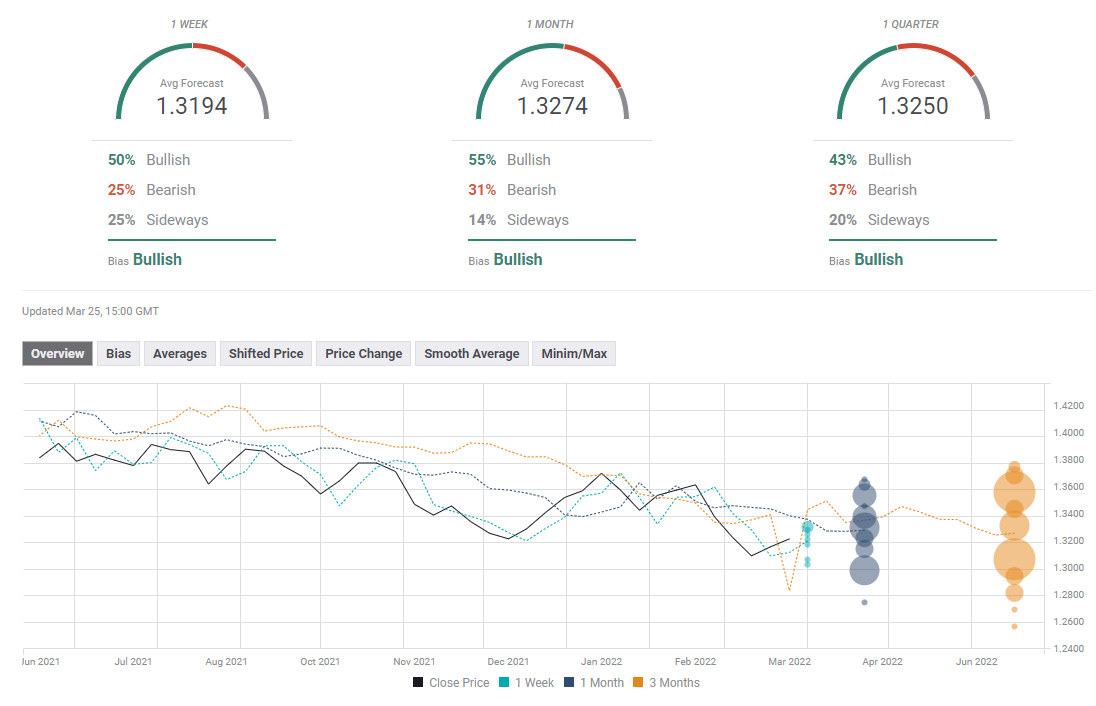
The FXStreet Forecast Poll shows that bulls represent half of the polled experts on the one-week view. The average price target of 1.3194, however, suggests that the British pound's gains are likely to remain limited in the near term.
Author

Dhwani Mehta
FXStreet
Residing in Mumbai (India), Dhwani is a Senior Analyst and Manager of the Asian session at FXStreet. She has over 10 years of experience in analyzing and covering the global financial markets, with specialization in Forex and commodities markets.