EUR/USD: All eyes on Nonfarm Payrolls

EUR/USD was trading at 1.1613 on Friday. As the week draws to a close, the US dollar remains on track to post gains, supported by ongoing uncertainty in the Middle East and continued demand for safe-haven assets.
US President Donald Trump stated that negotiations aimed at resolving the conflict are approaching their final stage and that Washington has no interest in returning to a full-scale confrontation with Iran. However, Iranian Foreign Minister Abbas Araghchi noted that no significant progress has been achieved in the talks yet. Adding to market concerns, the Iranian-backed Hezbollah movement rejected a US-backed ceasefire proposal between Israel and Lebanon.
Investor attention is firmly focused on today’s Non-Farm Payrolls report. The labour market data is expected to provide fresh insight into the health of the US economy and the likely direction of future Federal Reserve policy.
Recent employment figures have highlighted the resilience of the US economy, reinforcing expectations that the Federal Reserve will maintain a hawkish stance. Against a backdrop of elevated energy prices and inflation risks linked to the Middle East conflict, markets continue to price in the possibility of another interest rate increase before the end of the year.
Technical analysis
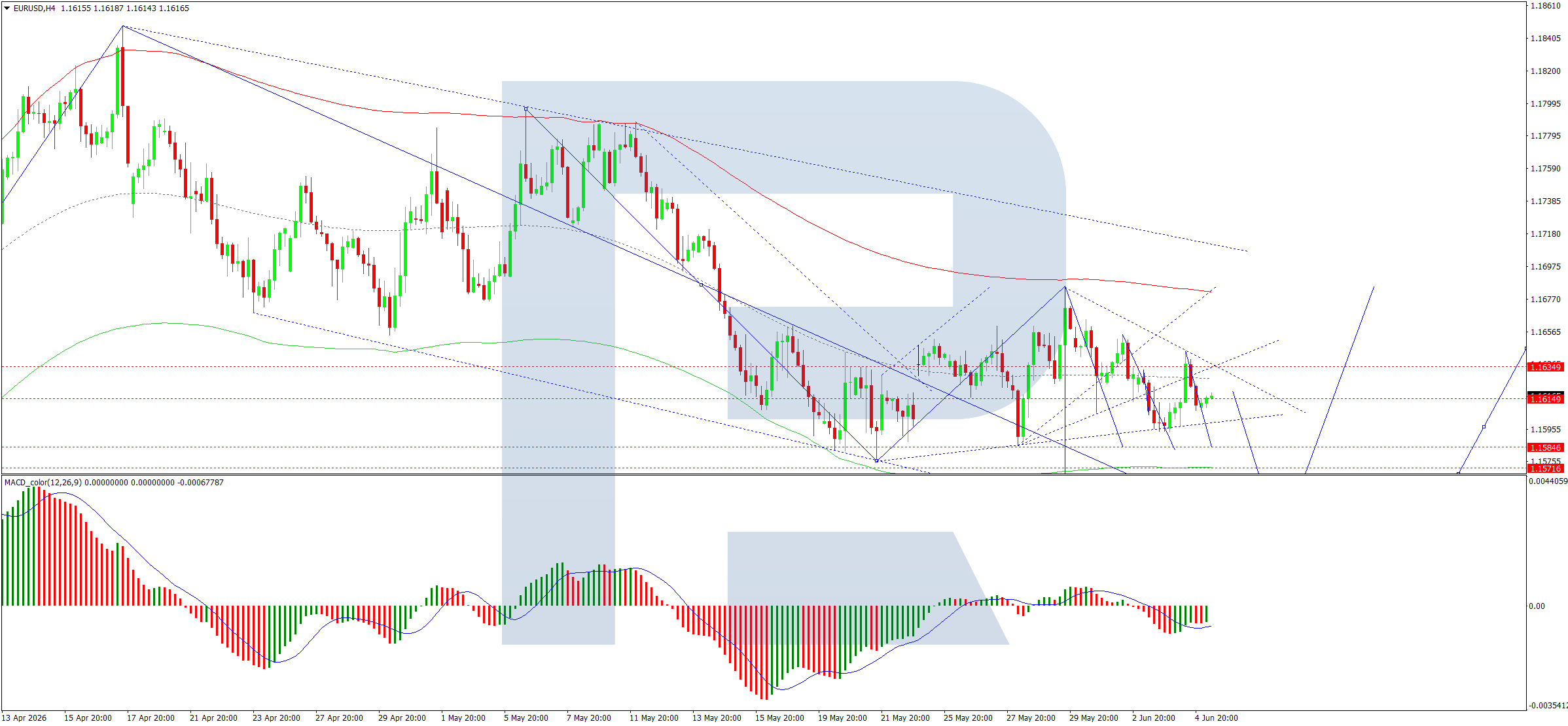
On the H4 chart, EUR/USD is trading within a compact consolidation range around the 1.1620 level. The current structure suggests a move lower towards 1.1525, with scope for an extension to 1.1500.
The MACD indicator supports this scenario, with its signal line below zero and pointing firmly downwards, reflecting persistent bearish momentum.
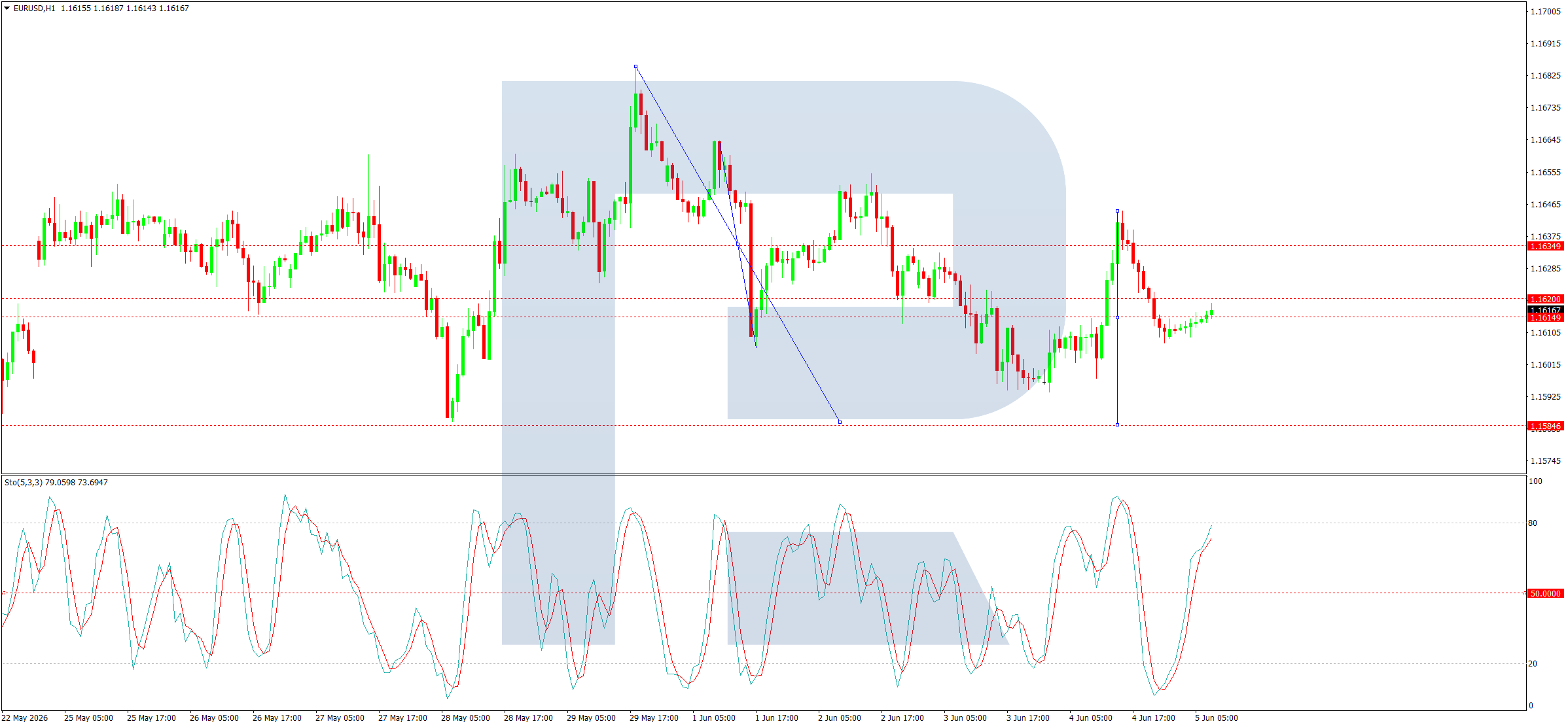
On the H1 chart, EUR/USD has reached 1.1644 before declining to 1.1607. In effect, the pair has formed the boundaries of a consolidation range around 1.1620.
A breakout above the range could trigger another upward move towards 1.1660, with scope for an extension to 1.1675 before the broader downtrend resumes towards 1.1500.
A downside breakout would strengthen the case for a direct move towards 1.1500, potentially marking the completion of the third wave within the current bearish trend.
The Stochastic oscillator confirms this outlook, with its signal line turning lower from 80 and pointing towards 20, indicating the beginning of a short-term decline.
Conclusion
EUR/USD remains under pressure as geopolitical uncertainty and expectations of prolonged restrictive US monetary policy continue to support the dollar. The Non-Farm Payrolls report will be the key catalyst for the market, while technical indicators suggest that downside risks remain dominant in the near term.
Author

RoboForex Analysis Department
RoboForex
RoboForex Analysis Department provides timely market insights, expert technical analysis, and actionable forecasts across forex, commodities, indices, and equities.