GBP/USD Weekly Forecast: Buy the dips in the US inflation week
- GBP/USD hit ten-month highs above 1.2500, printing fourth straight weekly gain.
- US Dollar downward spiral boosted GBP/USD but recession fears capped the rally.
- Daily technical setup still encourages GBP/USD bulls for dip-buying trades.

GBP/USD recorded the fourth straight weekly gain, as the Pound Sterling bulls refused to give up, despite the late rebound in the United States Dollar (USD). US Federal Reserve (Fed) and the Bank of England (BoE) monetary policy divergence could come into play in a critical week ahead for US inflation.
GBP/USD: What happened last week?
The US Dollar extended its losing streak into the sixth consecutive week, as both GBP/USD and EUR/USD surpassed key resistance levels, which helped to pave the way for more US Dollar weakness. Monetary policy divergence between the Federal Reserve and the Bank of England was highlighted on heightened expectations that the former will likely keep rates on hold at its May policy meeting amid a run of downbeat US economic data-led growing recession fears. Meanwhile, the United Kingdom’s central bank is seen hiking rates by 25 basis points (bps) next month, as inflation continues to remain stubbornly high.
The US Dollar started off the week on the right footing, climbing with the US Treasury bond yields, as the unexpected output cut from OPEC and its allies (OPEC+) sent Oil prices about 6% higher and rekindled inflation fears. The USD strength, however, petered out after the Institute for Supply Management (ISM) survey showed that manufacturing activity fell to the lowest level in nearly three years in March at 46.3, as new orders continued to contract. Meanwhile, all subcomponents of its manufacturing PMI came in below the 50 threshold for the first time since 2009. The GBP/USD pair, therefore, staged a solid rebound, which extended into Tuesday. The major hit the highest level in ten months at 1.2525 on the back of a chart-based upsurge, after bulls finally took out the 1.2450 key resistance.
Although the upside in Cable was capped by the dovish comments from BoE interest rate-setter Silvana Tenreyro on Tuesday, citing that “I expect that the high current level of bank rate will require an earlier and faster reversal, to avoid a significant inflation undershoot.” The US Dollar also regained its safe-haven appeal after the US JOLTS Job Opening and Factory Orders data disappointed and revived recession fears, dragging GBP/USD back toward 1.2400. The US Dollar correction, however, was shortlived, as sellers returned on the release of weak US ADP jobs and US ISM Services PMI data on Thursday. The US ADP private sector employment increased by 145,000 jobs in March vs. 200K expected and 261K previous. US ISM Services PMI dropped from 55.1 to 51.2 in March, below the expectation of 54.5. Meanwhile, all of the ISM Services sub-components slowed their pace of expansion.
The US JOLTS and ADP employment data showed the first signs of weakness in the US labor market. The recent streak of US economic underperformance added weight to the beleaguered US Dollar, supporting the view that the Federal Reserve may not need to raise rates much further. In light of this, GBP/USD held the fort above 1.2400 heading into Good Friday-induced thin trading conditions and the all-important United States Nonfarm Payrolls report.
The US Bureau of Labor Statistics announced on Friday that Nonfarm Payrolls (NFP) rose by 236,000 in March, compared to the market expectation of 240,000, and the Unemployment Rate declined to 3.5%. Labor Force Participation rate improved to 62.6% and wage inflation, as measured by Average Hourly Earnings, declined to 4.2% on a yearly basis from 4.6% in February. With the initial reaction to this data, the 10-year US yield gained more than 1% in the shortened session and helped the USD gather strength against its rivals. In turn, GBP/USD retreated to the 1.2400 area but managed to keep its footing.
United States Consumer Price Index to stand out
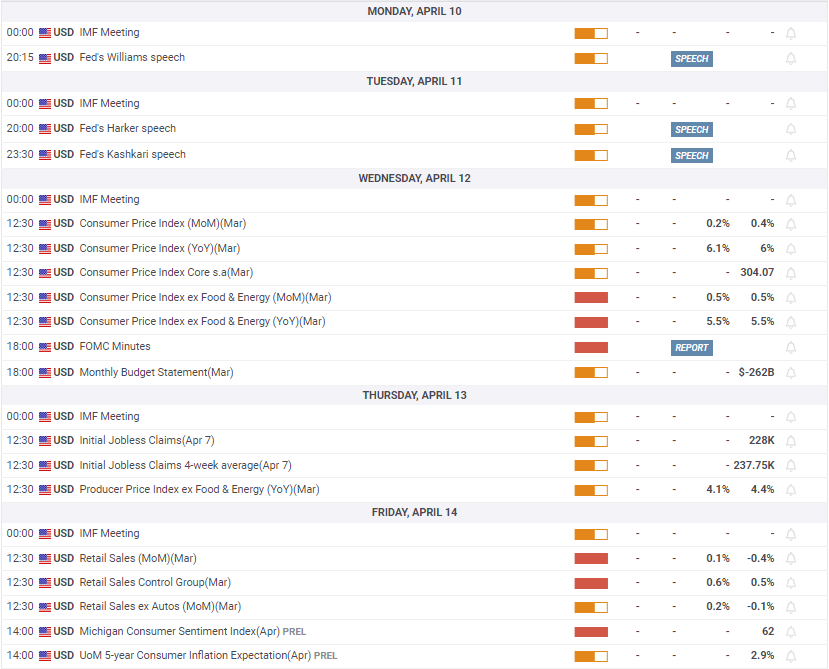
Another holiday-shortened week but a critical one, as traders gear up for the all-important Consumer Price Index (CPI) data from the United States, which will determine the US Dollar’s fate in the short to medium term. The week kicks off with Easter Monday and thin trading is likely to extend following Holy Friday. A majority of global markets are closed for trading on Monday.
China’s CPI data will be published on Tuesday, which could have some impact on risk sentiment. The data docket is light on both sides of the Atlantic on Tuesday, therefore, attention turns toward Wednesday’s US inflation data, Bank of England Governor Andrew Bailey’s speech and the Minutes of the Federal Reserve March meeting. US CPI data will determine the next policy move by the Fed, eventually impacting the US Dollar valuations.
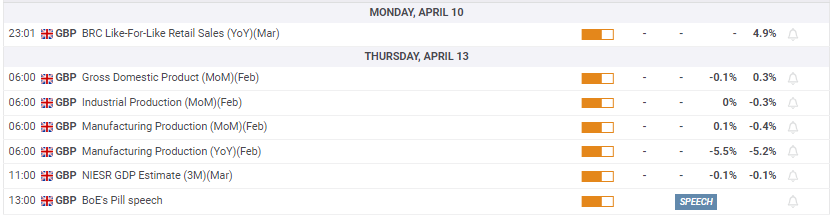
Thursday will be also busy, as the United Kingdom will report the monthly Gross Domestic Product (GDP) data alongside the country’s Industrial and Trade Balance data. In the US calendar, the Producer Price Index (PPI) and weekly Jobless Claims will feature and entertain Cable traders. The BoE Chief Economist Huw Pill is also due to speak in Thursday’s North American session.
The week will wrap up with fresh top-tier releases from the US, in the Retail Sales and Preliminary University of Michigan (UoM) Consumer Sentiment and Inflation Expectations data. Apart from the economic statistics, comments from the Federal Reserve policymakers will hold relevance for reevaluating the Fed interest rates outlook.
GBP/USD: Technical outlook
GBP/USD is gearing up for a bumpy road toward the May 27 2022 high of 1.2669, as portrayed on the daily chart.
The bullish 100-Daily Moving Average (DMA) has pierced through the flattish 50 DMA from below, representing a Bear Cross, which could make it an uphill task for Pound Sterling bulls to resume the recent bullish momentum.
If the correction extends in the week ahead, immediate support is seen at the 1.2350 psychological level, below which the weekly low of 1.2275 could be challenged. At that level, the upward-pointing 21 DMA aligns, making it a powerful cushion for buyers.
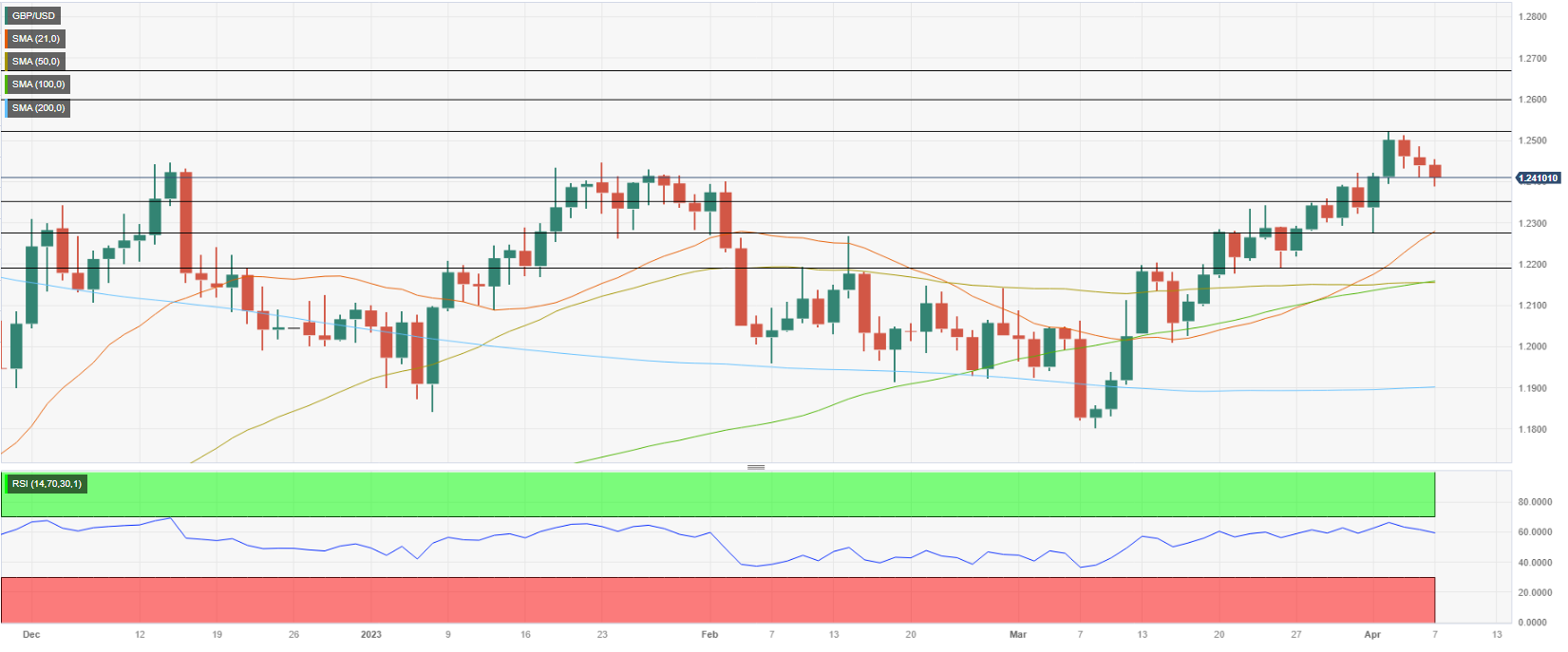
Acceptance below the latter will prompt sellers to test bullish commitments at the 1.2200 round figure. The next relevant downside target is seen at 1.2165, the confluence of the 100 and 50 DMAs.
With the 14-day Relative Strength Index (RSI), however, still hovering above the midline, there remains room for the upside.
GBP/USD needs a daily candlestick closing above the ten-month top of 1.2525 to make fresh headways toward the 1.2600 level. Pound Sterling bulls will then aim for the abovementioned strong hurdle at 1.2669.
GBP/USD: Forecast poll
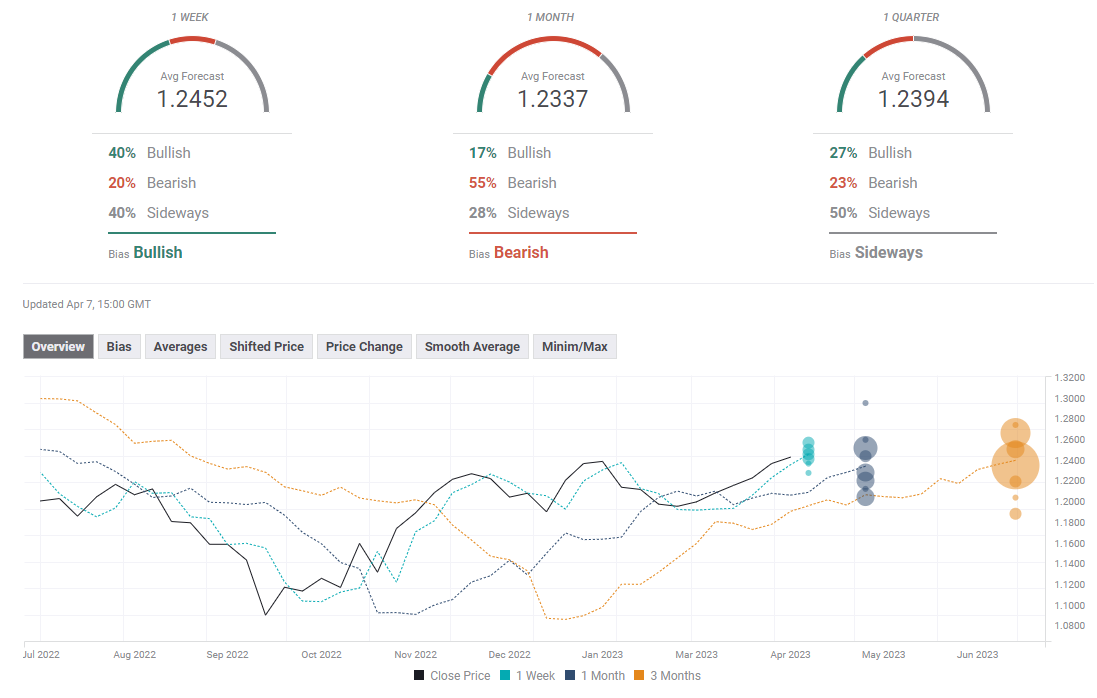
The FXStreet Forecast Poll paints a mixed picture for GBP/USD in the near term with the one-week target aligning at 1.2452. The one-month outlook remains bearish with more than half of polled experts expecting the pair to go down in that time frame.
Author

Dhwani Mehta
FXStreet
Residing in Mumbai (India), Dhwani is a Senior Analyst and Manager of the Asian session at FXStreet. She has over 10 years of experience in analyzing and covering the global financial markets, with specialization in Forex and commodities markets.