GBP/USD Weekly Forecast: Brexit deal uncertainty set to weigh on Sterling
- The UK parliament is set to resume Brexit deal debate on Monday, January 7 with fierce discussion expected to weigh on Sterling.
- The UK manufacturing and services PMIs improved in December but had no effect on currency markets.
- The risk-off mood sparked by China’s manufacturing sector turning to contraction territory and Apple’s revenue warning blaming China from slowdown saw a flash crash of majors at the beginning of 2019 with Sterling falling to a 21-month low.
- The manufacturing output data and monthly UK GDP are both unlikely to alter the scenario of Brexit debate driven market for GBP/USD.
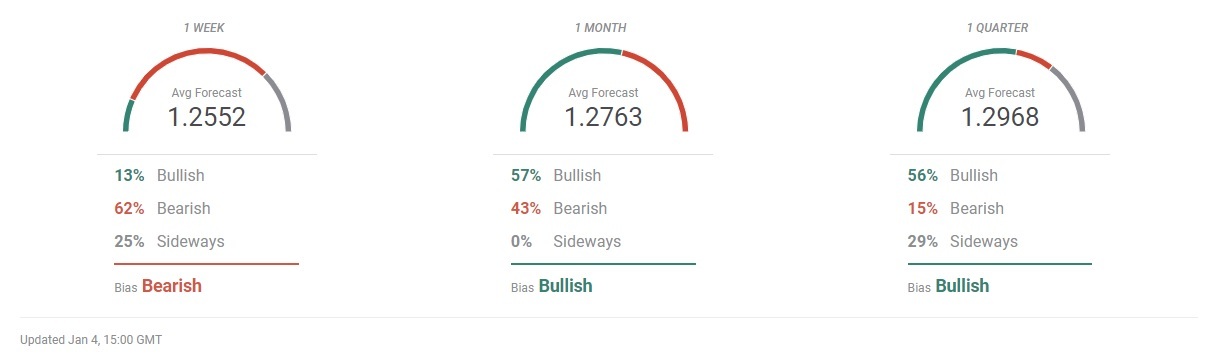
- The FXStreet Forecast Poll turned short-term bearish with the spot rate of 1.2552 expected in the 1-week horizon.


After trading within a tight range of 1.2600-1.2700 during the holiday season the GBP/USD broke unexpectedly on the upside in the last trading day of 2018 and settled around 1.2780. The New Year saw Sterling falling sharply lower with Wednesday’s intraday fall of almost 400 pips as the risk-off mood stemming from China’s manufacturing sector turning to the territory indicating economic contraction and Apple’s revenue warning sparked flash crash.
The GBP/USD sold off all the way down to 1.2438 marking a fresh 2019 and a 21-month low early on Thursday with the US Dollar gaining broadly as the algorithmic trading machines went crazy on a liquidity low market. The trigger for the flash crash was provided by Apple’s revenue outlook warning that blamed China’s economic slowdown from a lower outlook on sales.
Apple Inc. said it cuts the revenue guidance to $84 billion citing China’s economic slowdown and trade wars as the main reason. "China’s economy began to slow in the second half of 2018...GDP growth during the September quarter was the second lowest in the last 25 years. We believe the economic environment in China has been further impacted by rising trade tensions with the United States," Apple wrote in a statement.
With Sterling crashing to a 21-month low, the currency recovered soon after with GBP/USD rising to 1.2690 on Friday morning, getting back to the season’s holiday range of 1.2600-1.2700.
Friday saw the GBP/USD swinging widely as the US December non-farm payroll reports came out strong creating 312K new jobs in December and supported the US Dollar across the board. Subsequent remarks from the Federal Reserve chairman Jerome Powell though lifted GBP/USD from Friday’s low of 1.2618 back to 1.2690 area.
While it saw the international market movement that has created volatility on GBP/USD in the first week of 2019, the UK parliamentary debate about the Brexit deal is expected to be the major driver of the currency moves in the second week of January.
The economic data, whatever their outcome, are set to have only a limited market impact at times of increased Brexit uncertainty.
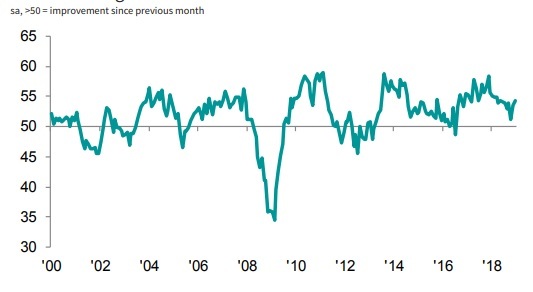
This was particularly true for the set of UK PMI data published during the first week of January. The manufacturing PMI rose to 54.2 in December after 53.6 in November while services PMI increased to 51.2 in December from 50.4 in the previous month.
UK manufacturing PMI
Source: IHS/Markit
Technical analysis
GBP/USD daily chart
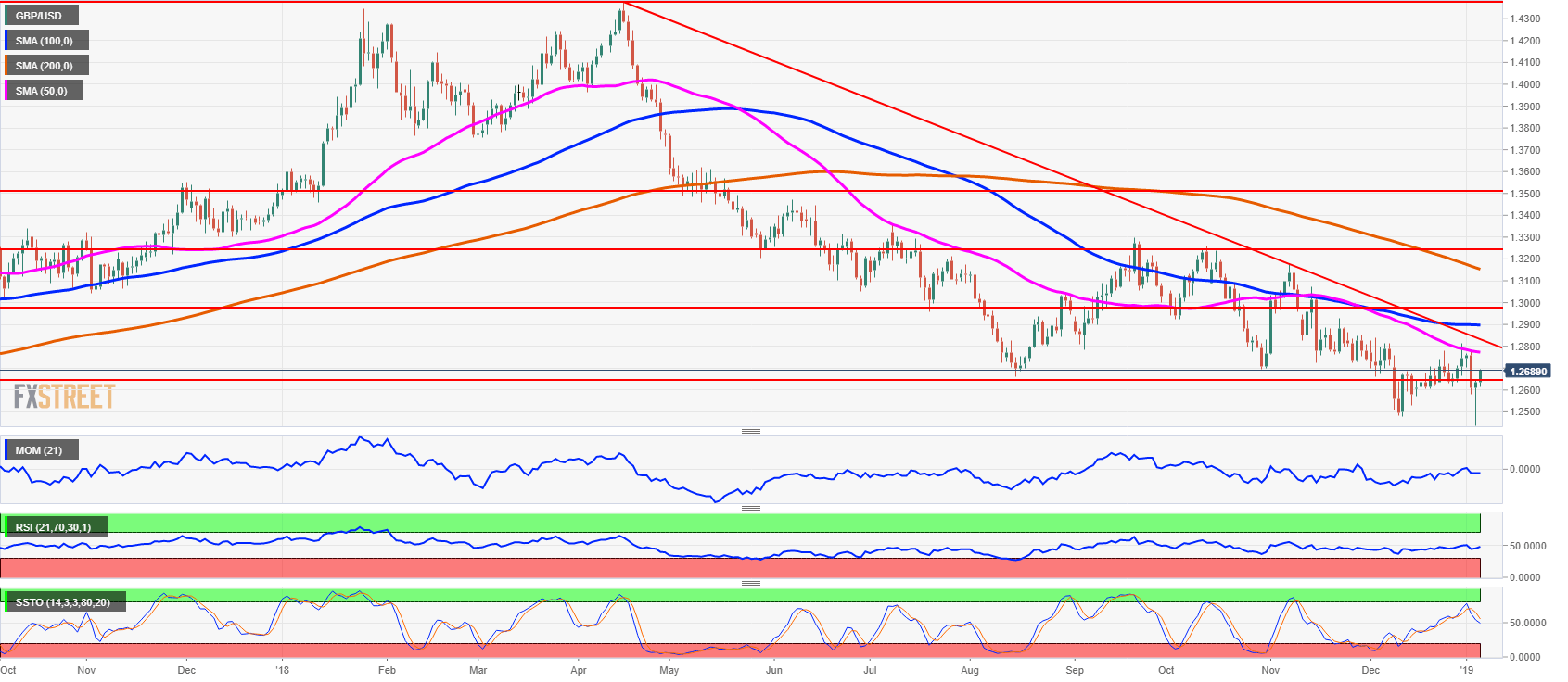
Technically, the GBP/USD is trading in a downward sloping trend on a daily chart. The technical oscillators including Momentum and the Relative Strength index turned flat-to-higher with Sterling retreating from a fresh 21-month low and the Slow Stochastics made a bearish crossover within neutral territory. The GBP/USD bounced off a 50-day moving average and with a flash crash fell as low as 1.2438. With GBP/USD resuming sideways trend, a short-term recovery towards 1.2700 and above is not enough to reverse the trend. With Brexit deal uncertainty weighing on Sterling, a fundamental pressure is still in place to see GBP/USD falling further towards 1.2500-1.2440 level.
Next week in economic data
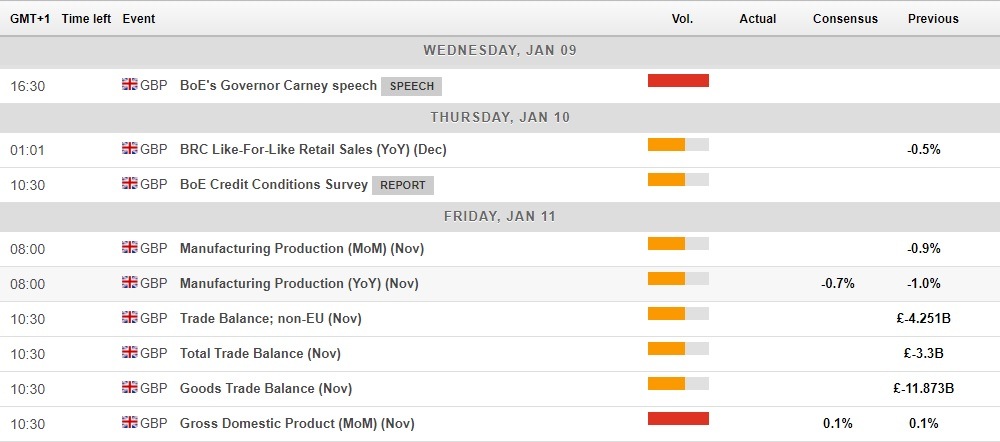
While there are monthly GDP and the UK production index published in the upcoming week in the UK, the most important news will be coming out of the Westminister as members of parliament resume Brexit deal debate starting from Monday next week.
The UK monthly GDP is expected to see the marginal increase of 0.1% over the month in November while the UK manufacturing output is seen falling -0.7% over the year in November after falling -1.0% in the previous month.
UK economic calendar January 7-11
On the other side of the Atlantic, the US economy continues to report solid results in terms of growth, even with forward-looking indicators deteriorating in recent reading. The ISM’s manufacturing PMI decelerated to 54.1 in December from 60.1 in the previous month, lining up with the rest of the big economies that reported a pood manufacturing sector activity at the beginning of 2019.
The US labor market though reported way above expectations reading for new job creation in December. The US non-farm payroll confirmed my previous bullishness stemming from the correlation with the ADP employment increase and rose 312K in December, while wages rose by 3.2% y/y and the unemployment rate ticked up to 3.9% due to increase in the participation rate.
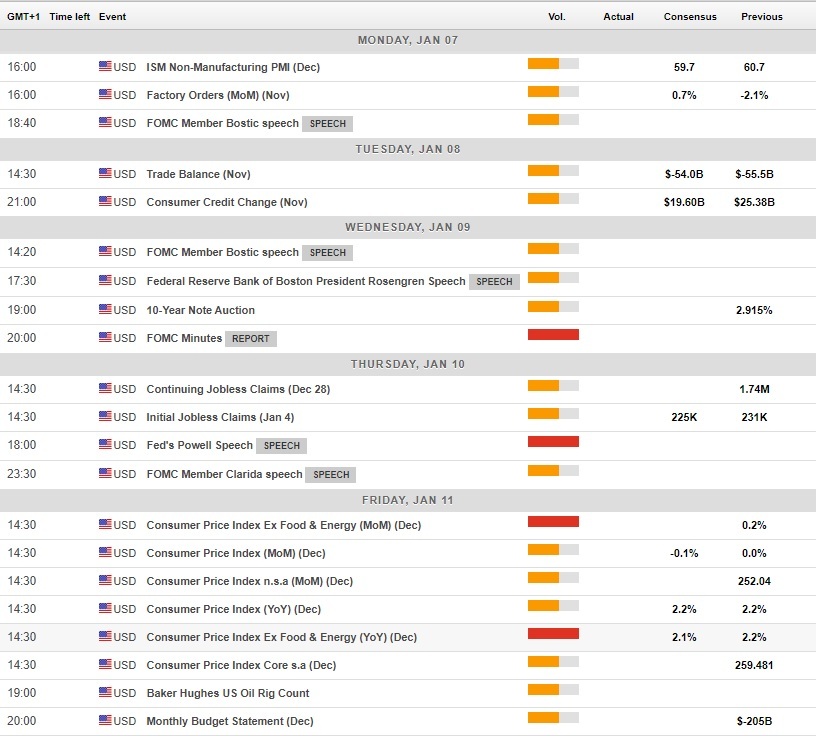
In the week ahead, the US is expected to report on December inflation with the Federal Reserve chairman Jerome Powell already indicated in his Atlanta speech that some slowdown in inflation can be expected and that the incoming data are the best guide for future monetary policy adjustments.
Except the Fed minutes scheduled for next Wednesday, all eyes will be of Federal Reserve’s chairman Jerome Powell’s speech at the Economic Club Luncheon, in Washington DC next Thursday.
US economic calendar January 7-11
FXStreet Forecast Poll
The FXStreet Forecast Poll turned short-term bearish with the spot rate of 1.2552 expected in the 1-week horizon. The vast majority of forecasters see Sterling falling (62%) compared with 13% of bullish and 25% of sideways projections.
For longer-term forecast, the predictions are more evenly split.
The average forecast for one month ahead sees GBP/USD rising to 1.2763 with bullish-to-bearish forecasts at 57%-43%. The three months' forecast reflects rising Brexit uncertainty with average FX rate at 1.2968 and 56% of bullish versus 15% bearish projections. At the same time, 29% of forecast expect sideways trend top prevail.
Author
Mario Blascak, PhD
Independent Analyst
Dr. Mário Blaščák worked in professional finance and banking for 15 years before moving to journalism. While working for Austrian and German banks, he specialized in covering markets and macroeconomics.