GBP/USD starts the week on a strong footing

GBP/USD enters the week of 10–14 August near 1.3500 – its highest level since 15 July. Sterling is building on the momentum from a sharp decline in the dollar following a weak US labour market report, which reduced expectations of a Federal Reserve rate hike in September. Further support has come from the drop in oil prices: cheaper energy is easing inflation risks and reducing pressure on the UK economy.
Geopolitics remains a key factor. Donald Trump announced progress in negotiations between Iran and Oman regarding the Strait of Hormuz, although no final agreement has yet been reached. A further decline in oil prices would reinforce expectations that the Bank of England can maintain a gradual approach to monetary policy. At its last meeting, the regulator left rates unchanged, and Andrew Bailey confirmed that the disinflation process continues.
The main event for sterling this week will be Thursday’s preliminary GDP estimate for the second quarter. The economy is expected to grow by 0.2% quarter-on-quarter, down from 0.6% previously, with the annual rate projected at 1.6% versus 0.9%. June GDP is forecast to rise by 0.1%. Stronger-than-expected data would support GBP/USD, while a marked slowdown could put renewed pressure on the pound.
On the US side, the key release will be July inflation data on Wednesday, with core CPI expected at 2.5% year-on-year and headline CPI at 3.4%. Thursday brings PPI, followed by retail sales and the University of Michigan’s preliminary consumer sentiment index on Friday. Weak inflation and consumer figures could weigh heavily on the dollar and support further GBP/USD gains, while sustained price pressures would strengthen the case for Fed tightening.
Technical analysis
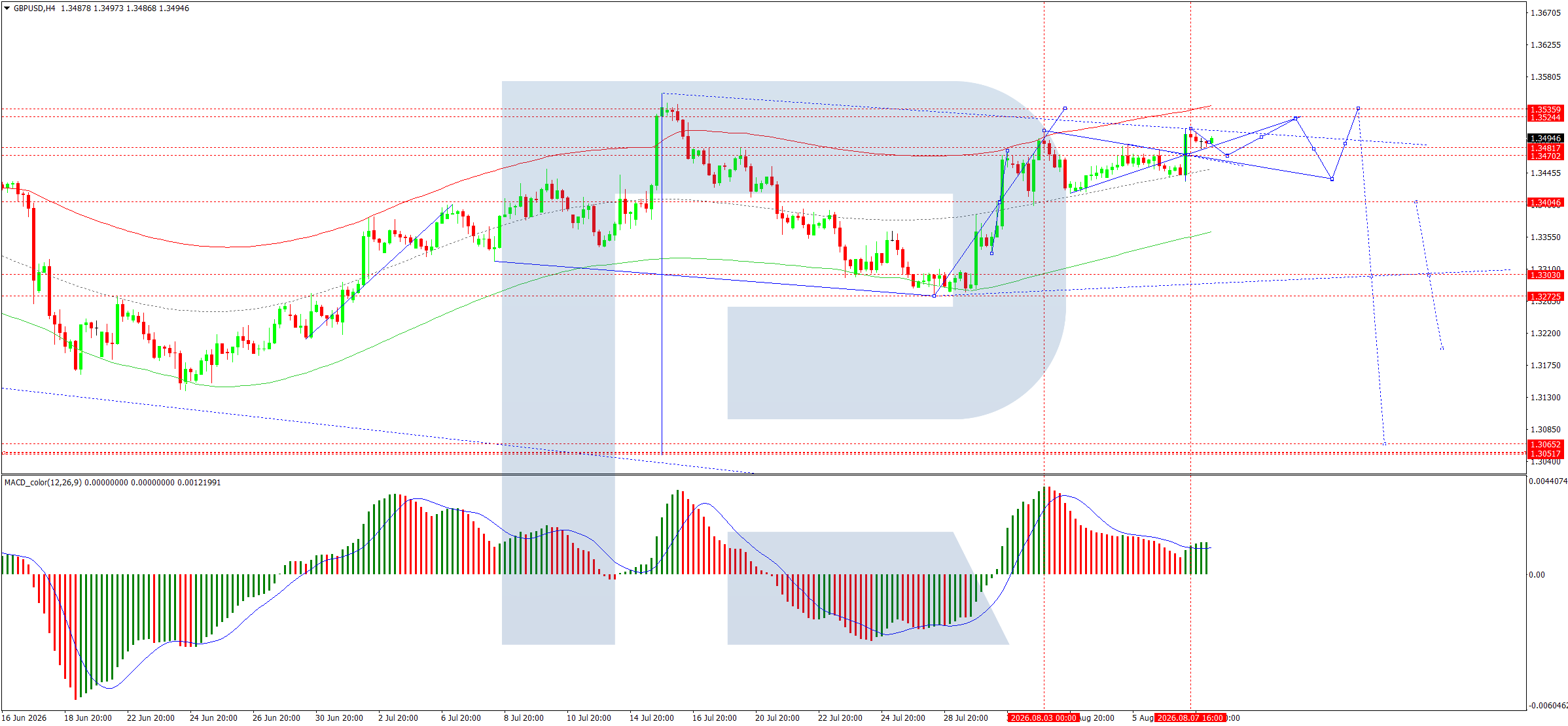
On the H4 GBP/USD chart, a wide consolidation range is forming around the 1.3470 level. An upside breakout would open the way for a move towards 1.3522 and then 1.3535. A downside breakout would suggest a move towards 1.3436, and a break below this level would open the way for the trend to extend to 1.3190. The MACD indicator supports this scenario, with its signal line above zero and pointing downwards.
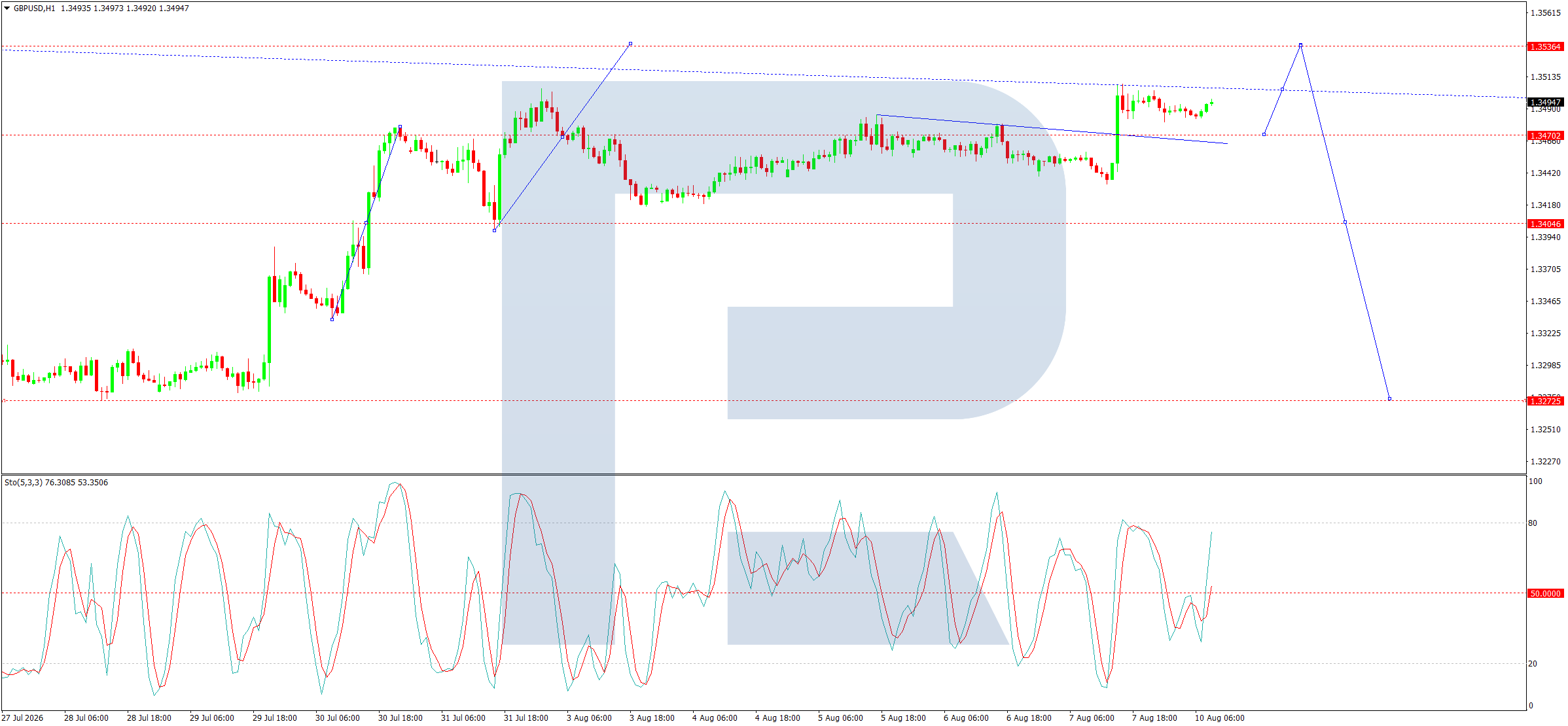
On the H1 chart, the market has formed a compact consolidation range around the 1.3470 level, currently extending between 1.3434 and 1.3500. A move lower towards 1.3470 is expected, followed by a move higher to 1.3535. The Stochastic oscillator confirms this scenario, with its signal line below 50 and pointing downwards. In the short term, a decline towards 20 is expected, followed by a rise towards 80.
Conclusion
GBP/USD has started the week on a strong footing, trading near its highest level since mid-July. The pound has benefited from a weaker dollar following soft US labour market data and falling oil prices, which have eased inflation concerns and reduced expectations of aggressive Fed tightening. Geopolitical progress regarding the Strait of Hormuz has also supported risk sentiment. Markets will now focus on UK GDP data on Thursday and US inflation figures on Wednesday, both of which will provide important clues about the policy outlook for the BoE and Fed. Technically, the pair appears poised for further upside towards 1.3535, with near-term direction hinging on this week’s key data releases. A break below 1.3436 would shift the outlook to bearish, exposing the 1.3190 level.
Author

RoboForex Analysis Department
RoboForex
RoboForex Analysis Department provides timely market insights, expert technical analysis, and actionable forecasts across forex, commodities, indices, and equities.