GBP/USD Forecast: Next bullish target aligns at 1.2060
- GBP/USD has advanced beyond 1.2000 in the European session on Tuesday.
- ILO Unemployment Rate in UK remained steady at 3.8% in May as expected.
- Cautious market mood could limit GBP/USD's upside in the short term.

GBP/USD has regained its traction and climbed above 1.2000 following a downward correction during the Asian trading hours on Tuesday. The pair could target 1.2060 next in case sellers manage to defend 1.2000.
Earlier in the day, the data published by the UK's Office for National Statistics (ONS) revealed that the ILO Unemployment Rate remained unchanged at 3.8% in three months to May as expected. Claimant Count Change declined by 20K in the same period. Following the upbeat jobs report, the probability of a 50 basis points (bps) Bank of England rate hike on August 4 rose to 86%, according to Reuters' calculations.
The cautious market mood, however, seems to be limiting the pair's upside for the time being. The UK's FTSE 100 Index is posting small daily losses and US stock index futures trade little changed on the day. In case Wall Street's main indexes turn south in the second half of the day, the dollar could capitalize on safe-haven flows and vice versa.
The US economic docket will feature Housing Starts and Building Permits for June later in the day. The housing market is feeling the pressure of rising mortgage rates and Fed policymakers are likely to consider the conditions in this market while deciding on the size of the next rate increase.
According to the CME Group's FedWatch Tool, markets are pricing a 33% probability of a 100 bps rate hike in July. If the housing data show an unexpected improvement, rising hawkish bets could provide a boost to the dollar. On the other hand, the greenback is likely to face additional selling pressure on disappointing figures.
GBP/USD Technical Analysis
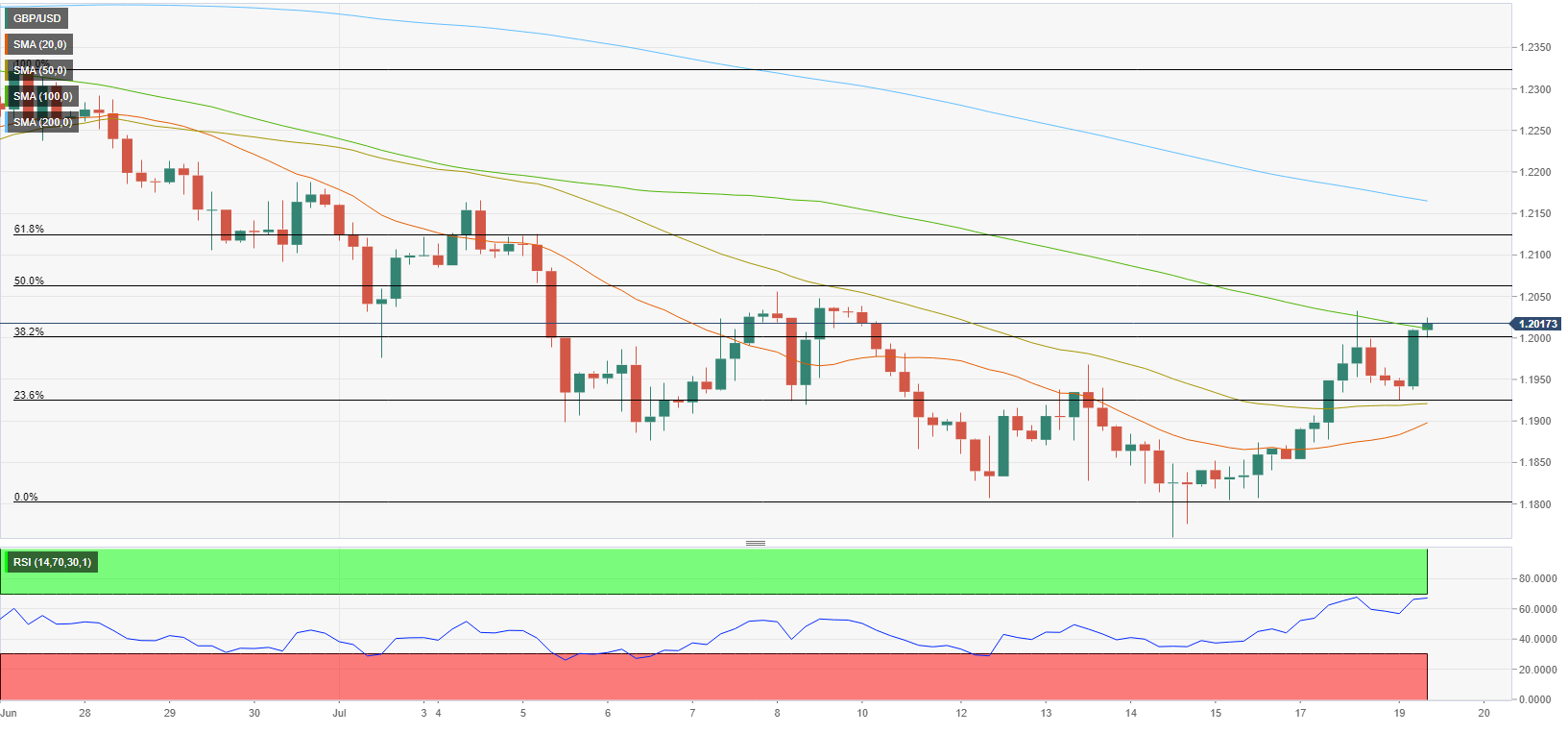
1.2000 (psychological level, Fibonacci 38.2% retracement of the latest downtrend, 100-period SMA on the four-hour chart) aligns as key support. In case this level stays intact, the next bullish targets could be seen at 1.2060 (Fibonacci 50% retracement) and 1.2100 (psychological level).
On the downside, additional losses toward 1.1920 (Fibonacci 23.6% retracement, 50-period SMA) and 1.1900 (psychological level, 20-period SMA) could be witnessed if 1.2000 fails.
Author

Eren Sengezer
FXStreet
As an economist at heart, Eren Sengezer specializes in the assessment of the short-term and long-term impacts of macroeconomic data, central bank policies and political developments on financial assets.