GBP/USD Forecast: Pound tests key resistance, UK PM Johnson expected to resign
- GBP/USD has staged a rebound on reports suggesting PM Johnson will resign.
- The upbeat market mood helps the pound find demand.
- The pair could extend its recovery if it manages to clear 1.2000.

GBP/USD has reversed its direction and climbed toward the 1.2000 area after having slumped to its lowest level in more than a year at 1.1876 on Wednesday. The positive shift witnessed in risk sentiment helps the pair preserve its recovery momentum and buyers could remain interested in case 1.2000 turns into support.
Earlier in the day, several news outlets, including the BBC, reported that British Prime Minister Boris Johnson is planning to announce his resignation on Thursday. Johnson is expected to remain in his position until a new leader for the Conservative Party is selected in late summer or early fall.
The initial reaction to this announcement provided a boost to the British pound. Reflecting the positive impact of this development on risk mood, the UK's FTSE 100 Index is up more than 1%.
It's worth noting, however, that a change in leadership is unlikely to lead to an improvement in economic conditions. Rising energy prices and the current squeeze on income are expected to cause a recession in the UK economy. The Bank of England (BOE) faces a tough balancing act regardless of who the new prime minister is. Bank of England (BOE) Chief Economist Huw Pill said on Wednesday that the inflation shock is expected to translate into second-round effects, which heightens the risk of inflation dynamics becoming more persistent.
In the second half of the day, May Durable Goods Orders and weekly Initial Jobless Claims data from the US will be looked upon for fresh impetus. In case risk flows dominate the markets in the American session, the pair could extend its recovery. Nevertheless, the fundamental picture suggests that the British pound's gains are likely to be limited.
GBP/USD Technical Analysis
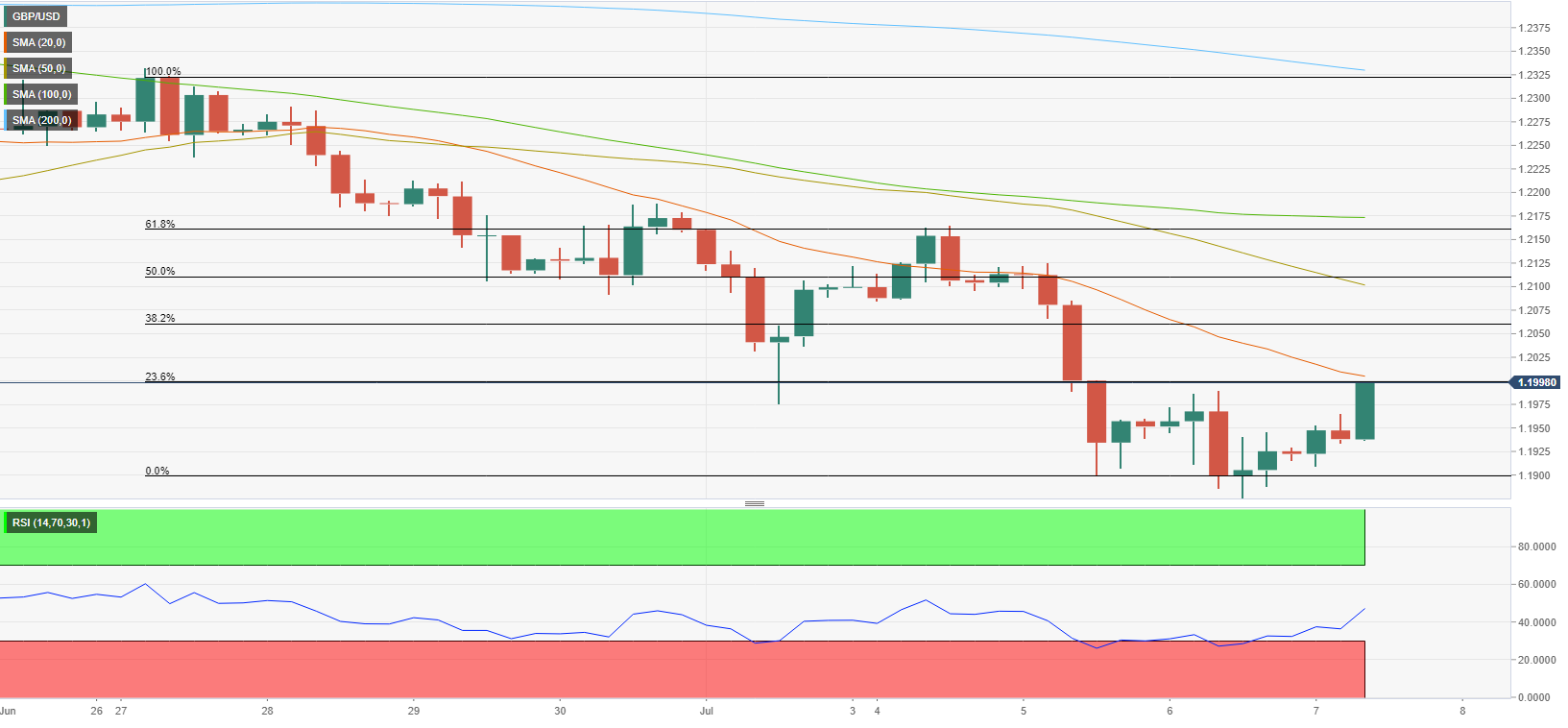
The Fibonacci 23.6% retracement level of the downtrend that started on June 27 forms initial resistance at 1.2000. The 20-period SMA on the four-hour chart reinforces that level as well. Above that hurdle, 1.2050 (Fibonacci 38.25% retracement) and 1.2100 (Fibonacci 50% retracement, 50-period SMA) could be seen as next resistances.
On the downside, 1.1900 (static level, psychological level) aligns as first support before 1.1875 (July 6 low) and 1.1800 (psychological level).
Author

Eren Sengezer
FXStreet
As an economist at heart, Eren Sengezer specializes in the assessment of the short-term and long-term impacts of macroeconomic data, central bank policies and political developments on financial assets.