GBP/USD Forecast: Pound Sterling needs to stabilize above 1.2870 to rebound
- GBP/USD trades below 1.2900 ahead of the weekend.
- The pair could stage a rebound if it manages to confirm 1.2870 as support.
- Upbeat UK Retail Sales data failed to help Pound Sterling gather strength.

GBP/USD stays relatively calm on Friday and trades near 1.2870, a key pivot point in the short term. The pair closed in negative territory for a fifth consecutive day on Thursday, dropping below 1.2850 for the first time in 10 days.
After the US Department of Labor reported on Thursday that the weekly Initial Jobless Claims declined to 228,000 in the week ending July 15, the lowest reading since the second week of May, the US Dollar (USD) gathered strength, weighing on GBP/USD.
Early Friday, the UK's Office for National Statistics reported that Retail Sales rose 0.7% on a monthly basis in June. This reading came in much better than the market expectation for an increase of 0.2% but failed to trigger a noticeable market reaction.
"We are at a crucial juncture and need to avoid reckless spending," UK Finance Minister Jeremy Hunt said. "As this week's fall in inflation showed, we will start to see results if we stick to our plan to halve inflation, grow the economy and get debt falling," he added. Despite this remarks, GBP/USD remained in its daily range.
The US economic docket will not feature any high-impact data releases. Position readjustment and profit-taking ahead of next week's key Federal Reserve policy meeting could ramp up market volatility toward the end of the European session.
GBP/USD Technical Analysis
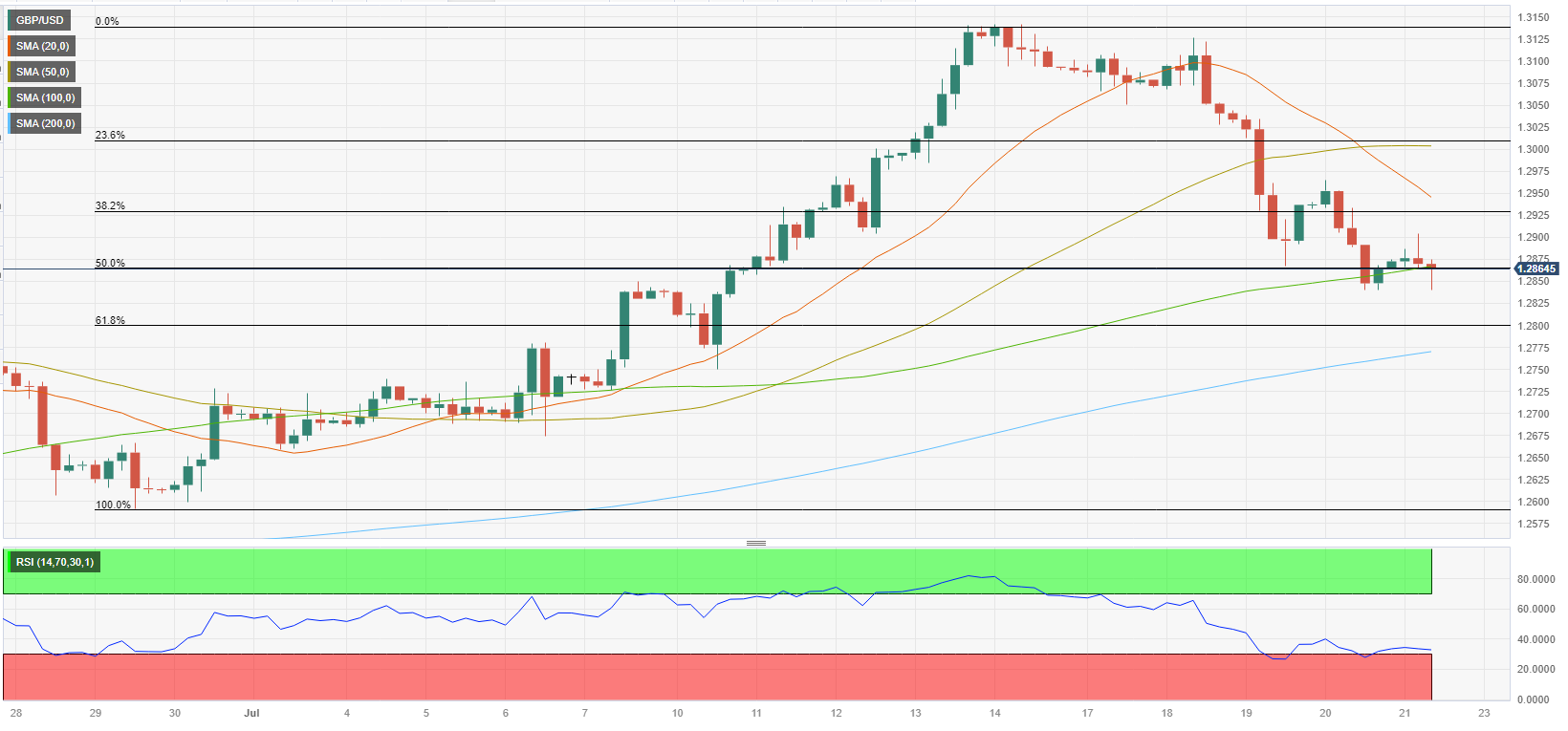
GBP/USD trades near 1.2870, where the Fibonacci 50% retracement level of the latest uptrend and the 100-period Simple Moving Average (SMA) form a key pivot point. If that level is confirmed as resistance, 1.2800 (Fibonacci 38.2% retracement) and 1.2770 (200-period SMA) could be set as next bearish targets.
On the upside, an extended recovery toward 1.2900 (psychological level), 1.2930 (Fibonacci 38.2% retracement, 20-period SMA) and 1.3000 (Fibonacci 23.6% retracement, 50-period SMA) could be seen once GBP/USD stabilizes above 1.2870.
Author

Eren Sengezer
FXStreet
As an economist at heart, Eren Sengezer specializes in the assessment of the short-term and long-term impacts of macroeconomic data, central bank policies and political developments on financial assets.