|

GBP/USD Forecast: Pound Sterling faces stiff resistance at 1.2100

  • GBP/USD has managed to shake off the bearish pressure.
  • Buyers could show interest in case the pair manages to clear 1.2100 hurdle.
  • Volatility is likely to remain low on the last trading day of the year.

GBP/USD has managed to climb above 1.2050 early Friday after having snapped a two-day losing streak on Thursday. With trading conditions remaining thin on the last trading day of the year, however, the pair could have a hard time making a decisive move in either direction.

The decisive rebound witnessed in Wall Street's main indexes forced the US Dollar to stay on the back foot on Thursday and allowed GBP/USD to edge higher. Early Friday, the UK's FTSE 100 Index trades marginally lower on the day and US stock index futures are losing between 0.25% and 0.55%, pointing to a cautious market mood. Unless risk flows return ahead of the New Year holiday, the pair's upside is likely to remain capped.

Meanwhile, The Times reported earlier in the day that British Prime Minister Rishi Sunak was planning to halve the financial support provided to businesses on energy bills on growing concerns about the costs.

The ISM Chicago will release the Purchasing Managers Index data later in the session, which is unlikely to trigger a noticeable market reaction. Bond markets in the US will close early, further limiting the action in currency markets.

GBP/USD Technical Analysis
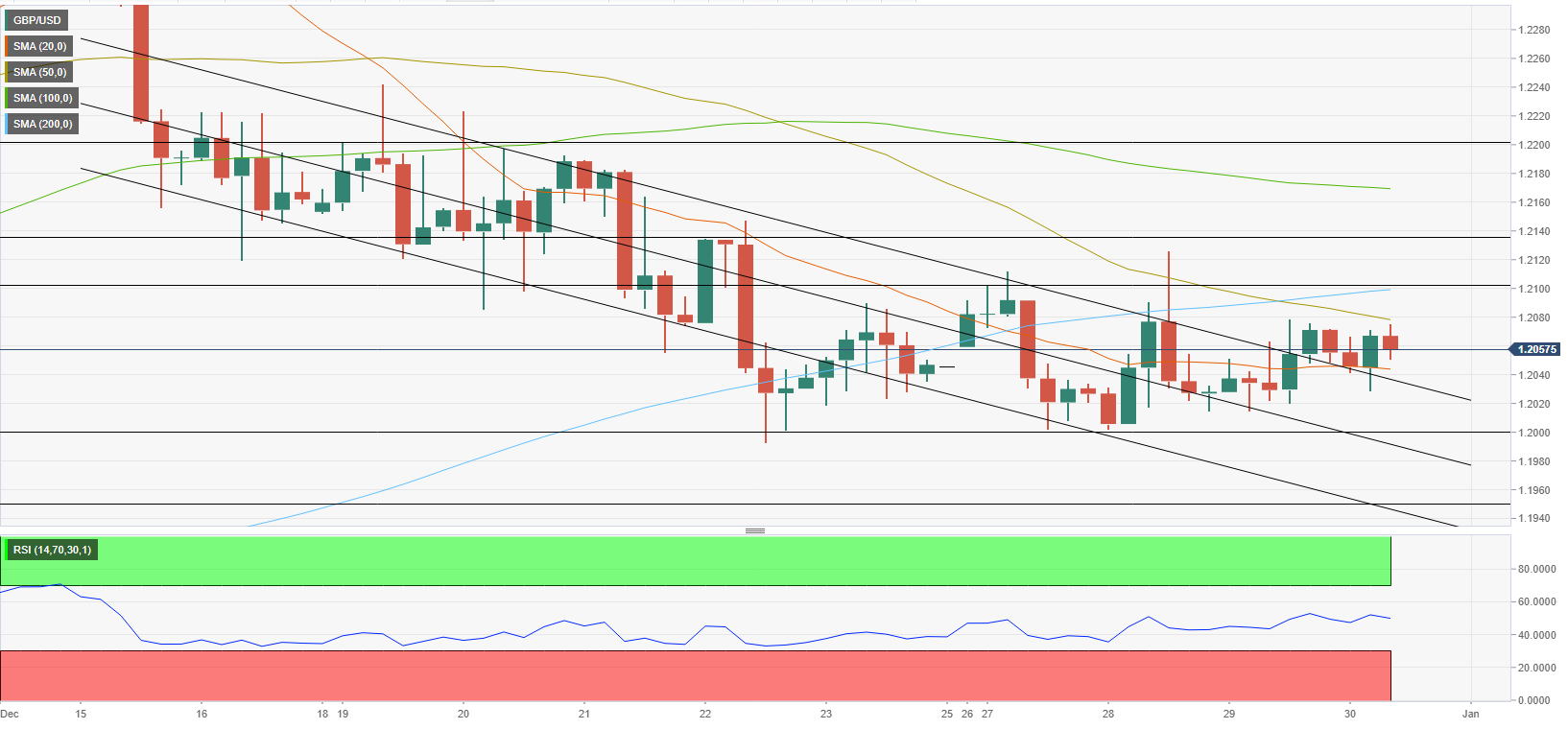
GBP/USD managed to hold above the descending regression channel after having climbed above it on Thursday, suggesting that sellers remain uninterested for the time being. Additionally, the Relative Strength Index (RSI) indicator on the four-hour stays near 50.

On the upside, 1.2080 (50-period Simple Moving Average (SMA)) aligns as interim resistance before 1.2100 (200-period SMA, static level).  A four-hour close above the latter could attract buyers and pave the way for additional gains toward 1.2140 (static level).

1.2040 (20-period SMA) is the first support before 1.2000 (psychological level, static level) and 1.1950 (static level).

Author

Eren Sengezer

As an economist at heart, Eren Sengezer specializes in the assessment of the short-term and long-term impacts of macroeconomic data, central bank policies and political developments on financial assets.


More from Eren Sengezer
Share:

Editor's Picks

British Pound eases to 1.3450 area following downwardly revised Manufacturing PMI data

The British Pound is trimming previous gains against the US Dollar on Monday, returning to the mid-range of the 1.3400s down from fresh seven-week highs, above 1.3500 earlier on the day. Weaker-than-expected UK manufacturing data added pressure on the Pound, which rallied at the Asian session opening, amid news of a halt to the hostilities in Iran.

EUR/USD struggles above 1.1500 despite USD weakness

EUR/USD struggles with its recovery above 1.1500 in European trading on Monday, despite broad US Dollar weakness and improved risk sentiment. The USD loses traction following US President Trump's call off an attack on Iran and that talks between the two sides would happen on Monday. Traders will closely monitor the developments surrounding US-Iran negotiations and US ISM PMI data.

Gold extends range play below $4,100 as rebounding USD meets receding Fed hike bets

Gold struggles to capitalize on a modest weekly bullish gap opening, and remains below the $4,100 mark heading into the European session. The US Dollar stages a modest recovery from its lowest level since June 17, which is seen capping the upside for the commodity. The upside for the USD, however, seems limited amid renewed hopes for a US-Iran peace deal and receding US Fed rate-hike expectations.

Week ahead: US payrolls report and AI earnings to keep investors on edge

After the Fed decision, NFP report awaited for more rate hike clues. Employment also on the agenda in Canada and New Zealand. Chinese trade and Japanese wage data to be watched too. But Iran and AI headlines to remain in driver’s seat for risk sentiment.

Solana risks a steeper decline below $70 despite steady ETF inflows

Solana (SOL) is trading in the red, losing bullish momentum and remaining capped below its 50-day Exponential Moving Average at $75.68. SOL-focused Exchange Traded Funds show resilience with a monthly inflow of $14.62 million in July, while the near-term retail support wanes with the funding rate turning negative.

9-3: Is the Federal Reserve’s vote tally Warsh's new forward guidance?
The rate did not move. Neither did the statement, and that’s the more interesting fact. Set the July 29 Federal Open Market Committee (FOMC) statement beside the one issued on June 17, and the two documents are identical apart from a single verb and a paragraph at the bottom naming three dissenters.