GBP/USD Forecast: British pound could eye 1.3400 as next recovery target
- GBP/USD seems to have set near-term bottom around 1.3300.
- Recovery could extend toward 1.3400 in case buyers manage to claim 1.3360.
- UK doesn't think tighter rules will be needed to combat the new coronavirus variant.

GBP/USD has recovered modestly after dipping below 1.3300 ahead of the weekend and looks to extend its technical correction toward 1.3400.
On Friday, the risk-averse market environment made it difficult for the British pound to find demand. However, the sharp decline witnessed in the US Treasury bond yields weighed on the greenback and helped GBP/USD limit its losses.
Although the dollar is staying resilient against its major rivals at the start of the week, GBP/USD continues to edge higher on improving risk sentiment.
Over the weekend, British Health Secretary Sajid Javid said that they were "nowhere near" imposing social distancing rules after several cases of the highly-mutated coronavirus variant Omicron were reported in the UK. Javid further announced that face masks will be mandatory in shops and public transports from Tuesday. On Monday, the junior UK health minister Edward Argar said that they don't expect rules to be tightened further in the next three weeks.
The US economic docket won't be featuring any high-tier data releases in the remainder of the day and investors will keep a close eye on headlines surrounding the coronavirus variant. So far, it doesn't seem like that the Fed's policy outlook will be altered by the new variant but market participants will keep a close eye on comments from FOMC officials before the blackout period starts on Saturday.
GBP/USD Technical Analysis
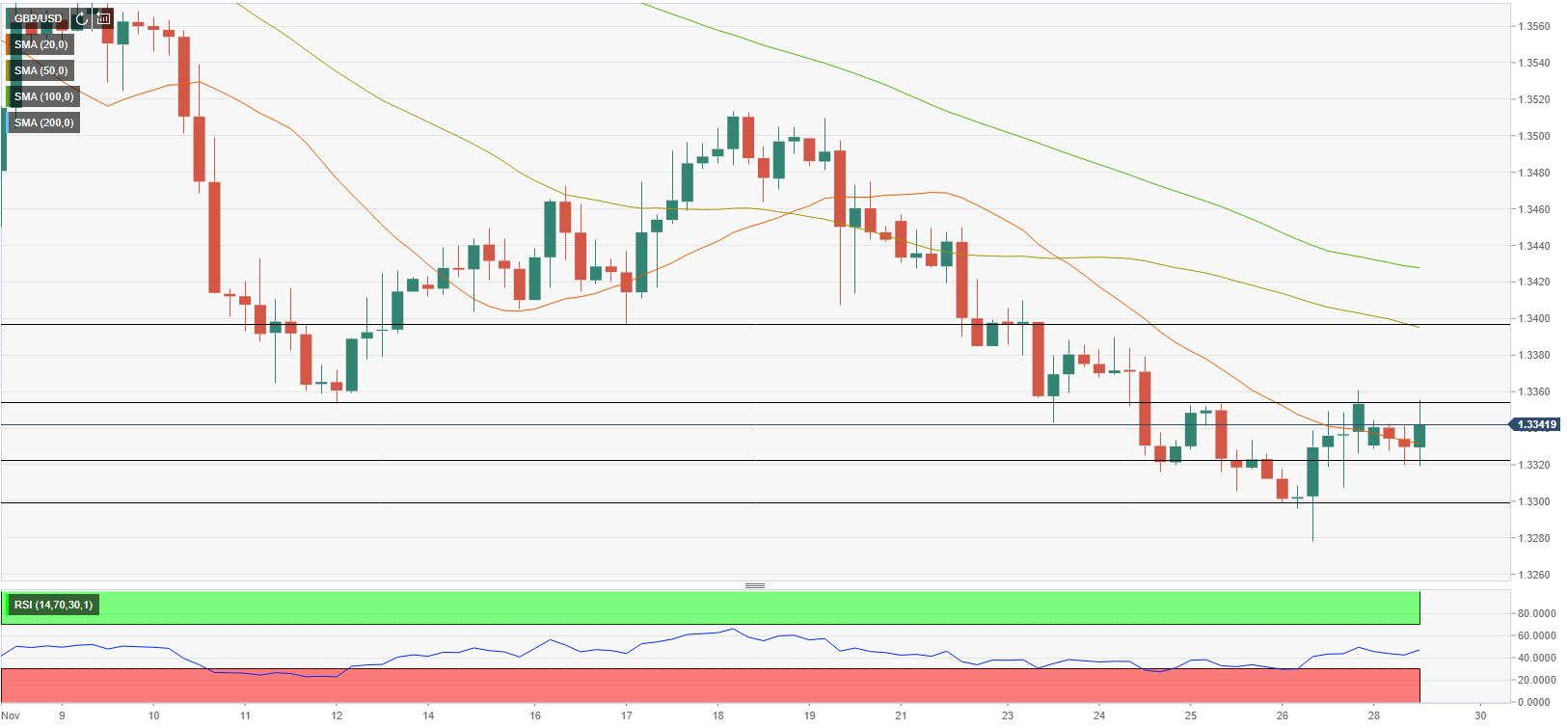
On the upside, GBP/USD is facing static resistance at 1.3360. In case a four-hour candle closes above that level, buyers could target 1.3400 (psychological level, 50-period SMA on the four-hour chart) and 1.3430 (100-period SMA).
Supports are located at 1.3320 (static level, 20-period SMA), 1.3300 (psychological level) and 1.3280 (2021-low).
In the meantime, the Relative Strength Index (RSI) İndicator is edging higher toward 50, suggesting that sellers are showing no interest for the time being.
Author

Eren Sengezer
FXStreet
As an economist at heart, Eren Sengezer specializes in the assessment of the short-term and long-term impacts of macroeconomic data, central bank policies and political developments on financial assets.